 Pin It
 I still remember the first time I arranged a black and white platter for an intimate dinner party. My grandmother had always taught me that a beautiful table is the first course, but that night, as I carefully positioned each olive and mozzarella ball, I realized something clicked. The stark contrast wasn't just visually striking—it felt intentional, almost meditative. That platter became the conversation starter before anyone even tasted a thing, and I've been obsessed with the simplicity of this elegant approach ever since.
What really solidified this recipe for me was serving it at my sister's engagement party. Watching guests pause before eating, genuinely admiring the arrangement, made me understand that sometimes the most sophisticated dishes aren't about complexity—they're about confidence. The black and white created this unexpected drama that elevated even the simplest ingredients into something that felt like a celebration.
Ingredients
- Black olives (Kalamata or Niçoise), 100g pitted: These are your anchors of flavor and that deep, sophisticated visual weight. I've learned that pitting them yourself if you find unpitted ones gives you more control, and honestly, it's meditative work.
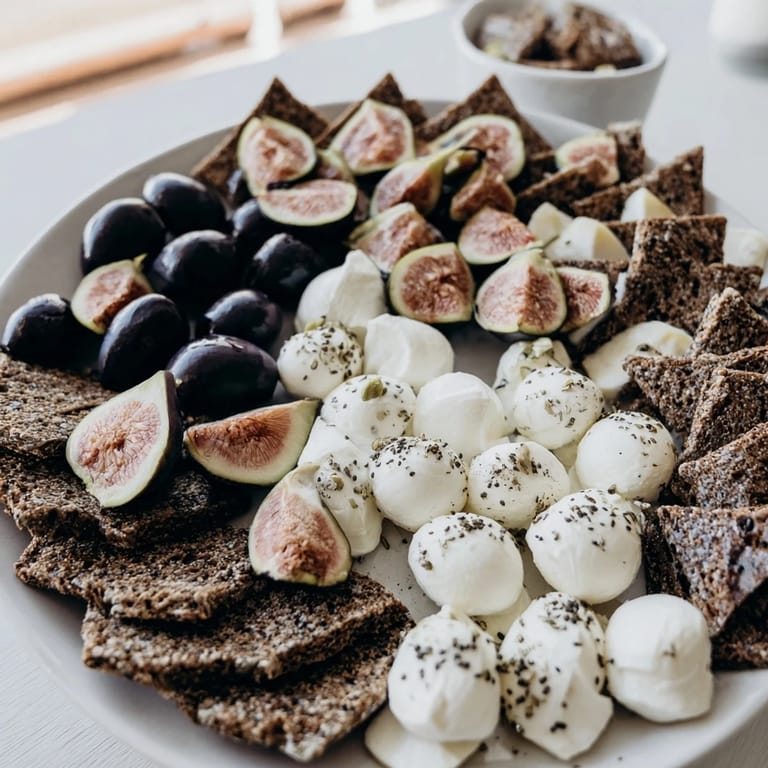
- Dark rye bread, 8 slices: The heartiness of rye gives this platter substance. Toast it very lightly if you want it crisper, though the slight chew is part of its charm.
- Black sesame seeds, 1 tablespoon: A sprinkle transforms everything. These tiny seeds catch light differently than white ones and add a subtle nuttiness.
- Black mission figs, 8 halved (optional): If you can find these, they bring a whisper of natural sweetness that grounds the savory elements. Don't feel obligated though—this platter sings without them too.
- Fresh mozzarella balls (bocconcini or ciliegine), 200g drained: Make sure you drain these well; excess liquid is the enemy of a crisp presentation. That creamy, mild flavor is your blank canvas.
- Fresh mozzarella slices, 8 thin slices from a large ball: These are your white statement pieces. Let them sit out for just a few minutes so they're not ice cold when served.
- Vanilla bean, seeds scraped: This is the secret that makes people pause. That gentle floral note transforms the platter from simple to unexpectedly sophisticated.
- White sesame seeds, 1 tablespoon: The counterpoint to the black seeds, adding texture and a tiny bit of toasty flavor.
- Blanched almonds, 16 peeled: Clean, pale, and minimalist—they're your silent supporting players that add protein and visual weight.
- Extra virgin olive oil, 2 tablespoons: Use one you actually love tasting. This isn't the place to hide a mediocre oil.
- Flaky sea salt, to taste: Finish with this, not table salt. The flakes add visual texture and a brighter salt taste.
- Freshly cracked black pepper (optional): A whisper at the end, only if you want it. I usually skip it in favor of letting the black sesame seeds be the dark punctuation.
Tired of Takeout? 🥡
Get 10 meals you can make faster than delivery arrives. Seriously.
One email. No spam. Unsubscribe anytime.
Instructions
- Cut your bread foundation:
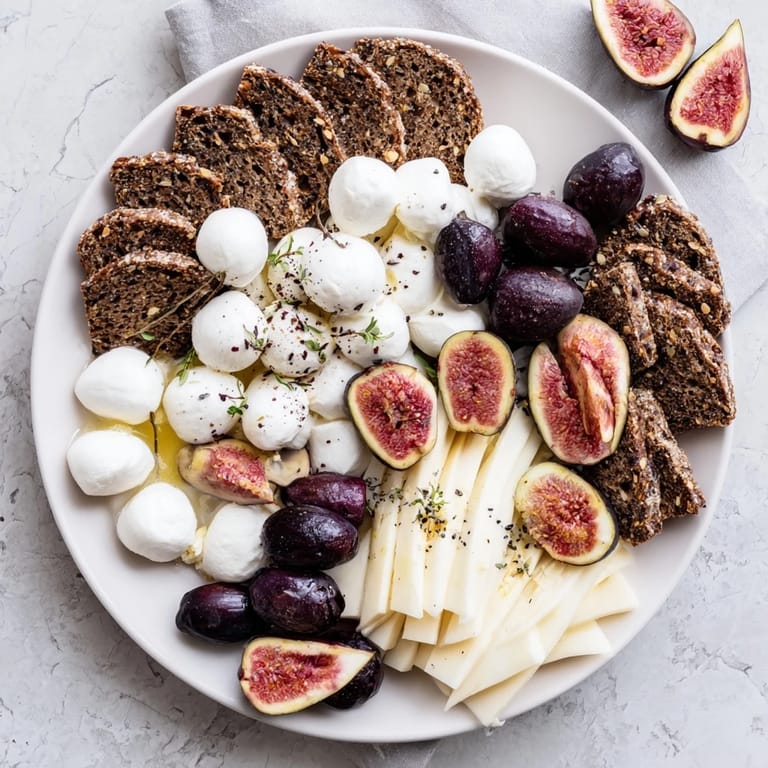
- Using a sharp knife, cut your dark rye bread into squares, triangles, or rectangles. Take a breath and think about how you want them arranged—maybe alternating rows, maybe a checkerboard pattern. There's no right way, only what feels balanced to you. Arrange these on your large platter first. They're your base, your stage.
- Build your black and white rhythm:
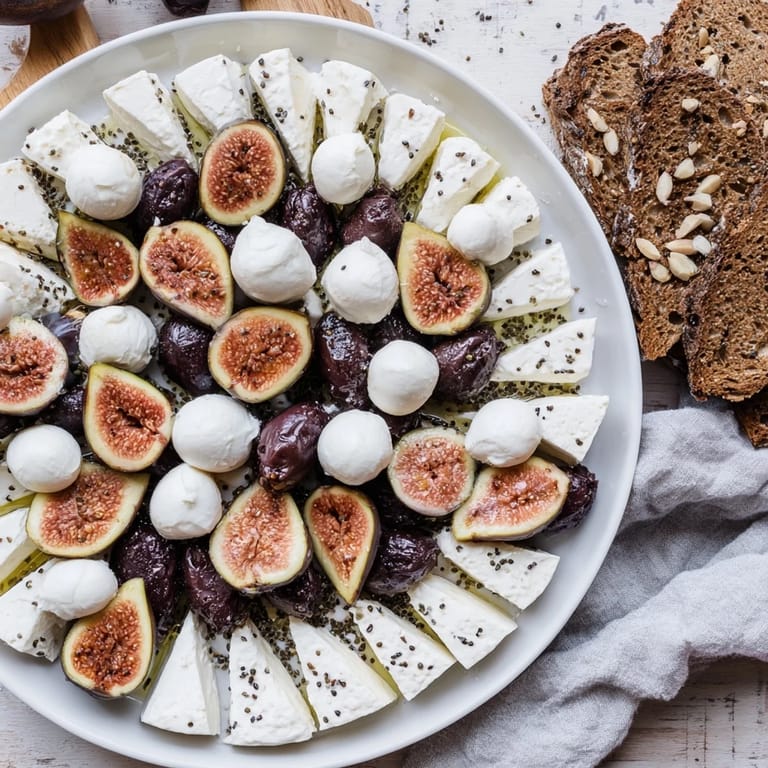
- Now come the olives and mozzarella balls. Place them in alternating lines or circles across the bread. This is where it becomes meditative—each placement is a small decision about balance and contrast. I like to step back every few placements and just look.
- Layer in the white mozzarella:
- Slice your large mozzarella ball into thin, elegant rounds. Arrange these in geometric shapes among the bread and olives. They should feel like brushstrokes completing a painting.
- Add texture with seeds:
- Sprinkle black sesame seeds over the white mozzarella—you'll see them catch the light. Then scatter white sesame seeds over the rye bread. This is where the platter goes from nice to memorable. The seeds add dimension and that promise of flavor.
- Honor the figs if you're using them:
- If you have black mission figs, halve them and place them strategically. They're small jewels of sweetness and visual interest. Don't overthink their placement; just find pockets where they feel balanced.
- Cluster your almonds:
- Arrange the blanched almonds in minimalist clusters or gentle lines. Think of them as punctuation marks. Their pale color against the bread and olives creates that crisp contrast we're after.
- Finish with oil and seasoning:
- Drizzle your good olive oil across the cheese and bread. Watch how it glistens and brings everything to life. Finish with flaky sea salt. Taste a little first if you can—you want enough to enhance, not overpower.
- The vanilla moment:
- Using the tip of a small knife, gently scrape vanilla seeds from the pod. Dot them artistically across a few mozzarella slices. This is the secret move—it adds elegance and an aromatic sophistication that makes people say, 'What is that?'
- Serve with intention:
- Serve immediately if you want maximum crispness, or cover and refrigerate for up to an hour. Either way, when you present this, present it with confidence. You've made something beautiful.
 Pin It
 There's something about a black and white platter that transcends being just food. It's a statement, a mood, almost a philosophy about elegance. I've watched it quiet rooms and start conversations in equal measure, and that's when I knew this wasn't just a recipe—it was a way to say something without words.
The Art of Geometric Arrangement
When I first started making these platters, I thought the geometry had to be mathematically perfect. I've since learned that it's the intention of the pattern that matters more than its precision. Whether you create strict rows, flowing diagonals, or concentric circles, what counts is that the eye can follow the black and white rhythm. I like to imagine the platter as a conversation between two colors, each taking turns leading the other across the surface. If you're nervous, sketch lightly on the platter with a toothpick first—no one will know, and it takes the pressure off.
Pairing and Presentation
This platter is a study in restraint, which means it pairs beautifully with wines that respect that aesthetic. A crisp Sauvignon Blanc, a dry sparkling wine, or even a light Pinot Grigio will complement without competing. The beauty of serving this is that you're not just offering food—you're offering a visual experience. I always make sure the platter is at eye level when guests arrive, maybe on a side table with soft lighting. Let people admire it for a moment before they dive in. That pause before the first bite? That's the whole point.
Variations and Flexibility
The skeleton of this recipe is flexible enough to adapt to what you have on hand. I've added thinly sliced daikon radish for extra white contrast, included black garlic for deeper flavor, and once even added thin slices of black beet for more visual drama. If gluten-free dark bread is what you need, it works beautifully. The vanilla bean can be omitted entirely if you prefer a purely savory experience, and honestly, both versions are stunning. The magic isn't in following this exactly—it's in understanding that you're building a visual story with just two colors.
- Try black garlic alongside the olives for an earthy, umami depth
- Thin slices of white radish add a peppery crunch that changes the texture story
- Fresh herbs like tiny basil leaves can peek through if you want a whisper of green (though that breaks the black and white rule, and sometimes breaking your own rules is exactly right)
 Pin It
 A black and white platter is proof that sophistication isn't about complexity—it's about intention. Serve this with confidence, knowing that what you've created is both simple and unforgettable.
Questions About This Recipe
- → What are key black elements in this platter?
Pitted black olives, dark rye bread, black sesame seeds, and optionally black mission figs provide the rich black tones and textures.
- → How is the white contrast achieved?
Fresh mozzarella balls and slices, white sesame seeds, and blanched almonds establish bright white accents with smooth and crunchy textures.
- → What is the purpose of the geometric arrangement?
The geometric cuts and placement enhance the visual appeal by creating crisp, contrasting patterns that highlight the black and white elements.
- → Are there any flavor enhancers included?
Extra virgin olive oil, flaky sea salt, freshly cracked black pepper, and scraped vanilla bean seeds add aroma, seasoning, and depth without overwhelming the platter.
- → Can this platter be adapted for gluten-free guests?
Yes, by substituting gluten-free dark bread, the platter remains suitable without compromising its visual and flavor balance.