 Pin It
 My uncle's kitchen in New Orleans smelled like this dish every Sunday—not the tourist-trap version, but the real thing, where the meat hits hot oil and the whole house fills with that sharp, savory cloud. He'd let me stand on a stool and watch the vegetables soften into the fat, teaching me that dirty rice wasn't about being messy; it was about building flavor in layers, each ingredient earning its place. Years later, I made it for friends who'd never had proper Cajun food, and watching their faces when they tasted that first spoonful told me everything about why this dish has survived generations.
I remember making this for a potluck in January when everyone was tired of heavy holiday meals, and this showed up still steaming in a cast iron Dutch oven—the kind of practical, nourishing food that made people ask for the recipe three times in one evening. There's something about a one-pot dish that smells like the South that breaks through small talk and makes people actually want to sit down together.
Ingredients
- Ground pork, 225 g (½ lb): This is the foundation—it renders fat that carries the spices through the whole dish, and it browns faster than beef if you need to move quickly.
- Ground beef or chicken livers, 225 g (½ lb): Livers are traditional and give you that deep, almost iron-rich flavor that makes people say they can taste the history in it; beef is the easier shortcut if you're not ready for that step.
- Onion, 1 medium, finely chopped: The sweeter it gets, the more it balances the heat and spice, so don't rush the chopping—uniformity matters here.
- Green bell pepper, 1, diced: It softens into the oil and adds a subtle vegetal sweetness that keeps the dish from being one-note.
- Celery stalks, 2, diced: This is the holy trinity with onion and pepper—they cook down almost to nothing and leave behind pure umami.
- Garlic cloves, 3, minced: Add it raw and it's sharp; add it to the fat and it becomes sweet and almost caramelized, which is what you want here.
- Spring onions, 2, sliced: Keep these separate and raw for garnish—they add a bright, fresh bite that cuts through all that richness at the end.
- Long-grain white rice, 200 g (1 cup), rinsed: Rinsing removes the starch so the grains stay separate instead of clumping, and toasting it before the broth goes in makes it taste nuttier.
- Chicken broth, 480 ml (2 cups): Use homemade if you have it; the deeper the broth, the deeper the dish.
- Vegetable oil, 2 tbsp: This is your heat conductor—it needs to be a neutral oil that won't smoke and distract from the spice flavors.
- Cajun seasoning, 1½ tsp: Make your own if you want control—paprika, cayenne, garlic powder, onion powder, thyme, and salt combined—or use store-bought and adjust the cayenne to your heat preference.
- Dried thyme, ½ tsp: It adds an earthy backbone that keeps the spices grounded instead of just hot.
- Smoked paprika, ½ tsp: This is what gives it that slightly charred, deep flavor without actual charring.
- Salt, ½ tsp, plus more to taste: Taste as you go because the broth adds salt too, and oversalting happens faster than you'd think.
- Black pepper, ¼ tsp: Fresh ground makes a difference—pre-ground tastes dusty next to the fresher spices.
- Cayenne pepper, ¼ tsp, optional: This is your heat control—add it if you like the burn, or leave it out and let the Cajun seasoning carry the warmth.
Tired of Takeout? 🥡
Get 10 meals you can make faster than delivery arrives. Seriously.
One email. No spam. Unsubscribe anytime.
Instructions
- Get your oil hot and brown the meat:
- Heat the oil in your skillet over medium-high heat until it shimmers and just barely smokes—that's when you know it's ready. Add the pork and beef (or livers if you're going traditional) and break it up with a wooden spoon as it cooks, letting the pieces get golden and caramelized all over, about 6 to 7 minutes. Don't stir constantly; let it sit for a minute or two so the meat actually browns instead of just turning gray.
- Build flavor with the vegetables:
- Once the meat is cooked through, add the onion, bell pepper, celery, and garlic all at once, and let them sizzle in that rendered fat for about 5 minutes until they're soft and starting to release their sweetness. You should smell the vegetables hitting the oil—that's when you know they're doing their job.
- Toast the spices with the vegetables:
- Stir in the Cajun seasoning, thyme, smoked paprika, salt, black pepper, and cayenne pepper, mixing everything together so the spices coat the meat and vegetables and start to bloom in the heat. This takes maybe 30 seconds, but it's the moment that transforms raw spices into something complex and alive.
- Toast the rice and build the base:
- Add your rinsed rice and stir it into the spiced meat and vegetables, then let it sit undisturbed for 1 to 2 minutes so the grains toast slightly and get nutty. The rice should look almost glossy as it absorbs the flavored oil around it.
- Add liquid and let it cook gently:
- Pour in the chicken broth and bring the whole thing to a boil—you'll see it bubble up and smell the steam carrying all those flavors—then immediately reduce the heat to low, cover with a lid, and let it simmer quietly for 20 to 22 minutes until the rice is tender and the liquid is absorbed. Don't peek constantly; trust the process and only lift the lid to check near the end if you're worried.
- Rest and fluff:
- Take the pot off the heat and let it sit, still covered, for 5 minutes so the rice finishes cooking gently in its own steam. Then use a fork to fluff it gently, breaking up any clumps and making sure the spiced meat is distributed evenly through the rice.
- Finish and serve:
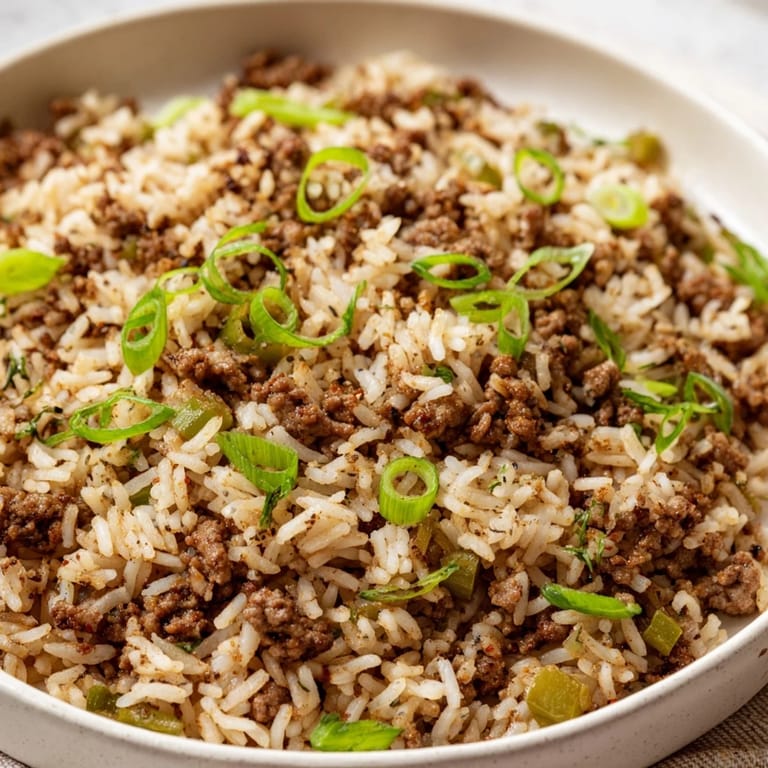
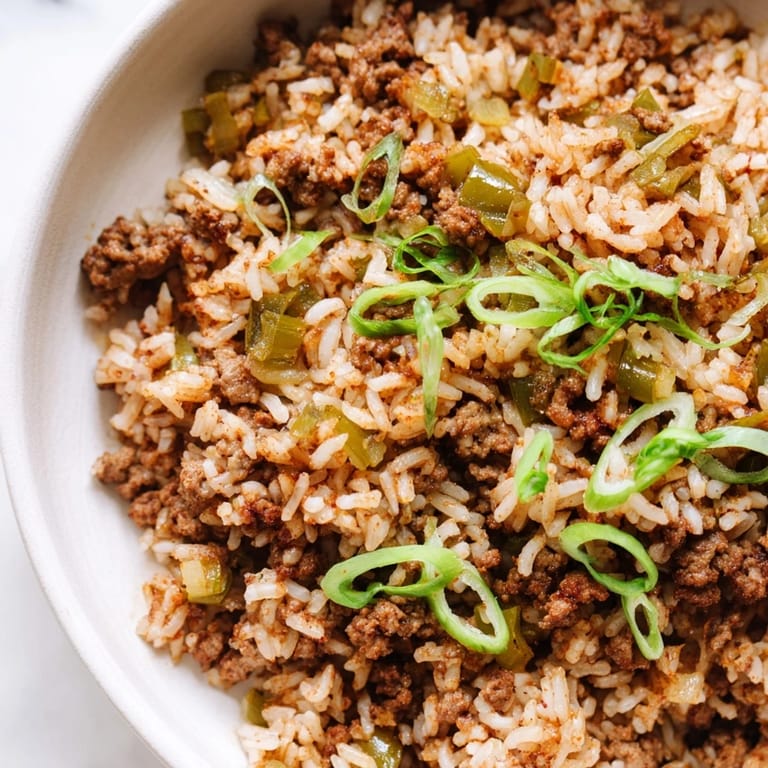
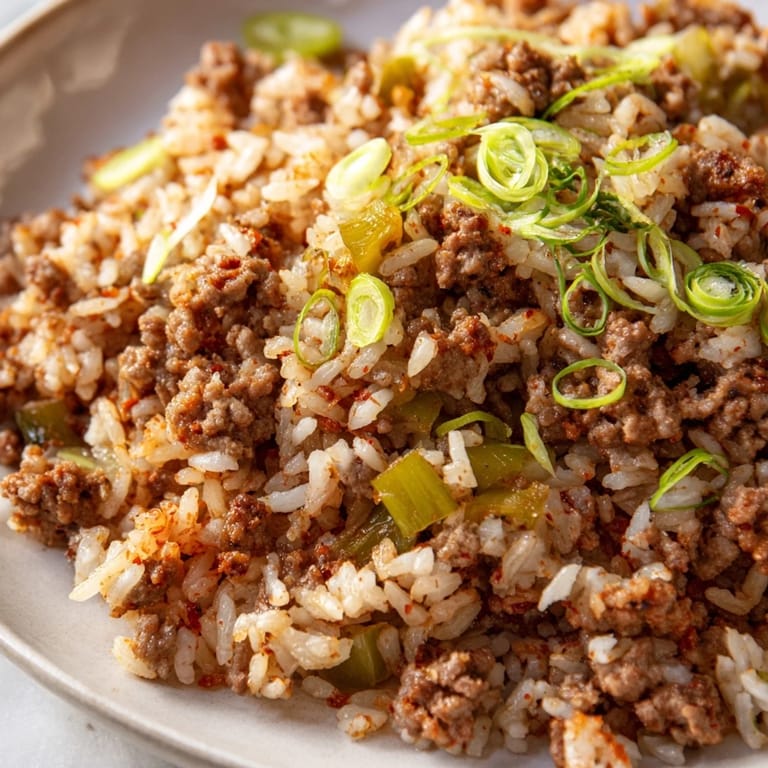
- Scatter the fresh sliced spring onions over the top and serve it right from the pot if you can, so people see all those colors and smell that steam rising. This is the kind of dish that belongs on the table still warm, shared family-style.
 Pin It
 There was a moment when a friend took a second serving without even putting her plate down, and she said, "This tastes like somewhere," which is exactly what good food does—it tastes like a place, a time, a reason to gather. That's what dirty rice is for me: it's a edible passport to someone's kitchen, and once you make it right, it becomes yours too.
The Story Behind Dirty Rice
Dirty rice comes from Louisiana kitchens where nothing went to waste and flavor was built from what you had on hand. The "dirty" part isn't an insult—it's the meat, the spices, and the vegetables cooking down so thoroughly with the rice that it all becomes one color, one taste, one honest thing. It was born out of necessity and tradition, which are usually the same thing in great cooking.
Making It Your Own
Some cooks add andouille sausage instead of ground meat for a smokier version; some add chopped liver for a deeper flavor that catches people off guard in the best way; and some swear by a splash of hot sauce mixed right in instead of served on the side. The truth is that dirty rice is flexible enough to adapt to what you have and confident enough that it still tastes like itself, so experiment without fear. Just remember that the holy trinity of onion, pepper, and celery is non-negotiable, and the spices should be bold enough that you taste them in every spoonful, not just somewhere hidden in the background.
Serving and Pairing Ideas
Dirty rice works as a standalone main course or as a side to grilled chicken or fried fish, and it's equally at home on a Tuesday night or at a weekend gathering where people linger at the table talking about what they're eating. It reheats beautifully—just add a splash of broth to loosen it up and warm it gently so the rice doesn't dry out—and tastes even better the next day when the flavors have had time to settle into each other.
- Serve it with fresh lime wedges on the side for brightness and a slight acidic cut through the richness.
- A cold beer or crisp white wine pairs perfectly, especially if you're adding extra heat with cayenne.
- Hot sauce on the table is not optional—let people adjust their own heat level and make it personal.
 Pin It
 This is the kind of food that doesn't need apologies or explanation—it shows up in your kitchen, fills your house with good smells, and makes everyone at the table want to stay a little longer. Make it once, and it becomes part of your repertoire; make it twice, and it becomes part of who you are as a cook.
Questions About This Recipe
- → What types of meat can be used?
Ground pork and beef are common, with chicken livers as a traditional alternative for deeper flavor.
- → How is the rice cooked in this dish?
Rice is toasted briefly with the spices and ingredients, then simmered in chicken broth until tender and fluffy.
- → What spices provide the Cajun flavor?
The dish uses a blend including Cajun seasoning, smoked paprika, thyme, black pepper, and optional cayenne for heat.
- → Can this dish be made dairy-free?
Yes, this preparation contains no dairy ingredients, making it suitable for dairy-free diets.
- → What is a good garnish for serving?
Sliced spring onions add freshness and a mild bite that complements the rich flavors.
- → How long does the dish take to prepare?
The total time is about 50 minutes, including 15 minutes of preparation and 35 minutes of cooking.