 Pin It
 I'll never forget the evening I discovered that a cheese board could be more than just a collection of snacks—it could be a work of art. I was hosting my first proper dinner party, and while I fretted over the main course, my neighbor casually mentioned how she'd once arranged a platter in bold color blocks instead of the usual scattered approach. Something clicked. I spent the next hour hunting down deep crimsons and brilliant golds from my pantry, and when guests arrived, the first thing they did wasn't head to the table—they gathered around that platter. That's when I realized: food that's beautiful enough to admire before eating tastes even better.
Years later, I made this platter for my sister's engagement celebration, and I watched her face light up when she saw it. She called it "edible jewelry," and by the end of the evening, not a single piece remained. That's when I knew this wasn't just a recipe—it was a moment maker.
Ingredients
- Fresh sweet cherries: These are the jewels of your crimson side—pitting them yourself takes just minutes and ensures they're perfectly tender. Don't skip the pitting; biting into a pit is an unwelcome surprise.
- Wine-soaked cheese like Drunken Goat or Merlot BellaVitano: This is where the magic starts. The wine infusion gives each slice a subtle complexity that regular cheese simply can't match. Slice it thin so guests can taste the nuance.
- Dried cranberries: Their tartness cuts through the richness beautifully and adds textural contrast to the softer fruits.
- Pomegranate seeds: These bright jewels add a pop of juice and bitterness that keeps the palate interesting. Buy them already seeded if you can—it saves time and mess.
- Roasted yellow bell peppers: The roasting step transforms them from crisp to silky, making them feel luxurious. The charred edges add depth to their natural sweetness.
- Aged cheddar or gouda: Go for something with character—a well-aged cheese will have a subtle crystalline bite that elevates the whole board.
- Gold leaf–topped crackers: These are your sparkle. If you can't find them pre-topped, water crackers work beautifully and let the other flavors shine through.
- Golden raisins: Their honeyed sweetness bridges the gap between the fruit and cheese sections, making every combination work.
- Yellow cherry tomatoes: These should be fresh and ripe, not mealy. They add a bright, slightly acidic element that's essential.
Tired of Takeout? 🥡
Get 10 meals you can make faster than delivery arrives. Seriously.
One email. No spam. Unsubscribe anytime.
Instructions
- Roast your yellow peppers until they're blistered and soft:
- Preheat your oven to 220°C (425°F). Place whole yellow bell peppers on a baking sheet and roast them for 10–12 minutes, turning occasionally, until the skins are deeply charred and blistered all over. The smell will tell you when they're ready—deep and slightly sweet. Transfer them to a bowl, cover with plastic wrap, and let them steam for 5 minutes. This makes peeling so much easier. Once cooled slightly, gently rub off the papery skins under cool running water if needed. Remove the seeds and slice into strips. Drizzle with a small amount of olive oil and a crack of black pepper. Let them cool completely before arranging.
- Add gold leaf to your crackers if you're using it:
- If you've chosen gold leaf crackers or plan to add it yourself, do this carefully now. Gold leaf is delicate and will stick to anything damp, so make sure your crackers are completely dry. Follow the package instructions—usually it's as simple as pressing a tiny square onto the cracker surface. A soft touch is everything here.
- Create your crimson block with intention:
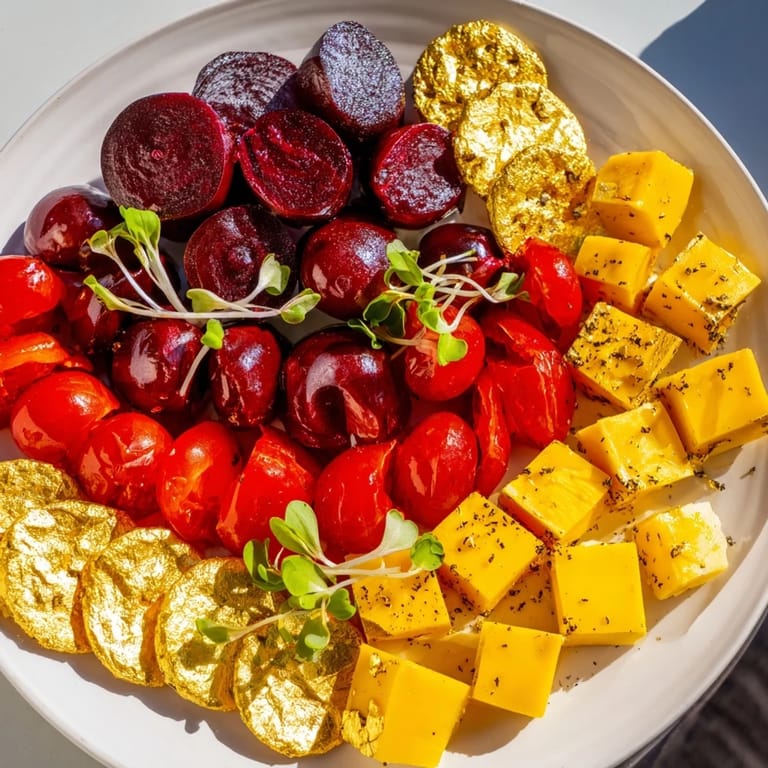
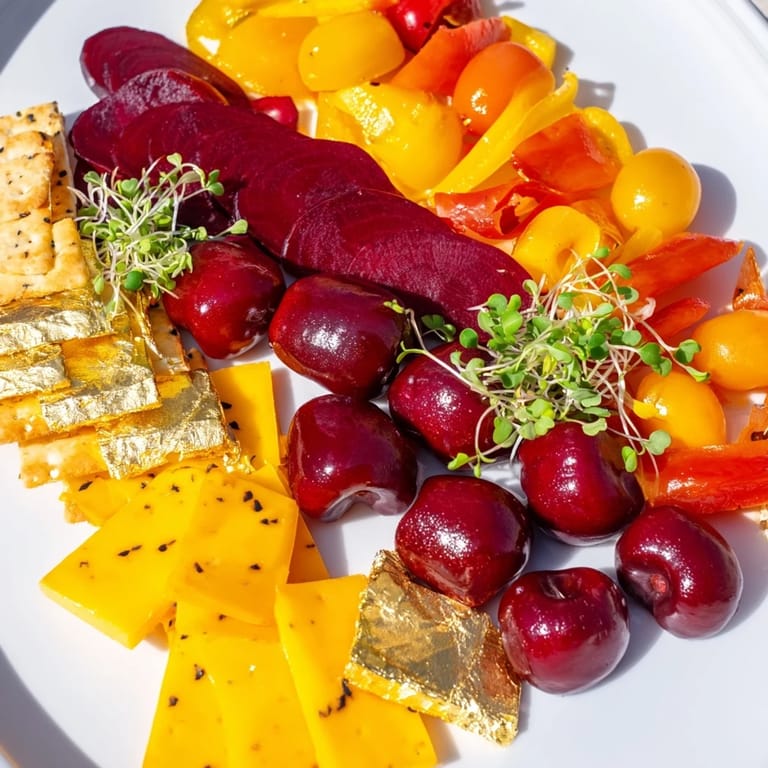
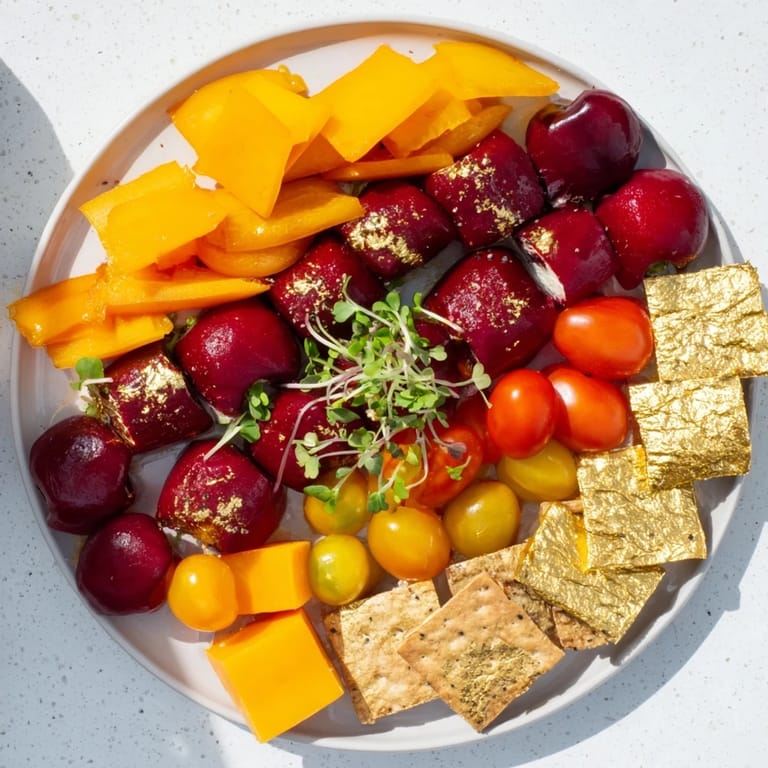
- On one half of a large platter or board, arrange all your deep red elements in a tight, organized block. Start with the pitted cherries, then tuck in slices of wine-soaked cheese. Scatter the dried cranberries, halved grapes, and pomegranate seeds around them. Think of it like creating a jeweled rectangle—each element should nestle close to its neighbors. The tightness of the arrangement is what makes this visually powerful.
- Build your contrasting gold block opposite the reds:
- On the other half of the platter, create an equally organized block of golds. Layer your cooled roasted yellow pepper strips, cube your aged cheese, arrange the gold-topped crackers, scatter the golden raisins, and halve your yellow cherry tomatoes. The contrast between the two blocks should be dramatic enough that it catches someone's eye from across the room.
- Finish with fresh garnish for softness:
- Just before serving, scatter fresh basil leaves or delicate microgreens across both sections. These add a whisper of greenery that makes the colors feel even more vibrant and introduces a fresh, herbaceous note that bridges everything together.
- Serve and encourage mixing:
- Present the platter with a smile and invite guests to break the pattern by combining elements from both sides. That's when the real flavor discoveries happen—a cherry with aged cheddar, a roasted pepper strip wrapped around wine-soaked cheese. Let them play.
 Pin It
 The most meaningful moment came when I watched a picky eater—someone I'd known for years who "didn't really like cheese boards"—try this one. She kept reaching for "just one more" combination, her hesitation melting away as soon as she tasted how the wine-soaked cheese played with the roasted peppers. That's when I understood that presentation isn't superficial—it gives us permission to be curious.
The Story Behind Color-Blocked Platters
The idea of arranging food in bold color blocks is rooted in both art and culture. It forces us to see ingredients as individual pieces of a larger composition, rather than just snacks thrown together. When I learned this approach, it changed how I thought about hospitality. It's not about spending more money or using rarer ingredients—it's about respecting what you have enough to arrange it with intention. The crimsons and golds here represent opposite ends of the autumn and holiday spectrum, and putting them directly against each other creates visual tension that makes every color pop. This technique works with any color palette: deep purples against bright limes, rich chocolates against creamy whites. Once you see it, you can't unsee it.
Roasting Peppers: The Technique That Changes Everything
I used to think roasting peppers was unnecessarily fussy until a chef friend showed me the difference between a raw and roasted pepper on the same board. The roasting concentrates the sugars and creates a silky, almost melting texture that raw peppers can't match. But there's technique involved. The char on the outside might look like disaster, but it's actually protection for the tender flesh underneath. The steam bath afterward is crucial—it loosens the skin without cooking the pepper further, so you're left with something that's soft enough to melt on your tongue but still has its shape. I've found that letting them cool on their own time, rather than rushing them under cold water, results in a better texture. The patience pays off when a guest bites into one and gets that unexpected tenderness.
Wine-Soaked Cheese and Why It's Worth the Hunt
The first time I tasted Drunken Goat cheese, I was skeptical. Wine and cheese together sounded gimmicky to me. But then I realized: this isn't a novelty. Throughout history, winemakers and cheese makers have lived side by side, and certain cheeses have naturally been aged near wine or with wine vapors around them. Modern versions are simply honoring that tradition more deliberately. The wine seeps into the cheese over time, creating layers of flavor that unfold as you chew. It adds a subtle sophistication that guests notice without always being able to name what they're tasting. Look for versions that use wines you'd actually drink—a Merlot BellaVitano, for instance, should taste like the wine is actually present, not like it's a label gimmick.
- If you can't find wine-soaked cheese, a good aged Gruyère or smoked gouda will still create an interesting contrast with the sweet fruits.
- Slice your wine-soaked cheese just before serving to keep the edges from drying out.
- Trust your palate—if it tastes too wine-forward, it's probably been aged longer than you might prefer.
 Pin It
 Every time I make this platter, I'm reminded that the best hospitality often has nothing to do with complexity and everything to do with thoughtfulness. This is food that says, "I wanted to make something beautiful just for you."
Questions About This Recipe
- → How do you prepare the roasted yellow peppers?
Roast whole yellow bell peppers at 220°C (425°F) for 10–12 minutes until skins are blistered. Then steam in a covered bowl for 5 minutes, peel off skins, remove seeds, slice, drizzle with olive oil, and season with black pepper.
- → What cheeses complement the deep red and gold flavors?
Wine-soaked cheeses like Drunken Goat or Merlot BellaVitano pair well with aged cheddars or gouda, enhancing both color and taste contrasts.
- → Can the gold leaf be substituted?
Yes, turmeric or saffron threads can be used as colorful alternatives if edible gold leaf is unavailable.
- → How should the platter be arranged for best effect?
Arrange the deep red ingredients tightly on one side and the bright gold components opposite, creating distinct color blocks to maximize visual impact.
- → Are there vegetarian or vegan considerations?
The platter is vegetarian by default. For a vegan version, use plant-based cheeses and substitute crackers accordingly.