 Pin It
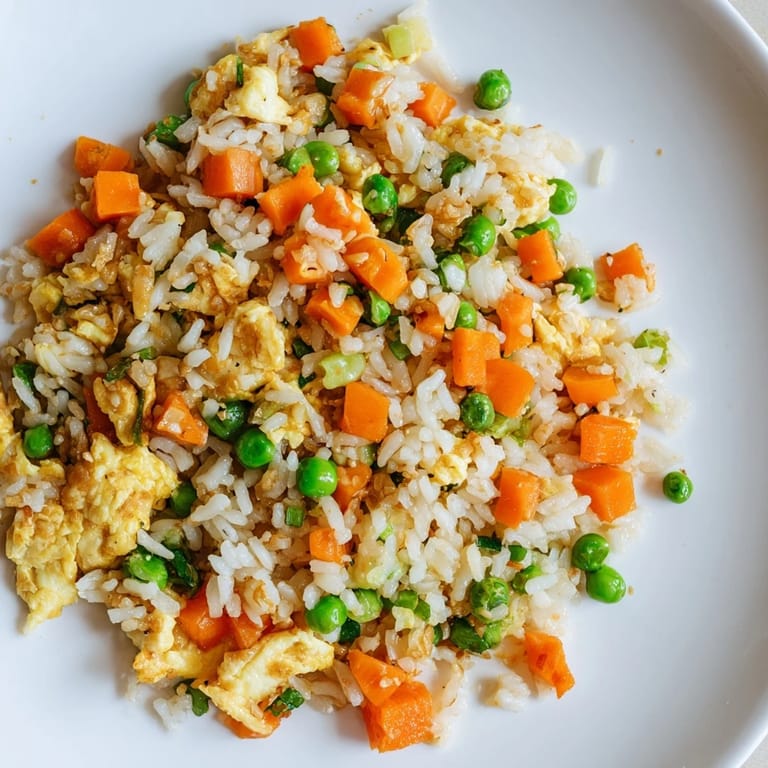
 There's something almost meditative about the sound of rice hitting a hot wok—that first sharp sizzle that tells you everything's about to come together. I discovered egg fried rice on a random Tuesday night when I had leftover rice, two eggs, and about fifteen minutes before I needed to eat. What started as a desperate kitchen improvisation became the dish I now make on autopilot whenever I need something comforting and quick, something that tastes way better than it has any right to given how simple it is.
I made this for my roommate once when she came home stressed about work, and I remember how she stopped mid-sentence about her day just to say the kitchen smelled incredible. It wasn't fancy or fussy—just the smell of sesame oil and soy sauce hitting hot rice—but somehow that simplicity was exactly what she needed. That's when I realized this recipe wasn't just about feeding yourself; it was about creating that moment where someone walks in and feels instantly better.
Ingredients
- Cooked leftover rice (2 cups, day-old and cold): Day-old rice is essential because fresh rice gets mushy—the grains are firmer and stay separate when stir-fried, giving you that desirable texture instead of a clumpy mess.
- Large eggs (2): Beat them in a bowl before cooking so they distribute evenly; you're looking for light, fluffy scrambled pieces, not an omelet.
- Diced carrots (1/2 cup): The slight sweetness balances the salty soy sauce, and they add a bright pop of color and crunch.
- Frozen peas, thawed (1/2 cup): No need to cook them separately; they warm through in the pan and add sweetness and texture.
- Chopped scallions (1/4 cup): Split these into two portions—half goes in during cooking for flavor, half goes on at the end for freshness and a mild onion bite.
- Diced bell pepper (1/2 cup, optional): This is my personal addition for extra crunch and sweetness; red or yellow peppers are slightly sweeter than green.
- Soy sauce (2 tablespoons): Use low-sodium if you want control over salt content, and remember that sesame oil will add richness, so you don't need to oversalt.
- Sesame oil (1 teaspoon): Just a small amount goes a long way—it's potent and adding too much turns the dish muddy instead of fragrant.
- Ground white or black pepper (1/4 teaspoon): White pepper blends more invisibly into the dish; black pepper gives you visible specks and a slightly sharper bite.
- Vegetable oil (2 tablespoons): Use something neutral like canola or peanut oil; the eggs cook in the first tablespoon, then you add the rest for vegetables and rice.
- Salt to taste: Hold off on this until the end since soy sauce already carries salt, and you can adjust once you taste it.
Tired of Takeout? 🥡
Get 10 meals you can make faster than delivery arrives. Seriously.
One email. No spam. Unsubscribe anytime.
Instructions
- Get everything ready:
- Dice your carrots and peppers into small, even pieces so they cook at the same speed. Thaw the peas if they're frozen, beat the eggs in a bowl until they're pale and slightly frothy, and make sure your rice is cold and broken up so no clumps are hiding in there.
- Cook the eggs first:
- Heat 1 tablespoon of oil in a large skillet or wok over medium-high heat until it shimmers. Pour in the beaten eggs and let them sit for about 10 seconds before scrambling—you want soft, slightly undercooked-looking curds because they'll finish cooking when everything comes together. Transfer them to a plate.
- Sauté the vegetables:
- Add the remaining 1 tablespoon of oil to the same pan. Toss in the carrots and bell pepper, stirring constantly for about 2 minutes until they soften slightly but still have some crunch. Then add the thawed peas and half of the scallions, cooking for just 1 more minute.
- Add the rice and heat it through:
- Pour in the cold rice and use your spatula to break up any clumps, stirring constantly so every grain gets coated with oil and heats evenly. This takes about 2 to 3 minutes—you're listening for that satisfying sizzle and looking for the rice to turn slightly translucent and glossy.
- Season and finish:
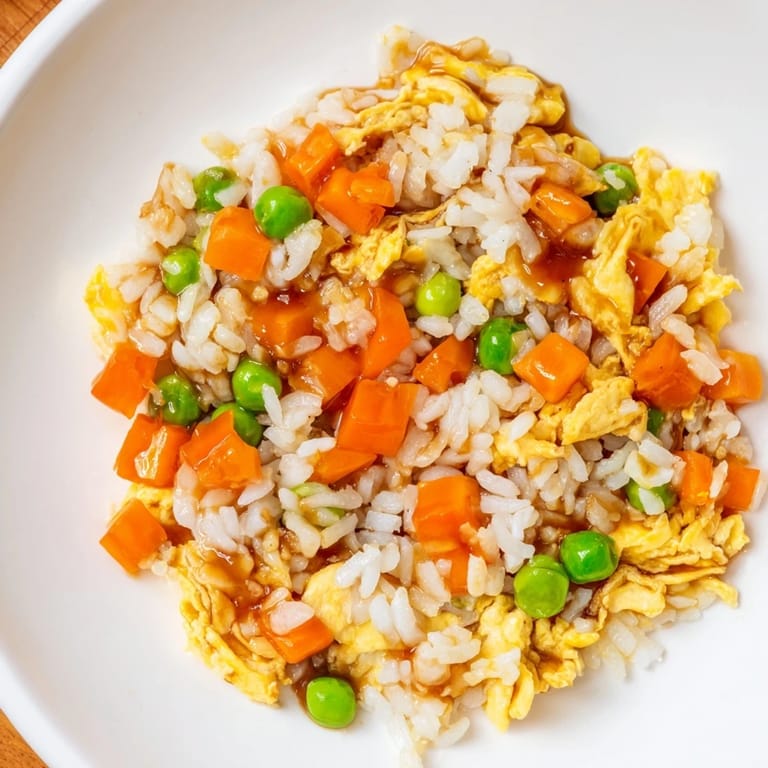
- Drizzle the soy sauce and sesame oil over everything while tossing constantly—the heat releases their aromas and distributes them evenly. Slide the scrambled eggs back in, toss everything together for about 1 minute, then taste and adjust pepper and salt as needed. If it tastes flat, you probably need salt or a tiny splash more sesame oil.
- Serve immediately:
- Divide between bowls or plates and top with the remaining fresh scallions. This dish is best eaten right away while the rice is still hot and has that slight char from the wok.
 Pin It
 There was a morning I made this for my partner before a long drive, and we ate it standing up in the kitchen, passing the pan back and forth with a fork. I think that's when I understood why this dish keeps showing up in my cooking rotation—it's not trying to impress anyone, it just quietly fixes things when you need it to.
The Rice Question
I learned the hard way that rice is the foundation here, not just a vehicle for other flavors. The first time I made fried rice with fresh rice, I got a sad, gluey mess instead of separate, glistening grains. Now I plan ahead and save my leftover rice from dinner the night before, keeping it in the fridge uncovered so moisture can escape and the grains stay distinct. If you're starting from scratch, spread hot rice on a baking sheet to cool quickly, then refrigerate it for at least a few hours.
Why Cook the Eggs Separately
Scrambling the eggs first and setting them aside seems like an extra step, but it's the difference between getting tender, delicate egg pieces and rubbery, overcooked scramble. When you cook them alone in a hot pan, you control exactly how soft they are. Then, by adding them back near the end, they warm through gently without falling apart, and you get those satisfying little pockets of egg distributed throughout instead of a homogenous mix. I tried cooking everything together once and ended up with tough egg shreds; now I'm religious about this order.
Vegetables and Flavor Pairing
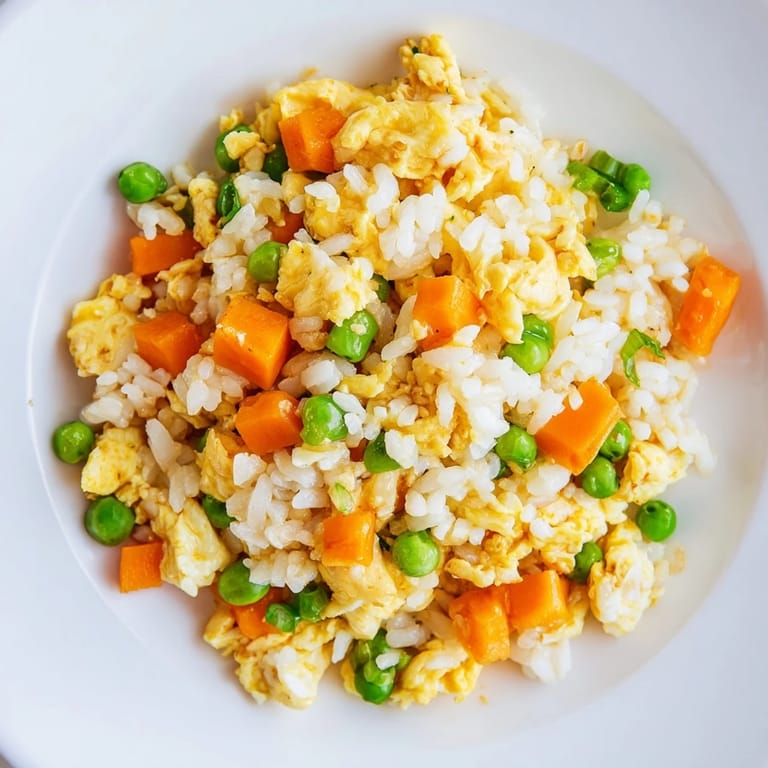
The combination of carrots and peas is classic for a reason—the sweetness of the peas plays beautifully against the salty soy sauce, while carrots add a subtle earthiness. But this is also the most flexible part of the recipe, and I swap vegetables depending on what's in my fridge or what season it is. Corn in summer, broccoli in fall, snap peas in spring—as long as you keep the vegetable volume roughly the same, you'll get a balanced dish. The bell pepper is my secret weapon though; I add it not because tradition demands it, but because that slight sweetness makes the whole thing feel less utilitarian and more intentional.
- Cut vegetables into small, consistent pieces so they cook evenly and you get pleasant bites throughout.
- Frozen vegetables work beautifully here—thaw them first so you're not introducing excess water into the hot pan.
- Don't skip the scallions at the very end; the fresh bite keeps everything from tasting one-note.
 Pin It
 This recipe lives in that sweet spot where it's humble enough to make on a Tuesday night but satisfying enough to make you feel like you actually cooked something. That's the magic of it.
Questions About This Recipe
- → Can I use freshly cooked rice?
For best texture, use day-old cold rice to prevent clumping and achieve the ideal fried rice consistency.
- → What vegetables work well in this dish?
Carrots, peas, scallions, and bell peppers are great choices; you can also add snap peas or broccoli.
- → How can I add more protein to this meal?
Include cooked chicken, shrimp, or tofu to enhance the protein content and make it more filling.
- → Is sesame oil necessary?
Sesame oil adds a nutty aroma and flavor, but you can omit it or substitute with another oil if preferred.
- → What seasoning alternatives can I use?
Try adding garlic or ginger during the vegetable sauté for extra depth of flavor.
- → How should I store leftovers?
Keep leftovers in an airtight container in the fridge and reheat thoroughly before serving.