 Pin It
 I discovered this salad on a sun-drenched afternoon at a farmers' market in County Cork, where a vibrant display of green produce caught my eye—cascading spinach, glowing kiwis, and emerald grapes arranged like a living landscape. The vendor mentioned how the Irish countryside inspired her presentation style, and I became obsessed with recreating that same sense of wonder on my own table. There's something magical about building a salad that's almost too beautiful to eat, yet tastes as incredible as it looks.
I'll never forget serving this at my sister's garden party last summer. She'd been stressed about entertaining, and when I brought out this salad, the whole table went quiet for a moment—not from hunger, but from the sheer beauty of it. Someone said it looked like an Irish landscape, and suddenly everyone was taking photos before we'd even tossed it together. That's when I realized this salad does something special: it brings people together before they even taste it.
Ingredients
- Baby spinach leaves (100 g): The foundation of your green landscape—choose fresh, tender leaves and wash them gently. They're delicate little things, so handle them like you're tucking in something precious.
- Arugula (50 g): Adds a peppery bite that wakes up your palate. Don't skip this; it's what gives the salad its edge.
- Cucumber (1 small, thinly sliced): Slice it thin so the pieces catch the light. This is where texture and visual layering really come into play.
- Green bell pepper (1, diced): Raw and crunchy, it brings both color variation and substance to every bite.
- Kiwis (2, peeled and sliced): These are your jewels—the bright green and tiny seeds catch everyone's eye. Peel them gently and slice them just before assembly so they don't weep.
- Green grapes (100 g, halved): Halving them shows off their natural beauty and makes them easier to distribute throughout. They add sweetness without being obvious about it.
- Green olives (50 g, pitted and sliced): These bring complexity and a subtle brine that ties everything together. Use good quality ones—this is not the place for the cheapest option.
- Fresh basil leaves (30 g): Tuck them in throughout like you're planting a garden. The aroma alone will make people hungry.
- Basil pesto (3 tbsp): This is your flavor anchor. Homemade is wonderful, but good store-bought pesto works beautifully here. Mix it with the oil and lemon juice to create a balanced dressing.
- Extra-virgin olive oil (2 tbsp): Quality matters here—you'll taste it. Choose something you love.
- Lemon juice (1 tbsp): Fresh lemon, not bottled. This brightens everything and prevents the greens from darkening.
- Salt and freshly ground black pepper: Taste as you go. Season the dressing, not the raw vegetables.
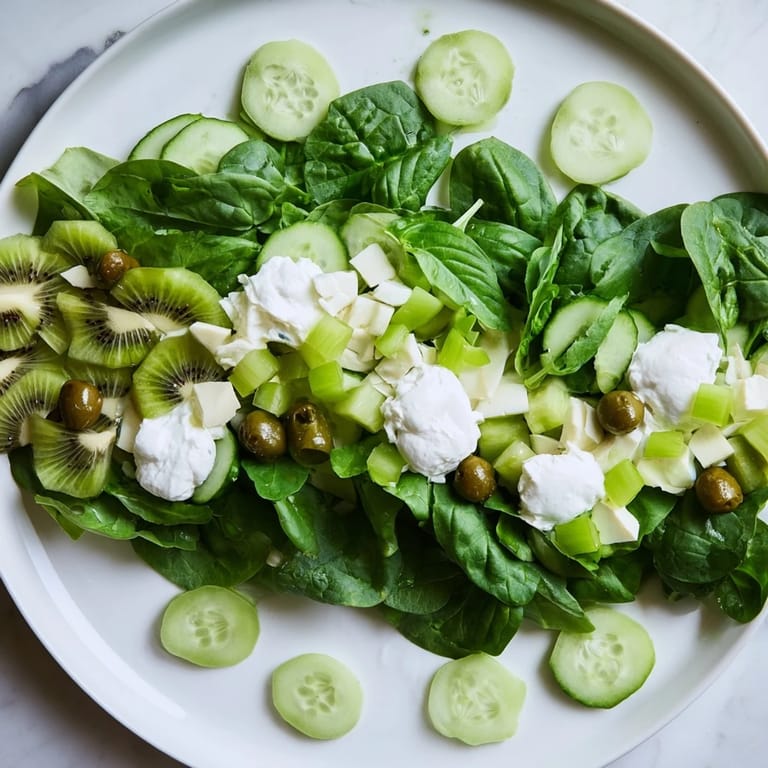
- Fresh mozzarella (100 g, torn or sliced): This is your river—use good quality mozzarella that's creamy and mild. Tear it by hand if possible; it creates more interesting shapes than cutting.
- Crème fraîche or Greek yogurt (1 tbsp, optional): If you want to deepen the river's creaminess, a few dots of this add richness without overwhelming the greens.
Tired of Takeout? 🥡
Get 10 meals you can make faster than delivery arrives. Seriously.
One email. No spam. Unsubscribe anytime.
Instructions
- Create Your Green Base:
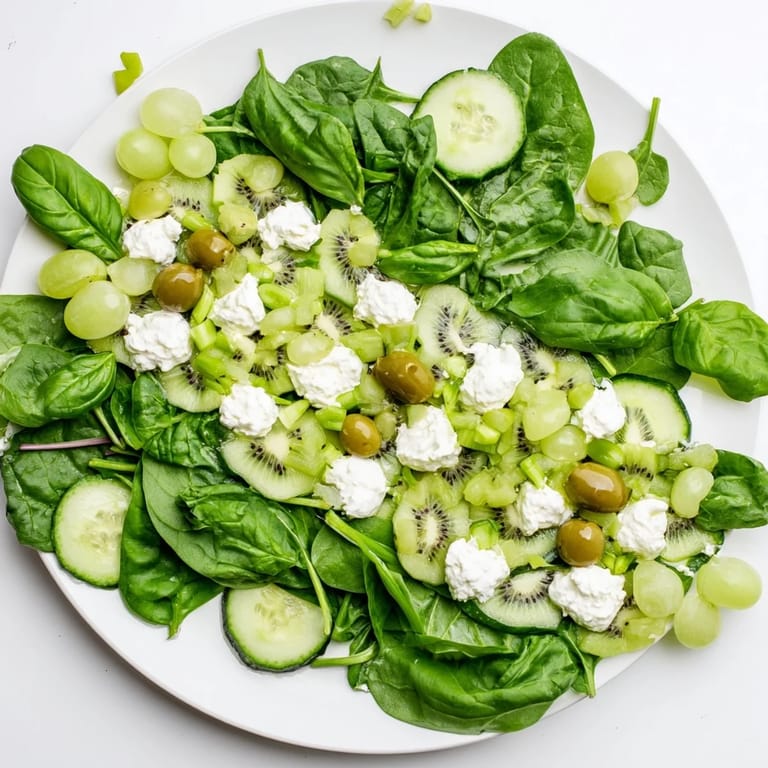
- Spread your spinach and arugula across a large serving platter as if you're painting a landscape. Don't be timid—use the whole platter. Let the leaves naturally fall and create shadows with their folds. This is your canvas.
- Layer Your Primary Greens:
- Now scatter the cucumber slices and diced bell pepper over the leafy base. Think about color distribution—you want pockets of bright green bell pepper contrasting with the pale cucumber. This is where the salad starts to come alive visually.
- Add Dimension with Fruit and Olives:
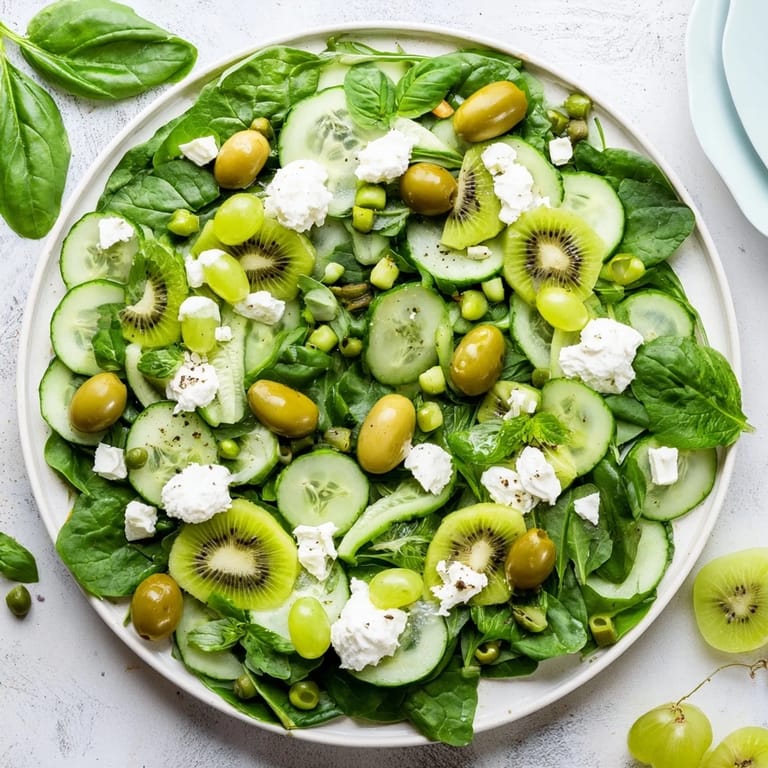
- Artistically place your kiwi slices, grape halves, and olive slices around the platter. Let some cluster together, leave other areas sparse. You're building depth and shadow—some green should be bright and forward, while other green recedes into the background. This visual play is what makes people stop and stare.
- Weave in the Basil:
- Tuck fresh basil leaves throughout the salad, letting them poke out at interesting angles. They're not just flavor—they're little green exclamation points that add life and aroma.
- Mix Your Liquid Gold:
- In a small bowl, whisk together your pesto, olive oil, and lemon juice. Taste it. Adjust the seasoning with salt and pepper. The dressing should taste bold enough to be interesting but not so strong it overpowers the vegetables.
- Dress the Landscape:
- Drizzle the dressing across the entire salad in a gentle, even motion. Some people make thin lines; others create pooling puddles. Both are beautiful. Let the dressing find its way into the crevices between the greens.
- Create the River:
- This is the moment of magic. Take your torn mozzarella and arrange it in a meandering line across the salad, like a river cutting through green fields. Let it curve and twist—perfection isn't the goal here; authenticity is. If you're using crème fraîche or yogurt, dot small spoonfuls along the river for extra creaminess.
- Serve with Ceremony:
- Bring it to the table immediately and let people admire it before you toss it together. Take a moment. Let them see what you've created before it all becomes salad. Then, with a salad server or two large spoons, gently toss everything together, making sure every plate gets some of that creamy mozzarella river.
 Pin It
 What I love most about this salad is the moment someone asks for the recipe and you have to explain that the true ingredient is presentation. It's not complicated cooking—it's considered cooking. It says, 'I slowed down for you. I made something beautiful because you're worth beautiful things.' That's a powerful message to share across a table.
Why This Salad Works All Year Round
Spring through early autumn, you can find every ingredient at farmers' markets at peak freshness. But don't abandon this salad in winter—greenhouse cucumbers, hothouse tomatoes, and stored greens work beautifully. In fact, winter preparation teaches you patience: you'll appreciate the quality of ingredients more when they're harder to find. The bright green feels like rebellion against gray winter days, and somehow that makes it taste even better.
Making It Your Own
This is a template more than a strict recipe. Once you understand the structure—layered greens, crunchy elements, fruit for sweetness, cheese for richness, dressing for unity—you can adapt it to what you have. Swap the kiwis for green apple slices in fall. Use pistachios or pumpkin seeds for crunch if you want earthiness. Add fresh herbs like mint or cilantro if you're drawn to them. The magic isn't in the exact ingredients; it's in the intention behind arranging them thoughtfully.
The Pairing Question Everyone Asks
This salad lives beautifully alongside almost anything, but it truly sings when paired with something equally fresh. A crisp Sauvignon Blanc is the obvious choice—the wine's acidity mirrors the lemon in your dressing. But citrusy sparkling water is equally wonderful if you're keeping it simple. For food pairing, I've served this before grilled fish, roasted chicken, and even as a light lunch with crusty bread and good cheese. It's the kind of salad that makes everything around it taste better.
- If serving this at a dinner party, prep all your ingredients earlier in the day and store them in separate containers. Assembly takes just five minutes.
- For a vegan version, use vegan pesto and plant-based mozzarella—the presentation works equally well.
- This salad is best served immediately, so be the last thing you prepare before guests sit down.
 Pin It
 This salad taught me that sometimes the most delicious thing you can offer people isn't the most complicated recipe, but the most thoughtful one. Feed people with beauty, and they'll remember it long after they've finished eating.
Questions About This Recipe
- → What greens are used in the salad?
Baby spinach and arugula form the fresh, leafy base for this salad, providing tenderness and peppery notes.
- → How is the creamy cheese incorporated?
Mozzarella is torn into small pieces and artfully arranged in a meandering line, creating a creamy river effect across the layers.
- → What ingredients add the green accents?
Slices of kiwi, green grapes, green olives, and fresh basil leaves scatter on top to build depth and shade variation.
- → How is the dressing prepared?
A blend of basil pesto, extra-virgin olive oil, lemon juice, salt, and pepper creates a flavorful dressing that’s drizzled evenly over the salad.
- → Can this be made vegan-friendly?
Yes, by using vegan pesto and substituting mozzarella with plant-based cheese alternatives.