 Pin It
 There's something about a bowl of chickpeas that feels like permission to eat well without fussing. I discovered this salad on a Tuesday afternoon when my fridge held little but the usual suspects, and I wanted something that wouldn't apologize for being simple. The tahini-lemon dressing—nutty, bright, unexpectedly luxurious—turned what could have been a sad desk lunch into something I found myself making again the next week, and the week after that.
My partner was skeptical about the tahini at first—too earthy, too different from what they expected. But one bite changed that. Now they request it specifically, and I've caught them making versions on days when I'm not home, which feels like the highest compliment a recipe can receive.
Ingredients
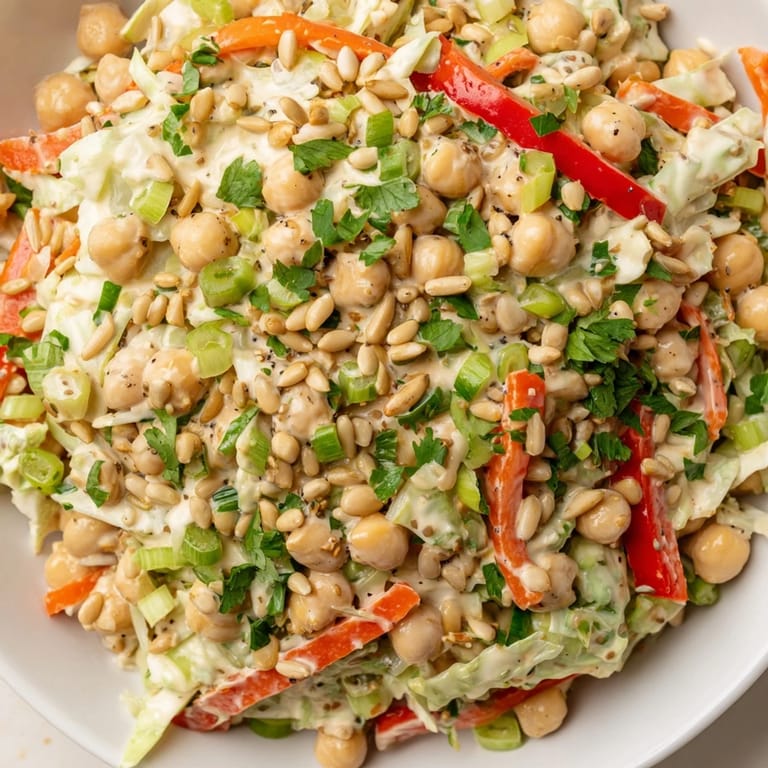
- Chickpeas (2 cups cooked): The backbone of everything, providing protein and fiber that actually keeps you satisfied. Canned works beautifully if you drain and rinse them well—this step matters more than you'd think.
- Green or red cabbage (2 cups shredded): Choose red if you want the salad to stay vibrant; it holds its crunch longer and the color feels celebratory.
- Carrots (1 cup shredded): The slight sweetness balances the tahini's earthiness in a way that feels intentional.
- Red bell pepper (1 small, diced): Adds a peppery snap and brightness that makes you taste every ingredient separately at first, then together.
- Green onions (2, thinly sliced): A quiet flavor that builds gradually and prevents the salad from feeling flat.
- Fresh parsley (1/4 cup chopped): Never skip this—it's what makes it taste fresh rather than assembled.
- Toasted sunflower seeds (2 tablespoons): Optional but transformative; they add texture and make you notice each bite.
- Tahini (3 tablespoons): The star of the dressing, creamy and complex when balanced correctly.
- Lemon juice (2 tablespoons, freshly squeezed): Fresh matters here; bottled tastes thin and one-dimensional by comparison.
- Extra-virgin olive oil (1 tablespoon): Adds richness without heaviness.
- Maple syrup or honey (1 tablespoon): Rounds out the tahini's intensity and brings subtle sweetness.
- Garlic (1 clove, minced): Just enough to whisper rather than shout.
- Cold water (2–3 tablespoons): The secret to a dressing that coats rather than glues; add gradually until it feels right.
- Ground cumin (1/2 teaspoon): The bridge between Mediterranean and Middle Eastern, warming without overwhelming.
- Salt and black pepper: Essential to taste; salads need more seasoning than you think.
Tired of Takeout? 🥡
Get 10 meals you can make faster than delivery arrives. Seriously.
One email. No spam. Unsubscribe anytime.
Instructions
- Gather and prep your vegetables:
- Set out your large bowl and have everything shredded, diced, and ready before you start mixing. This takes five minutes and makes the next steps feel smooth rather than frantic.
- Build the salad base:
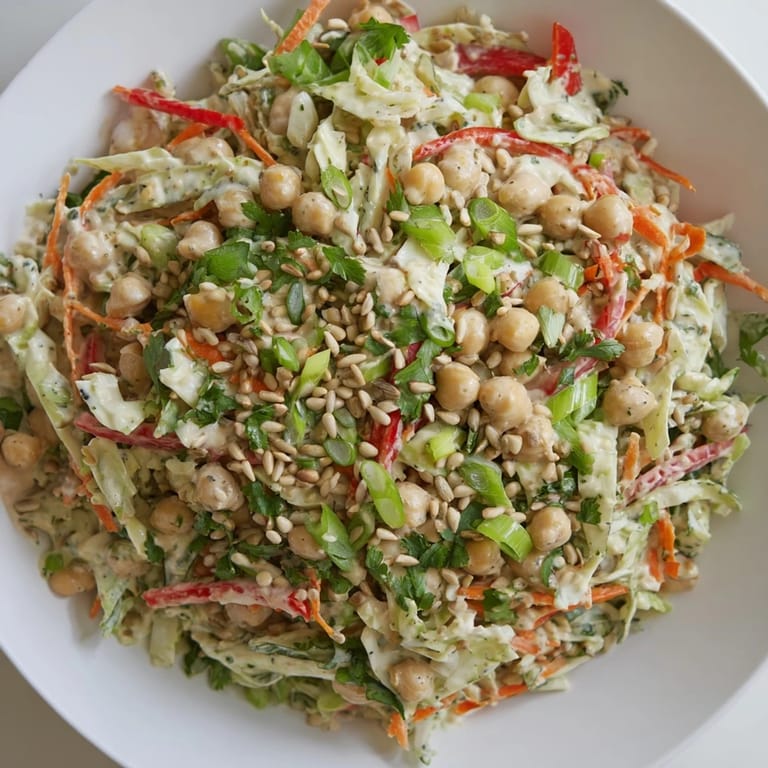
- Combine the chickpeas, cabbage, carrots, bell pepper, green onions, parsley, and sunflower seeds in your large bowl. The mixture should look generous and colorful.
- Make the dressing:
- In a small bowl, whisk the tahini with lemon juice, olive oil, maple syrup, and minced garlic until mostly combined. Add water a tablespoon at a time, whisking between each addition, until the dressing reaches a pourable consistency—thicker than vinaigrette but not thick enough to sit in clumps.
- Season the dressing:
- Whisk in the cumin, salt, and black pepper. Taste it on its own; it should taste bright and balanced, not too sharp or too mild.
- Bring everything together:
- Pour the dressing over the salad and toss thoroughly until every piece glistens with dressing. Don't be shy—this is where flavors begin to recognize each other.
- Taste and adjust:
- Take a bite and trust your instincts. Does it need more lemon? More salt? More water in the dressing? Make those small corrections now.
- Chill or serve:
- You can eat it immediately while textures stay distinct, or refrigerate for up to 30 minutes while flavors meld into something deeper and more coherent.
 Pin It
 I brought this to a potluck last spring where someone asked for the recipe, and I realized I'd never actually written it down—I'd just been making it from memory and small adjustments. That moment taught me the difference between cooking and knowing how to cook: one is mechanical, the other is conversation between you and ingredients.
Flavor Building and Balance
The magic of this salad lives in its dressing, which pulls together five distinct flavor notes that should feel harmonious rather than muddled. The tahini provides earthiness, the lemon brings sharpness, the garlic adds depth, the maple syrup introduces sweetness, and the cumin ties everything to a specific place—the Mediterranean and Middle East, where these flavors have always belonged together. Each element needs space to be tasted, which is why the water matters so much; rushing to thicken the dressing creates a coating that masks rather than enhances.
Storage and Meal Prep
This salad improves as it sits, making it ideal for preparing ahead. The cabbage softens slightly and absorbs more dressing flavor, while the chickpeas become more tender. Store it in an airtight container in the refrigerator for up to three days, though it's best within the first two when the vegetables still hold some structure. If the dressing separates or becomes thick, whisk in a tablespoon of water to restore its pourable consistency. You can also assemble the vegetables separately from the dressing and combine them right before eating if you prefer maximum crunch.
Variations and Occasions
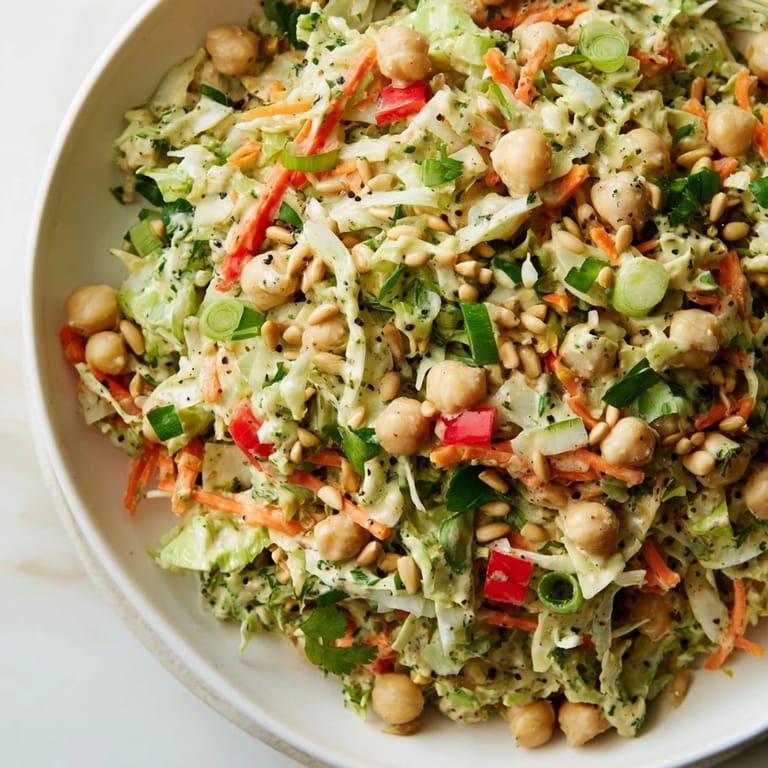
This recipe welcomes experimentation without losing its identity. Add crisp radishes or celery for extra crunch, swap sunflower seeds for pumpkin seeds or toasted pine nuts, or introduce a pinch of cayenne if you want heat creeping in at the edges. If you're not strictly vegan, crumbled feta or a soft cheese adds richness, or serve it alongside grilled chicken, tempeh, or fish to turn it from a complete meal into an elegant side. In winter, it feels substantial; in summer, it feels refreshing. The salad understands different seasons and different hungers.
- Try adding a tablespoon of pomegranate molasses for subtle tartness and depth.
- Toast your sunflower seeds in a dry pan for two minutes before adding them; the flavor becomes more pronounced.
- Massage the cabbage with a pinch of salt for five minutes before mixing if you want it slightly softer and more receptive to the dressing.
 Pin It
 This salad has become a quiet reliable in my kitchen, the kind of dish that works for lunch alone, for bringing to someone's table, for days when you want to eat well without ceremony. It asks for very little and gives back generously.
Questions About This Recipe
- → What gives this salad its creamy texture?
The dressing made from tahini, lemon juice, olive oil, and a touch of water creates its smooth, creamy texture.
- → Can I substitute any ingredients in the salad?
Yes, sunflower seeds can be swapped for pumpkin seeds or omitted for nut-free needs. Adding radishes or celery provides extra crunch.
- → Is this dish suitable for vegan and gluten-free diets?
Yes, it’s naturally vegan and gluten-free, but using honey in the dressing makes it unsuitable for strict vegans.
- → How should I store leftover salad?
Store leftovers in an airtight container in the refrigerator for up to 2 days. The flavors may intensify after chilling.
- → What is the best way to serve this salad?
Serve chilled or at room temperature as a light main dish or a hearty side alongside grilled proteins.