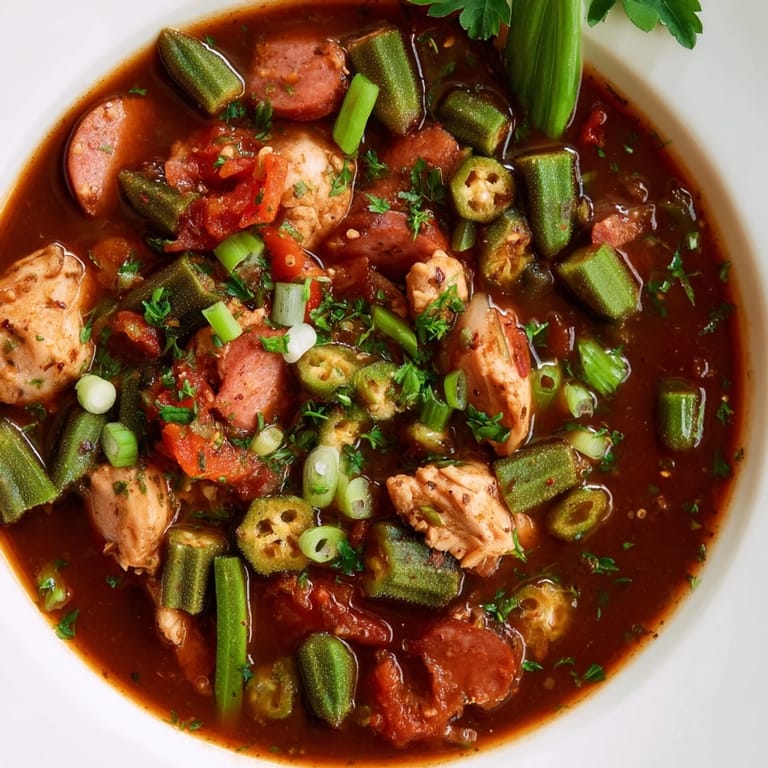
 Pin It
 The first time I made gumbo, I burned the roux so badly the entire pot had to be thrown out. My neighbor, who'd grown up in New Orleans, just laughed and handed me a fresh stick of butter with the kind patience only someone who'd seen a thousand kitchen mishaps could muster. Years later, I finally understood what she was trying to teach me that day: patience with the roux is patience with the whole dish. Now when I stir that flour and oil together, watching it shift from blonde to mahogany to that perfect deep chocolate, I feel like I'm in on a secret that took me far too long to learn.
I made this for a group of friends on a cold February night, and watching them push their bowls toward the center of the table asking for seconds felt like the highest compliment. Someone said it tasted like home, even though home for them was three states away. That's when I realized gumbo isn't really about nailing a recipe—it's about creating the kind of meal that makes people forget where they're sitting and just remember how they feel.
Ingredients
- Boneless, skinless chicken thighs (350 g): Thighs stay tender and flavorful through long simmering, unlike breast meat which can dry out; don't skip the browning step because it builds the base flavor of the entire pot.
- Smoked andouille sausage (225 g): This is the soul of authentic gumbo, bringing smoke and spice that can't be replicated; slice it thick enough to hold its shape but thin enough to release its flavor quickly.
- Fresh or frozen okra (250 g): Fresh is ideal but frozen works just fine if you thaw and drain it first; okra acts as a natural thickener and adds a subtle vegetable sweetness.
- The holy trinity (onion, bell pepper, celery): This combination is non-negotiable in Cajun cooking; the ratio matters less than making sure each piece is roughly the same size for even cooking.
- All-purpose flour and vegetable oil (60 g each): This roux is the foundation of everything that follows; the oil-to-flour ratio must be equal, and the heat must stay medium to avoid burning.
- Chicken stock (1.5 liters): Use homemade if you have it, but good store-bought works perfectly; avoid low-sodium versions because you need that backbone of flavor.
- Bay leaves, thyme, smoked paprika, cayenne: These seasonings work together to create depth; the paprika gives warmth, the cayenne builds heat, and the herbs tie everything into a cohesive whole.
- Worcestershire sauce and hot sauce: A teaspoon of Worcestershire adds umami without making the dish taste fishy; hot sauce at the end lets each person control their own heat level.
Tired of Takeout? 🥡
Get 10 meals you can make faster than delivery arrives. Seriously.
One email. No spam. Unsubscribe anytime.
Instructions
- Build your roux with intention:
- Heat oil over medium heat, add flour, and whisk constantly for 15–20 minutes until it reaches a deep chocolate brown color. This is where most people rush, and it's exactly where you shouldn't—a good roux needs time and attention, but once you see that rich color, you'll know you've got it right.
- Soften the holy trinity:
- Toss your chopped onion, bell pepper, and celery into the hot roux and let them cook for 3–4 minutes until they begin to soften and release their aromas. Stir in the minced garlic for another minute, and you'll smell the moment everything shifts toward something deeper and more complex.
- Brown the meat:
- Add the sausage slices and chicken pieces and cook for about 5 minutes, letting them develop color and texture. This browning step isn't just about looks—it's about layering flavor into every spoonful of the final dish.
- Introduce the okra:
- Stir in the sliced okra and cook for 3–4 minutes to let it start releasing its thickening properties. The okra might seem to vanish into the pot, but it's working behind the scenes, becoming part of the sauce's body and structure.
- Build the broth and let it simmer:
- Pour in the diced tomatoes, chicken stock, bay leaves, thyme, paprika, cayenne, Worcestershire sauce, salt, and pepper. Bring everything to a boil, then reduce the heat to low and let it simmer uncovered for 45–50 minutes, stirring occasionally so flavors meld and nothing sticks to the bottom.
- Finish and taste:
- Remove the bay leaves and take a spoonful to taste. If you want it thicker, sprinkle in filé powder off the heat and stir well—it doesn't dissolve smoothly if the pot is boiling, so patience here matters too.
- Serve with intention:
- Ladle the gumbo over hot white rice, garnish with fresh spring onions and parsley, and let people add hot sauce to taste. The rice isn't just a side—it's the vessel that makes this whole dish feel complete.
 Pin It
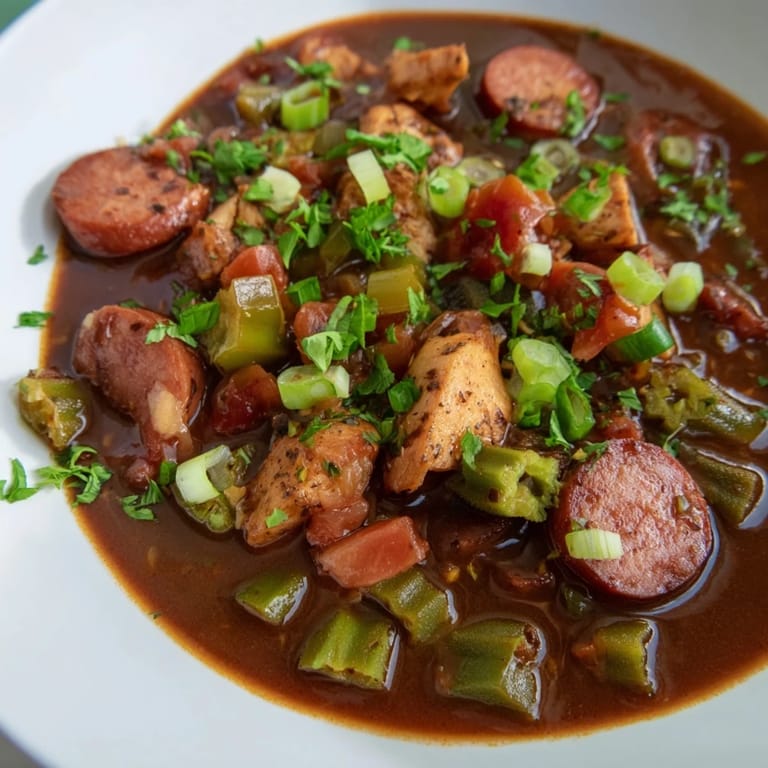
 There's something about sitting down to a bowl of gumbo that feels like being held by something warm and familiar, even if you've never been to Louisiana. My grandfather told me once that good food is a conversation between the cook and the person eating it, and gumbo might be the best conversationalist in my kitchen.
The Roux: Your Foundation
The roux is where gumbo lives or dies, and understanding it will change how you cook. Medium heat is your friend here; too hot and you'll burn it in seconds, too low and you'll stir for half an hour watching it creep toward brown. I learned to stop watching the clock and start watching the color, letting my eyes and nose guide me instead. The smell transforms from raw flour to toasted to rich and caramel-like, and that sensory journey is your real timer.
Why Fresh Okra Matters (But Frozen Works)
Fresh okra has a delicate texture that unfolds beautifully in the pot, but I've made equally delicious gumbo with frozen okra that I thawed and drained thoroughly. The key is respecting what okra does—it's a thickener and a flavor contributor, not just a vegetable. Some people avoid okra because of its reputation for being slimy, but in gumbo, that quality becomes a feature, not a bug. That natural slickness is what makes the broth silky and luxurious.
Serving and Variations
Gumbo tastes even better the next day when flavors have had time to settle and deepen, so don't hesitate to make it ahead. Serving it over hot white rice is traditional, but some people ladle it into bowls with rice on the side so they can adjust the ratio to their liking. For a seafood version, skip the chicken and add peeled shrimp or crab meat during the last 10 minutes of simmering—the cooking time is short enough to keep the seafood tender.
- Crusty French bread on the side turns this into a complete, celebratory meal.
- Filé powder, made from ground sassafras leaves, adds earthiness and additional thickening if you use it.
- Hot sauce at the table respects that everyone's heat tolerance is different, so let people adjust their own spice level.
 Pin It
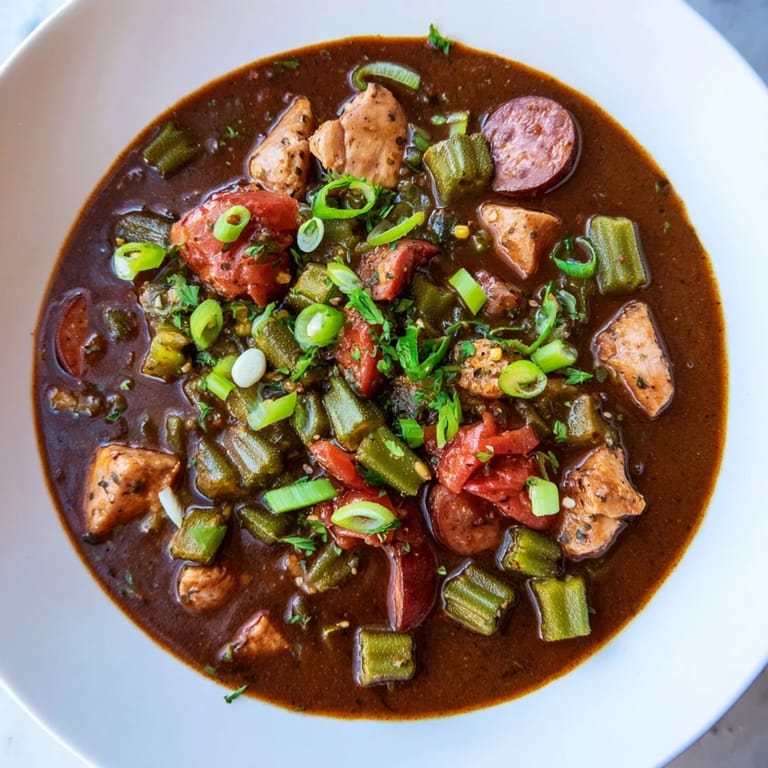
 Gumbo taught me that some dishes are about technique, but most of them are about patience and care. Every time you make it, you're adding your own story to a recipe that's been told for generations.
Questions About This Recipe
- → What makes a dark roux important in this dish?
The dark roux provides a rich, nutty flavor and deep color, forming the backbone of the stew’s hearty taste and texture.
- → Can I substitute the andouille sausage?
Yes, any smoked sausage can be used as a flavorful alternative if andouille is unavailable.
- → Is fresh okra necessary or can I use frozen?
Frozen okra works well if thawed and drained beforehand, making it a convenient option without sacrificing quality.
- → How do I thicken the stew further?
Adding filé powder off the heat thickens the stew while adding a subtle earthy flavor traditional to Louisiana cooking.
- → What is the best way to serve this stew?
Serve it hot over cooked white rice and garnish with spring onions and fresh parsley for a complete, satisfying dish.
- → Can seafood be added to this dish?
Yes, peeled shrimp or crab meat can be added during the last 10 minutes of simmering for a seafood variation.