 Pin It
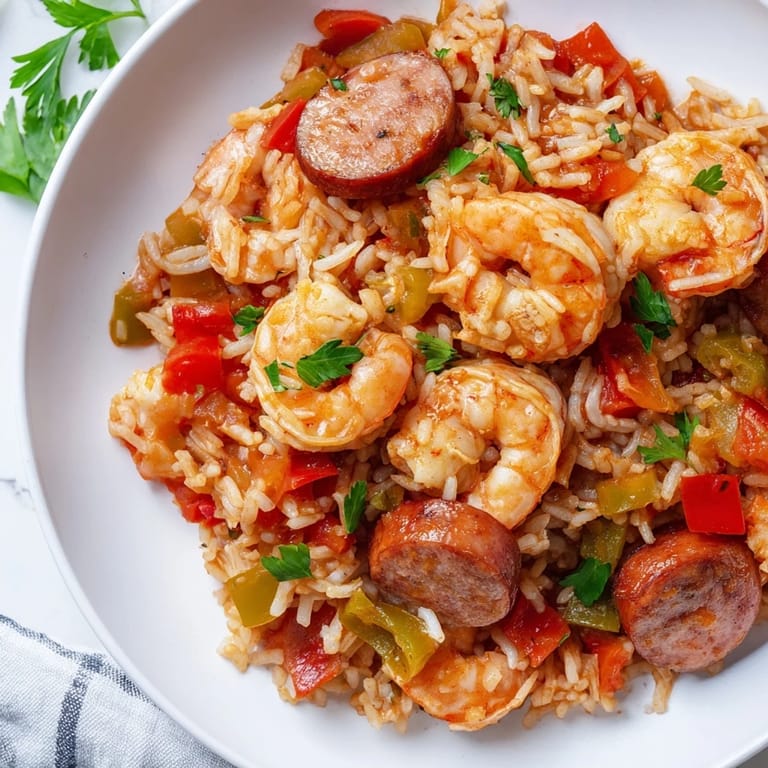
 There's something about a steaming skillet that brings people together, and jambalaya has a way of doing that faster than almost anything else I cook. Years ago, a friend from New Orleans taught me the secret wasn't in following steps perfectly—it was in understanding that each ingredient needed space to shine while still blending into something greater. The first time I made this version, my kitchen filled with such a fragrant cloud of smoked paprika and thyme that my neighbor actually knocked on the door to ask what was happening. That's when I knew I'd found something special.
I made this for a small dinner party one October evening, and I'll never forget how quiet the table went after everyone took their first bites—that comfortable silence that means the food is doing its job. One guest, who swore she didn't like seafood, went back for seconds without hesitation. Watching someone's mind change about food through a single dish is one of those unexpected kitchen victories that keeps me cooking.
Ingredients
- Andouille sausage (8 oz): The smokiness is non-negotiable here; it's the backbone that makes everything taste like actual Creole cooking, so don't swap it for just any sausage.
- Large shrimp (8 oz): Fresh or frozen works equally well, but thaw frozen shrimp slowly in the refrigerator if you can—it keeps them tender and sweet.
- Yellow onion, red and green bell peppers, celery (the holy trinity base): These three create the aromatic foundation; dicing them evenly helps them cook at the same rate and distribute flavor throughout.
- Garlic (3 cloves): Mincing it fine and adding it near the end of the sauté prevents it from burning, which would turn your dish bitter.
- Long-grain white rice (1 cup): Don't rinse it before cooking—those starches help create that slightly creamy texture that makes jambalaya feel luxurious.
- Chicken broth and diced tomatoes (with juice): The tomato juice adds both flavor and acidity that balances the richness of the sausage.
- Smoked paprika, thyme, oregano, cayenne, black pepper, salt: Blooming these spices in the pan for just a minute before adding liquid releases their essential oils and deepens the entire dish.
- Olive oil (2 tbsp total): Use good quality oil; it carries flavor in ways cheap oil simply cannot.
- Fresh parsley (for garnish): A small handful at the end brings brightness and lifts the heaviness of the meat.
Tired of Takeout? 🥡
Get 10 meals you can make faster than delivery arrives. Seriously.
One email. No spam. Unsubscribe anytime.
Instructions
- Sear the sausage until the edges caramelize:
- Heat one tablespoon of oil in your skillet over medium-high heat, then add sausage slices and let them sit undisturbed for a minute or two before stirring. This creates a golden crust that seals in flavor.
- Build the aromatic base with vegetables:
- Add the remaining oil and sauté your onion, peppers, and celery until they start to soften and become fragrant, about 4 to 5 minutes. The vegetables should still have a slight firmness—you're not making mush, you're waking them up.
- Toast the spices into the rice:
- Pour in your rice and all the dried spices, stirring constantly for about a minute so every grain gets coated and the spices smell toasted and alive. This one minute of attention changes everything.
- Bring it together with broth and tomatoes:
- Return the sausage to the skillet, then add the tomatoes with their juice and the chicken broth, stirring well to make sure nothing sticks to the bottom. You'll hear the sizzle die down as the liquid takes over.
- Let the rice absorb all that flavor slowly:
- Cover, reduce heat to low, and don't peek for 20 minutes—the steam is doing important work. Trust the process even though you'll be tempted to stir.
- Nestle the shrimp on top to finish cooking:
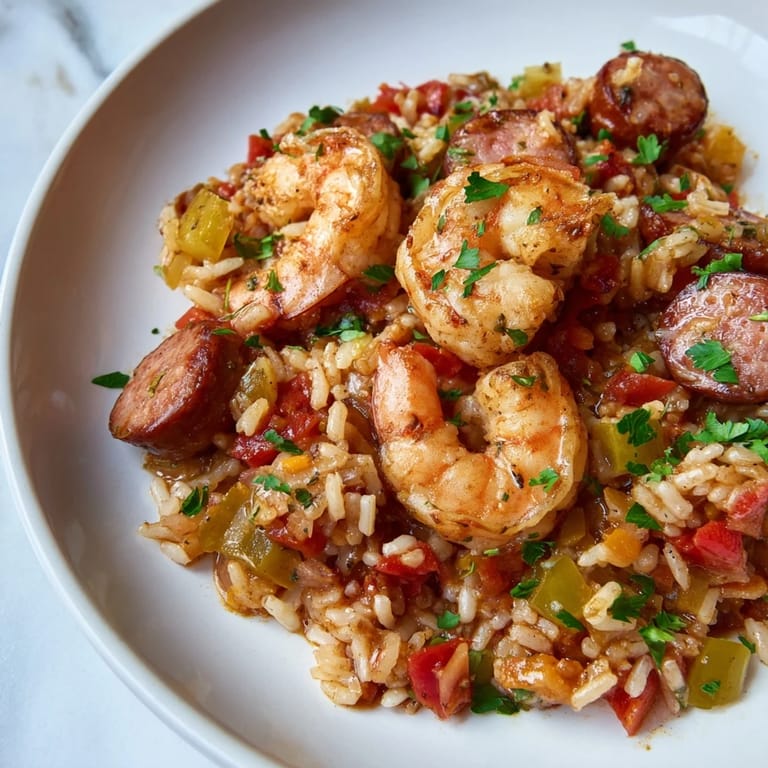
- After 20 minutes, arrange shrimp over the rice, cover again, and cook until they turn pink and firm, about 5 to 7 minutes. Overcooked shrimp turns rubbery, so watch carefully during these final minutes.
- Finish with a gentle fluff and fresh parsley:
- Use a fork to loosen the rice—don't stir aggressively or you'll mash everything together. A sprinkle of parsley adds a fresh note that cuts through the richness beautifully.
 Pin It
 There was a moment when my young niece, who usually picks at her food, asked for the recipe to make at her college dorm—not to impress anyone, just because it made her happy. That's the real magic of jambalaya: it's humble enough to feel approachable, but special enough to remind people why cooking matters.
The Soul of One-Skillet Cooking
There's something almost meditative about cooking everything in one vessel. You watch the transformations happen in sequence—the sausage darkening, the vegetables softening, the rice turning translucent, the shrimp blushing pink—and somehow it all comes together into something cohesive. It's less about multitasking and more about understanding that each element is dependent on what came before it, which is exactly how cooking should feel.
Choosing Your Proteins Wisely
Andouille sausage is the traditional choice, but I've learned over time that the quality of your sausage matters far more than sticking rigidly to the name. Find one that smells good to you, that has real spice and smoke in it—not just color. If you can't find andouille, a quality smoked sausage from a butcher counter will serve you better than a pale supermarket version, even if it's technically andouille.
Making It Your Own
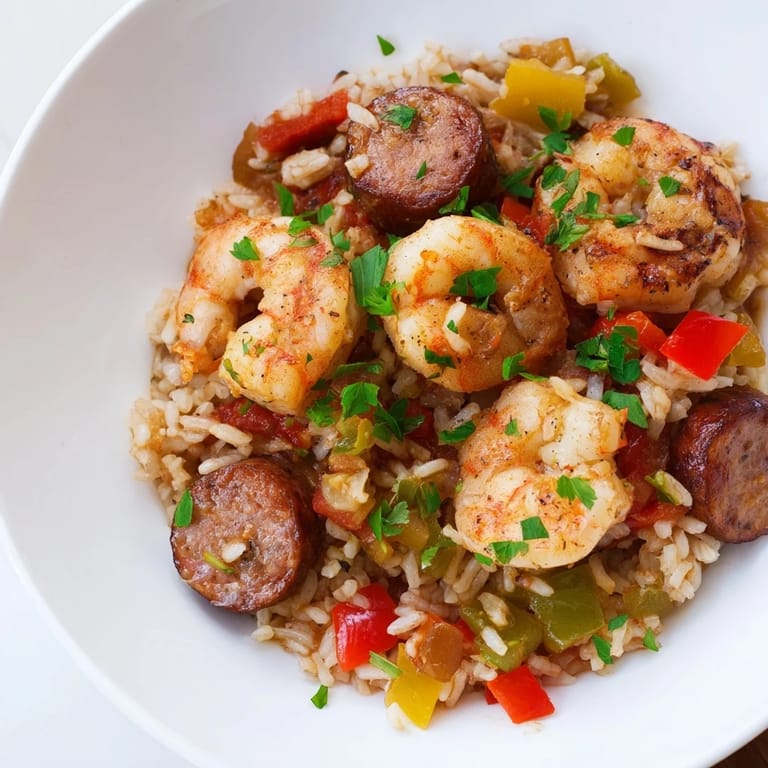
I've learned that recipes are really just starting points for a conversation between you and your ingredients. Some nights I add okra because I love how it thickens the sauce. Other times I use chicken instead of shrimp because that's what I have, and honestly, it's equally delicious. The core of this dish is sturdy enough to handle your instincts and preferences.
- If heat is your thing, add an extra pinch of cayenne while the rice cooks, or serve with hot sauce on the side for those who want it.
- Substitute chicken thighs for shrimp if you prefer, or use both for a seafood-and-meat version that feeds a crowd nicely.
- A splash of dry white wine stirred in with the broth adds brightness and sophistication without changing the essential character of the dish.
 Pin It
 This is the kind of dish that makes you grateful for the invention of the skillet and the courage of people who threw ingredients together without overthinking it. Make it, feed someone you care about, and pay attention to the quiet moments when the food speaks for itself.
Questions About This Recipe
- → Can I substitute shrimp with other proteins?
Yes, chicken can be used as an alternative or added alongside shrimp for variety.
- → How do I increase the heat level?
Add extra cayenne pepper or serve with a spicy hot sauce for more heat.
- → What type of sausage works best?
Andouille or smoked sausage are ideal for their smoky flavor, enhancing the dish's Creole profile.
- → Can I make this dish gluten-free?
Yes, ensure the sausage is gluten-free and use gluten-free chicken broth to keep the dish safe.
- → What is the best way to cook the rice evenly?
Cover the skillet and simmer on low heat until the rice absorbs most liquid and becomes tender.