 Pin It
 There's something about the ritual of assembling a donburi bowl that made me fall in love with Japanese home cooking. One humid afternoon, I was standing in a friend's Tokyo kitchen watching her layer rice, salmon, and vegetables with the kind of practiced ease that made it look effortless, and I realized she wasn't following a recipe—she was playing. That moment stuck with me, and now whenever I make this salmon and chicken rice bowl, I'm chasing that same feeling of ease and abundance in a single dish.
I made this for my partner on a random Tuesday after discovering mirin at a new grocery store, and the look on their face when they took that first bite—sauce mixing with warm rice, a little sesame seed crunch—told me I'd stumbled onto something worth repeating. It became our go-to bowl when we wanted something that felt special but didn't require hours of planning.
Ingredients
- Salmon fillets: About 300g total; this is where the bowl gets its richness, so don't skimp on quality—look for fillets that smell fresh and have a slight sheen.
- Boneless, skinless chicken thighs: About 250g total; thighs stay juicier than breasts when cooked quickly, which makes all the difference here.
- Soy sauce: The backbone of your marinade and sauce; use regular soy sauce unless you need gluten-free, then tamari works beautifully.
- Mirin: This sweet rice wine adds a subtle gloss and balances the saltiness of soy without making the dish taste sugary.
- Sake or dry white wine: A tablespoon of either cuts through richness and adds depth to the marinade.
- Sesame oil: Use sparingly—just a teaspoon per component because it's potent and easy to overdo.
- Japanese short-grain rice: The starchy grains stick together slightly, catching sauce and creating that perfect texture when you scoop.
- Avocado: Pick one that yields gently to thumb pressure; it should feel ripe but not mushy or it'll turn brown too quickly.
- Cucumber: A small one ensures thin, crisp slices; thicker slices get watery and lose their textural contrast.
- Carrot: Julienne it with a mandoline or sharp knife so it stays crunchy and doesn't overwhelm the other vegetables.
- Scallions: Slice them thin and add them just before serving so they stay sharp and bright.
- Toasted sesame seeds: Buy them pre-toasted to save time; toasting them yourself means they burn while you're not looking.
- Nori: Optional but adds a subtle briny note and visual drama; buy it pre-cut into strips to save a step.
- Rice vinegar: The sauce wouldn't be balanced without this—it's sharp, clean, and cuts through the richness of both proteins.
Tired of Takeout? 🥡
Get 10 meals you can make faster than delivery arrives. Seriously.
One email. No spam. Unsubscribe anytime.
Instructions
- Rinse and cook the rice:
- Run the rice under cold water, stirring gently until the water turns clear—this removes excess starch so each grain stays separate instead of clumping. Cook it in a rice cooker with 2½ cups water, or in a saucepan covered and simmering for about 15 minutes until the water is absorbed and tiny steam holes appear on the surface.
- Make the marinade:
- Whisk soy sauce, mirin, sake, sesame oil, and honey together in a small bowl until the honey dissolves. The mixture should smell aromatic and slightly sweet, never one-note salty.
- Marinate the proteins:
- Pour half the marinade into one shallow dish for the salmon and half into another for the chicken. Let them sit for at least 10 minutes while you prep other components—rushing this step means missing out on flavor, but 30 minutes is the sweet spot before the salt starts breaking down the delicate proteins.
- Cook the chicken:
- Heat a nonstick skillet over medium heat until a drop of water sizzles on contact. Add chicken thighs and don't move them for 4–5 minutes; the golden-brown crust that develops is where the flavor lives. Flip once and cook another 4–5 minutes until no pink remains in the center, then slide onto a plate to rest.
- Cook the salmon:
- In the same pan (the browned bits from the chicken add flavor), place the salmon skin-side up and cook for 2–3 minutes undisturbed. Flip gently and cook another 1–2 minutes—you want it opaque but still tender, not flaking apart into dust.
- Prepare the toppings:
- While proteins rest, slice the avocado lengthwise around the pit, twist the halves apart, scoop into thin slices, and arrange on a plate. Slice the cucumber thin on a bias so it catches light. Julienne the carrot with a mandoline or knife. Slice scallions on the diagonal so they're pretty and stay vibrant.
- Make the finishing sauce:
- Whisk soy sauce, rice vinegar, sesame oil, and sugar together until the sugar dissolves completely. Taste it and let yourself adjust—if it's too salty, add a splash of water; if it needs brightness, a tiny drizzle more vinegar balances it.
- Assemble the bowls:
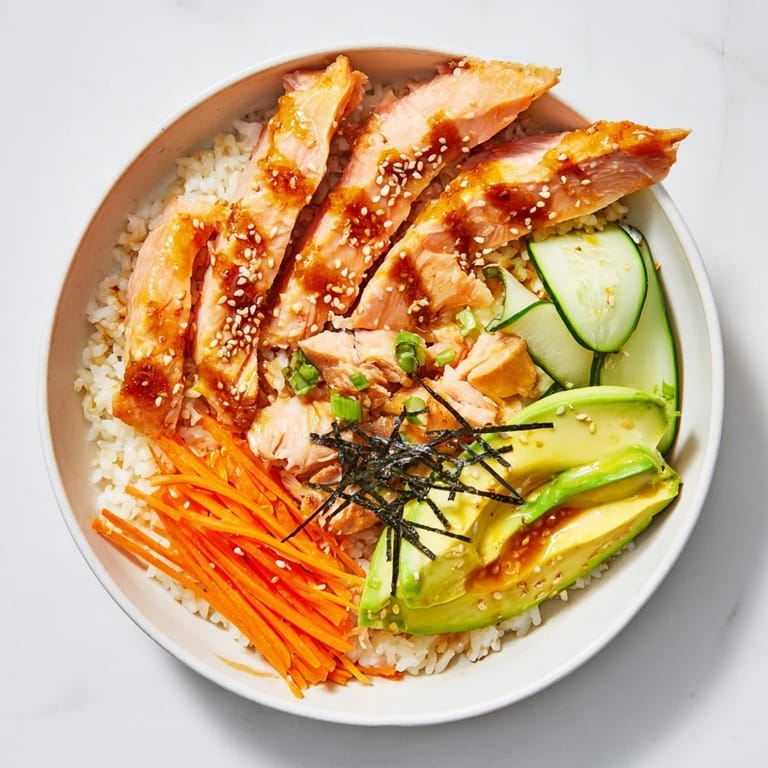
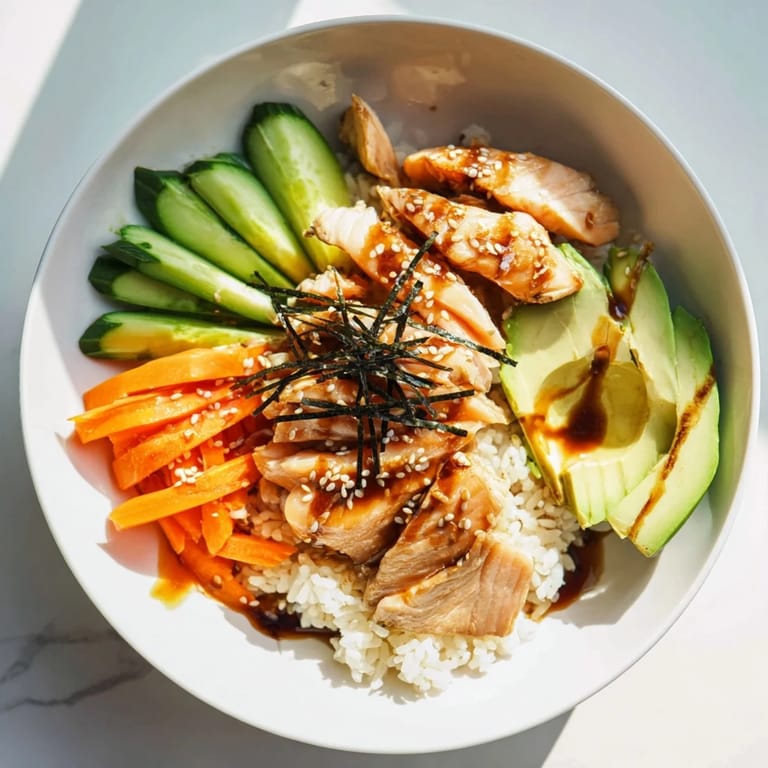
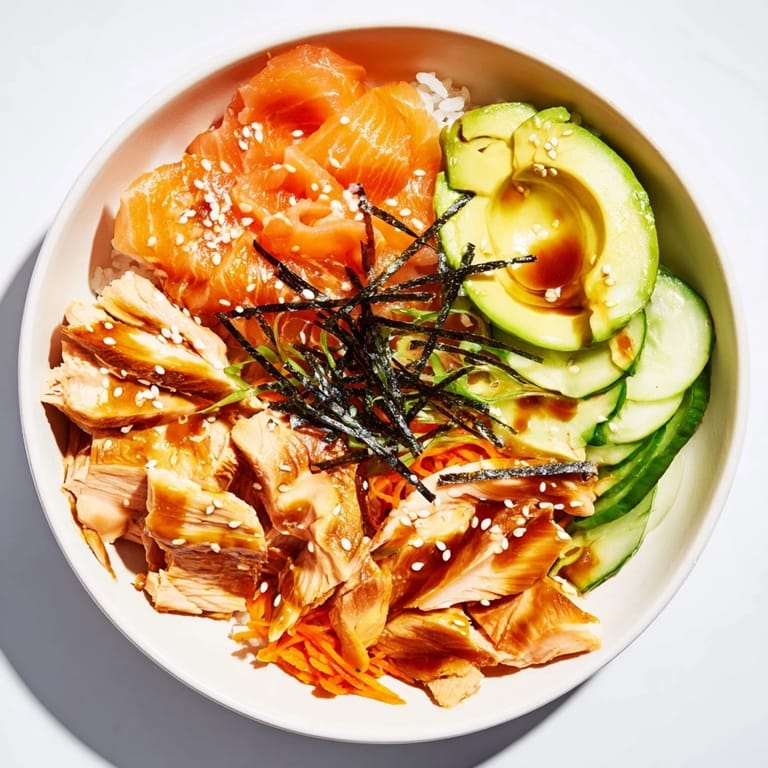
- Divide fluffed rice among four bowls, leaving a little space at the top. Arrange sliced chicken, flaked salmon, avocado, cucumber, carrot, and scallions in sections over the rice like you're painting. Drizzle sauce over everything, then sprinkle with sesame seeds and nori strips, which add a whisper of ocean and visual contrast.
- Ice cube hack for leftovers:
- If you're reheating assembled bowls the next day, place one ice cube directly on the rice, cover with a microwave-safe lid or plastic wrap, and microwave on high for 1–2 minutes. The ice melts slowly, steaming the rice gently so it stays tender instead of drying out, and creates that just-made texture all over again.
 Pin It
 I remember my mom watching me eat one of these bowls and saying, 'You actually made this taste like something,' which I'm pretty sure was a compliment. That's the magic of this dish—it looks composed and careful, but it's forgiving enough that even when you're learning, you end up with something that feels intentional and delicious.
Why This Bowl Works
The beauty of a donburi is that every element serves a purpose: warm rice soaks up the sauce, salmon and chicken provide protein and richness, vegetables add texture and freshness, and the sauce brings it all into conversation. When you layer them right, each spoonful has something different to say. It's the kind of dish that looks like you spent all day cooking but actually respects your time, which means you'll actually make it on a regular Wednesday instead of saving it for special occasions.
Customizing Your Bowl
The structure is flexible enough that you can riff on it without losing what makes it work. Swap the proteins—tofu for a vegetarian version, shrimp if you love seafood, or skip both and load it with roasted vegetables. Change the vegetables based on what's in your crisper drawer or what you're craving; edamame, steamed broccoli, shredded beets, or thinly sliced radish all work beautifully. The sauce is your playground too—if you like heat, add sriracha; if you want umami, stir in a bit of white miso; pickled ginger on the side adds a brightness that wakes everything up.
The Reheating Secret
The ice cube hack genuinely changed how I think about leftovers, because this bowl is actually better the next day when the flavors have had time to meld. A regular microwave reheating turns rice into something stiff and unpleasant, but letting an ice cube melt slowly releases steam that keeps everything tender and just-cooked tasting. It's one of those small kitchen discoveries that feels like cheating—a professional secret hiding in plain sight. If you're meal prepping, assemble the bowls, cover them, and refrigerate; when you're ready to eat, add the ice cube and microwave, and you've got a restaurant-quality lunch that tastes like you cared enough to make it fresh.
- Don't skip the sesame seeds—they add textural contrast and a toasted aroma that makes the bowl feel complete.
- Serve with green tea or a light sake if you want to lean into the Japanese experience, though honestly, cold water works just fine.
- Make extra sauce because everyone always wants more, and you'll end up drizzling it over rice you didn't plan on flavoring.
 Pin It
 Every time I make this bowl, it feels like a small act of care—for myself, for whoever I'm feeding, for the ritual of sitting down with something nourishing and thoughtful. That matters more than perfect technique ever will.
Questions About This Recipe
- → How does the ice cube help when reheating the rice bowl?
The ice cube melts slowly, creating steam that gently warms the rice, preventing dryness and keeping it moist.
- → Can I substitute other proteins for salmon and chicken?
Yes, tofu or tempeh work well for a vegetarian alternative without compromising flavor.
- → What rice type is best for this dish?
Short-grain Japanese rice provides the ideal texture—sticky but light—perfect for bowls.
- → How long should the proteins be marinated?
Marinating for at least 10 minutes allows the soy-based mixture to infuse great flavor into the salmon and chicken.
- → Are the toppings adjustable?
Absolutely, you can swap avocado for edamame or steamed broccoli to suit your preferences.