 Pin It
 There's something about assembling a Mediterranean bowl that feels less like cooking and more like painting with vegetables. I discovered this combination on a lazy Sunday afternoon when my fridge was overflowing with roasted vegetables from the farmers market, and I couldn't decide which ones to use, so I just threw them all together with some quinoa and hummus. What started as a way to use up odds and ends became the bowl I find myself craving on weeks when I need to feel grounded and nourished.
I made this for my friend Marcus who'd just started trying to eat more vegetables, and he was shocked when he went back for seconds. He kept asking what was in the hummus until I realized he'd never actually had a bowl where every single element tasted good on its own and even better together. Watching someone discover how food can be both delicious and genuinely nourishing is one of those small kitchen victories that stays with you.
Ingredients
- Quinoa, rinsed: This tiny grain is a complete protein with all nine essential amino acids, which is why vegetarian bowls love it so much—it actually keeps you satisfied.
- Water: The ratio of 2 cups water to 1 cup quinoa is crucial; too little and you'll get crunchy bits, too much and it becomes mushy.
- Zucchini, red bell pepper, red onion, cherry tomatoes: The combination of colors isn't just pretty—it means you're getting different nutrients and flavors that layer beautifully when roasted.
- Olive oil: Use a good quality oil here since it's just coating the vegetables; cheaper oil tastes thin when it's the main flavor carrier.
- Dried oregano and ground cumin: These spices are what make the bowl feel Mediterranean rather than just generic vegetables.
- Chickpeas, drained and rinsed: Rinsing them removes the canning liquid and makes them taste fresher and less metallic—it's a small step that makes a real difference.
- Kalamata olives, pitted and halved: The briny pop of olives is essential; it's what makes your mouth actually come alive when eating this bowl.
- Hummus: This creamy element ties everything together and adds richness without heaviness.
- Greek yogurt: It's slightly tangy and cooling, which balances the warm roasted vegetables beautifully.
- Feta cheese, crumbled: The salty sharpness of feta is what transforms this from healthy-eating food into something you genuinely want to eat.
- Fresh parsley, chopped: This bright finish adds a peppery freshness that cuts through all the rich elements.
- Lemon wedges: Squeeze these over everything at the end—the acid brings the whole bowl into focus.
Tired of Takeout? 🥡
Get 10 meals you can make faster than delivery arrives. Seriously.
One email. No spam. Unsubscribe anytime.
Instructions
- Heat your oven and prepare the vegetables:
- Preheat to 425°F while you chop everything into roughly the same size pieces—this ensures even cooking. Toss the zucchini, bell pepper, onion, and tomatoes with olive oil, oregano, cumin, salt, and pepper right on the baking sheet so there's less cleanup.
- Roast until edges are caramelized:
- Spread everything in a single layer and roast for 20–25 minutes, stirring halfway through so nothing sticks to the pan. You'll know they're done when the edges start to brown and the kitchen smells like a Mediterranean vacation.
- Cook the quinoa while vegetables roast:
- Combine rinsed quinoa and water in a saucepan, bring to a boil, then immediately reduce heat to low and cover. Let it simmer undisturbed for 15 minutes, then turn off the heat and let it sit covered for 5 more minutes—this steaming time is what makes it fluffy instead of dense.
- Warm the chickpeas gently:
- Heat them in a small skillet over medium heat for just 2–3 minutes with a pinch of salt, stirring occasionally. Warming them brings out their nuttiness and makes them feel like part of the meal rather than a cold addition.
- Assemble with intention:
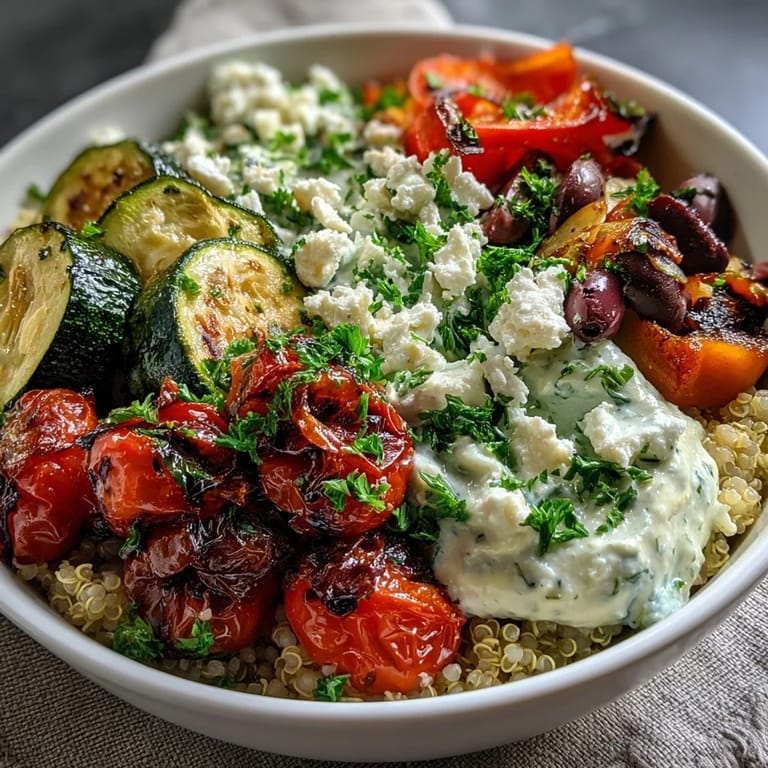
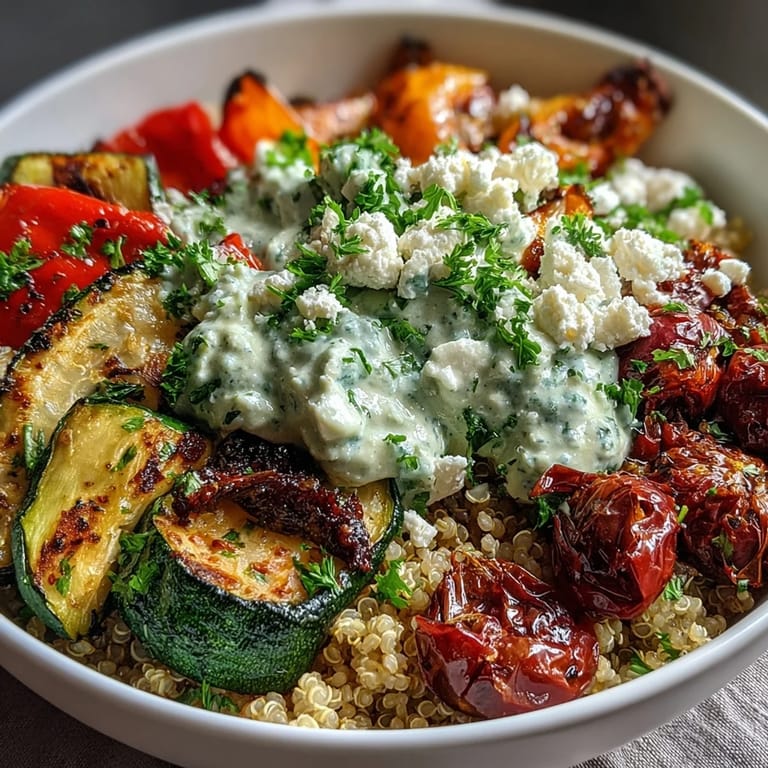
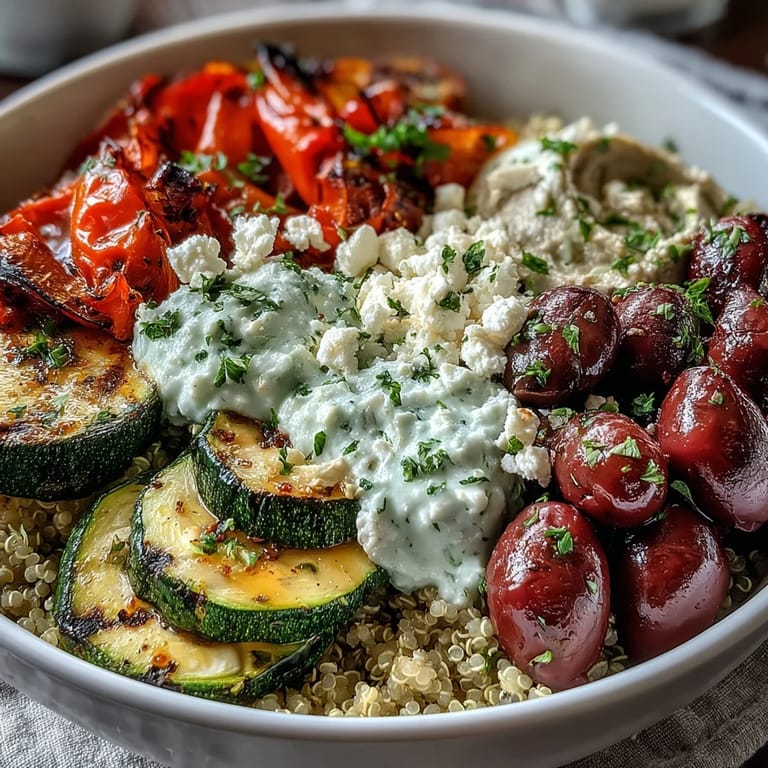
- Start each bowl with a bed of quinoa, then arrange the roasted vegetables and chickpeas around it like you're creating something intentional. Top with olives, dollops of hummus and Greek yogurt, and crumbled feta, then finish with parsley and lemon wedges on the side.
 Pin It
 There's a moment when you're plating these bowls where you realize you've created something that actually looks like restaurant food, and it costs a fraction of what you'd pay for it. My partner walked into the kitchen while I was arranging one and said, 'You should sell these,' which made me laugh, but it also made me realize how satisfying it is to create something that looks that beautiful and tastes that good.
Why This Bowl Works as a Complete Meal
The genius of this bowl is that it hits every nutritional category without feeling like you're eating something healthy. The quinoa provides sustaining carbohydrates and complete protein, the vegetables bring fiber and vitamins, the chickpeas add earthiness and more protein, and the hummus, yogurt, and feta provide the richness that makes your brain register this as satisfying rather than virtuous.
Making This Ahead Actually Works
I've tested assembling these bowls up to four hours before eating, and they hold up beautifully. The quinoa doesn't dry out if you keep the components separate until the last minute, and honestly, preparing everything on a Sunday afternoon means you have actual lunch ready when the week gets chaotic. The only thing I wouldn't do ahead is drizzle the lemon juice—save that for just before eating so it stays bright and sharp.
Customization Without Losing the Spirit
This bowl is endlessly adaptable without becoming something unrecognizable. Swap the roasted vegetables for whatever you have on hand—eggplant, asparagus, Brussels sprouts, or cauliflower all work gorgeously. The structure stays the same: a grain base, roasted vegetables, a legume, creamy elements, and something briny to wake everything up. You can absolutely add grilled chicken or shrimp if you want more protein, use brown rice or farro instead of quinoa, or go completely vegan by swapping the Greek yogurt for a plant-based version and skipping the feta entirely. The point is the balance and flavor combination, not the specific ingredients.
- Experiment with different vegetables based on the season—spring calls for asparagus and peas, summer screams for zucchini and tomatoes, fall loves roasted cauliflower and Brussels sprouts.
- If you're batch-cooking for the week, double or triple the roasted vegetables and use them throughout the week with different grains or proteins.
- Keep the lemon wedges and fresh herbs separate if packing these for lunch—they stay fresher and brighter that way.
 Pin It
 This bowl became my answer to the question of what to eat when you want something nourishing but not boring, healthy but not punishing. It's proof that eating well doesn't require complicated techniques or obscure ingredients, just good ones put together with intention.
Questions About This Recipe
- → Can I make this bowl ahead of time?
Yes, prepare components up to 3 days in advance. Store quinoa, roasted vegetables, and chickpeas separately in airtight containers. Assemble bowls when ready to serve and add fresh toppings like parsley and lemon just before eating.
- → What other grains work well in this bowl?
Farro, brown rice, bulgur, or couscous make excellent substitutions for quinoa. Cook according to package directions and adjust seasoning as needed. Each grain brings a slightly different texture and flavor profile.
- → How can I add more protein?
Grilled chicken, baked salmon, or sautéed shrimp pair beautifully with Mediterranean flavors. For plant-based options, add extra chickpeas, lentils, or cubed tofu. A hard-boiled egg also works well.
- → Can I use different vegetables?
Absolutely. Eggplant, artichoke hearts, cucumber, roasted red peppers, or fresh spinach all complement the Mediterranean profile. Roast harder vegetables and keep delicate ones raw for the best texture contrast.
- → Is this suitable for meal prep?
This bowl is ideal for meal prep. The flavors actually improve after marinating together. Pack components in separate containers and assemble just before serving, or layer in jars with dressing on the bottom for grab-and-go lunches.
- → How do I make it vegan?
Simply omit the feta cheese and use plant-based yogurt or tahini in place of Greek yogurt. The hummus provides plenty of creamy texture, and extra olives or avocado can add richness.