 Pin It
 There's something about the sizzle of chicken hitting hot oil that makes you stop and really pay attention. I discovered this dish on a Tuesday night when I had leftover rice noodles sitting in my fridge and a craving for something bolder than the usual weeknight stir-fry. The combination of soy, hoisin, and a hint of ginger came together so naturally that I found myself making it again just three days later, each time tweaking the sauce until it tasted exactly right.
I made this for a small dinner party once, and watching my friends' faces light up when they took that first bite was worth every minute of prep work. Someone asked if it was from a takeout container, and I remember feeling that little spark of pride realizing I'd pulled off something that tasted like it came from a proper restaurant kitchen.
Ingredients
- Chicken thighs or breasts: 500 g sliced thinly so they cook through in minutes and absorb the sauce beautifully; thighs stay more tender than breasts if you're unsure.
- Cornstarch: This is your secret weapon for getting that restaurant-style coating and helping the sauce cling to each piece.
- Soy sauce: The backbone of the whole dish; don't skip it or use a substitute.
- Hoisin sauce: Adds depth and umami that regular soy sauce alone can't deliver.
- Brown sugar: Start with 2 tablespoons and taste as you go; you control how sweet this becomes.
- Rice vinegar: A small splash that cuts through the richness and keeps everything balanced.
- Sesame oil: Just a teaspoon is enough; too much overpowers the whole thing.
- Garlic and ginger: Fresh, minced finely so they dissolve into the sauce rather than sitting as chunks.
- Red pepper flakes: Optional but recommended for a gentle warmth that builds as you eat.
- Bell peppers and snap peas: Keep them in thin slices or bite-sized pieces so they stay crisp even after tossing in the hot sauce.
- Spring onions: Added twice, once during cooking and again as a fresh garnish so you get both cooked softness and raw brightness.
- Rice noodles or leftover pasta: Either works; the noodles will carry the sauce throughout every bite.
- Sesame seeds: Toasted if possible; they add nuttiness and a satisfying finish.
Tired of Takeout? 🥡
Get 10 meals you can make faster than delivery arrives. Seriously.
One email. No spam. Unsubscribe anytime.
Instructions
- Prepare your noodles:
- If using dried rice noodles, follow the package directions, then drain and rinse with cold water to stop the cooking and prevent clumping. If you're using leftover pasta, just measure it out and have it ready.
- Coat the chicken:
- Toss your chicken slices with cornstarch, salt, and pepper until every piece has a light, even coating. This step is what gives you that golden exterior and helps the sauce stick.
- Mix the sauce:
- Whisk together soy sauce, hoisin sauce, brown sugar, water, rice vinegar, sesame oil, minced garlic, minced ginger, and red pepper flakes in a small bowl. Taste it on a spoon before you move forward; this is your chance to adjust sweetness or heat.
- Sear the chicken:
- Heat 1 tablespoon of oil in your wok or large skillet over medium-high heat until it shimmers, then add the chicken in a single layer without stirring for about 2 minutes to get a golden crust. Toss and cook another 2-3 minutes until just cooked through, then remove to a plate.
- Stir-fry the vegetables:
- Add the remaining tablespoon of oil to the pan and immediately add the bell pepper and snap peas, stirring constantly for 2-3 minutes until they're still crisp but have started to soften just slightly. You want them to have a little give but still snap when you bite.
- Bring it together:
- Return the chicken to the pan with the vegetables, add your sliced spring onions, and pour in the sauce all at once. Stir everything together for about a minute until the sauce thickens slightly and coats everything in a glossy sheen.
- Add the noodles:
- Toss in your cooked rice noodles or pasta and mix until the sauce is distributed throughout and everything is heated through, about 1-2 minutes. If it feels dry, add a splash of water.
- Plate and finish:
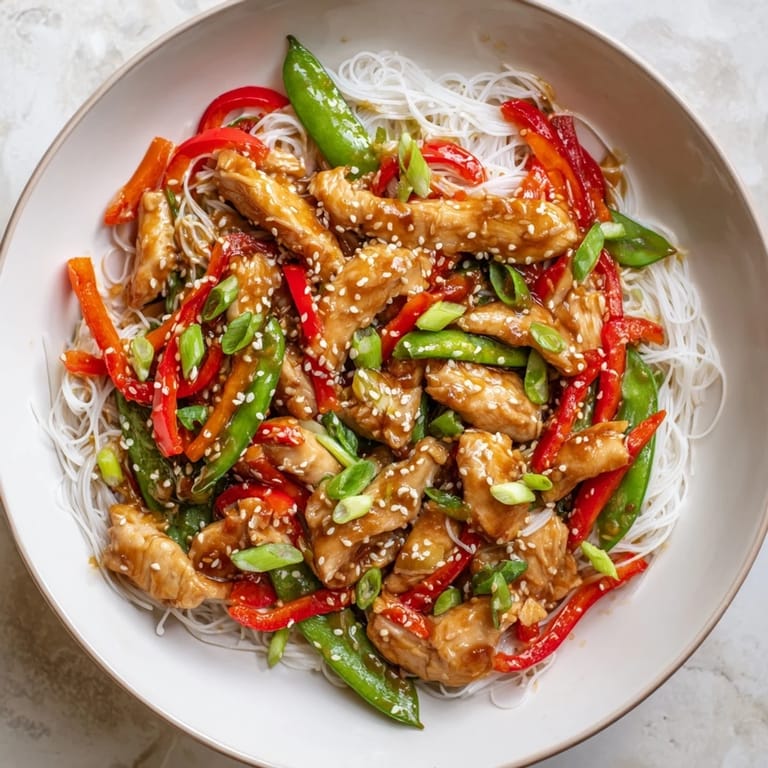
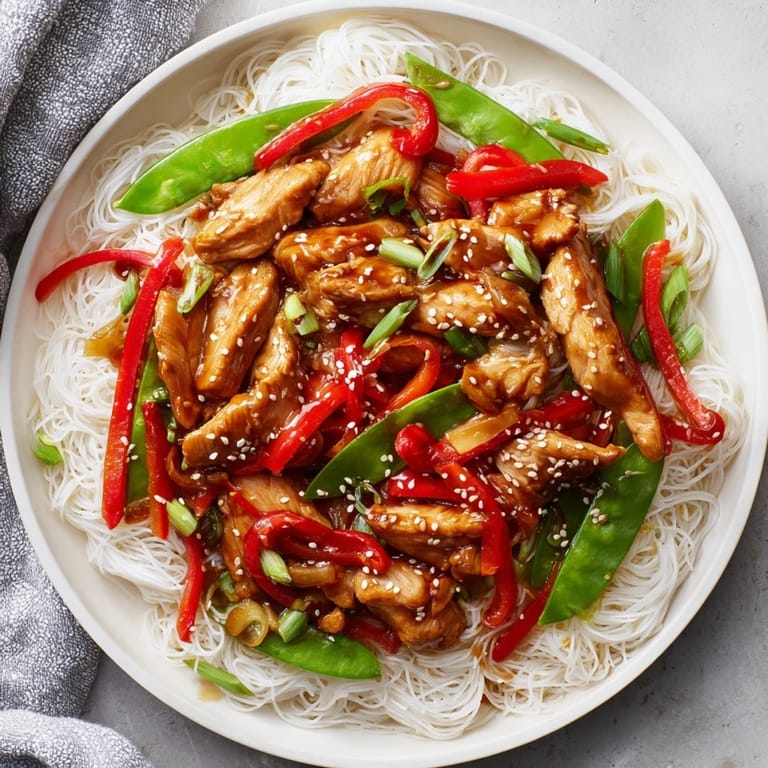
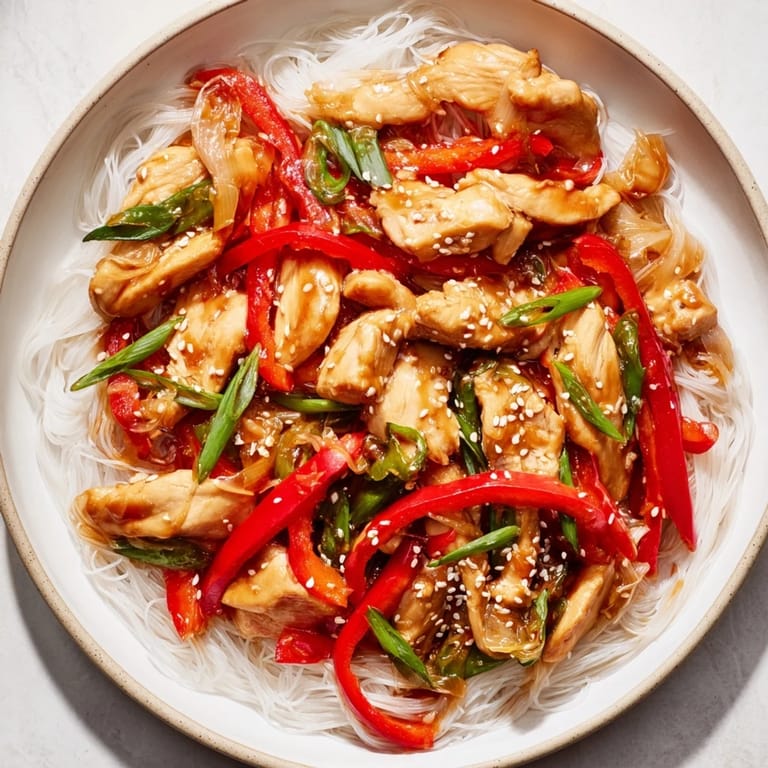
- Transfer to a serving bowl or individual plates and top with fresh spring onions and toasted sesame seeds while everything is still steaming hot.
 Pin It
 There was one night when a friend asked me to make this while they sat at my kitchen counter, and I realized halfway through cooking that I'd completely forgotten to add the sauce because we were having such a good conversation. We both laughed, added it right in, and it turned out perfect anyway. That's when I knew this was a keeper of a recipe.
Building Flavor Layers
The magic of this dish lives in how each ingredient plays a specific role. The soy sauce brings salt and depth, the hoisin adds a subtle sweetness and umami that makes people wonder what that certain something is, and the rice vinegar acts as a quiet hero that keeps everything balanced so nothing tastes heavy. I've learned that rushing to combine these elements or skipping even one throws off the whole conversation they're having with each other.
Timing Is Everything
This isn't a dish you can make ahead and reheat; the vegetables soften and lose their snap, and the noodles start absorbing the sauce until it disappears. The sweet spot is plating it the moment the sauce coats everything and the noodles are just heated through. I've found that cooking this dish forces you to be present and not distracted, which is actually a nice change from the usual multi-tasking kitchen life.
Customizing Your Version
One of the things I love about this recipe is how it bends without breaking. You can swap the chicken for tofu if you want something lighter, or shrimp if you want seafood sweetness instead. Add water chestnuts for extra crunch, or throw in broccoli if that's what you've got. The structure stays the same, but the dish becomes yours.
- Adjust the brown sugar up or down by a half tablespoon depending on your preference for sweetness.
- Fresh chili peppers work even better than red pepper flakes if you can slice them thin.
- Substitute leftover rotisserie chicken if you want to cut prep time even shorter.
 Pin It
 This recipe has become my go-to when I want to feel like I've made something impressive without spending half the evening in the kitchen. It's the kind of dish that tastes like you put in real effort, but leaves you with energy left over to actually enjoy eating it.
Questions About This Recipe
- → What type of chicken works best for this dish?
Boneless, skinless chicken thighs or breasts sliced thinly work best for tender, quick cooking.
- → Can I substitute the rice noodles with something else?
Yes, leftover cooked pasta or other thin noodles can be used as a base if rice noodles are unavailable.
- → How do I achieve the right sauce thickness?
Simmer the sauce briefly after combining with the chicken and vegetables to allow it to thicken slightly and coat everything well.
- → What are good garnish options?
Toasted sesame seeds and extra sliced spring onions add flavor and a crunchy texture as garnishes.
- → Can this be made dairy-free and gluten-free?
Yes, using gluten-free soy and hoisin sauces and omitting oyster sauce if necessary keeps it dairy and gluten-free.
- → How can I add a spicy kick?
Include crushed red pepper flakes when whisking the sauce or add fresh chili slices to increase heat.