 Pin It
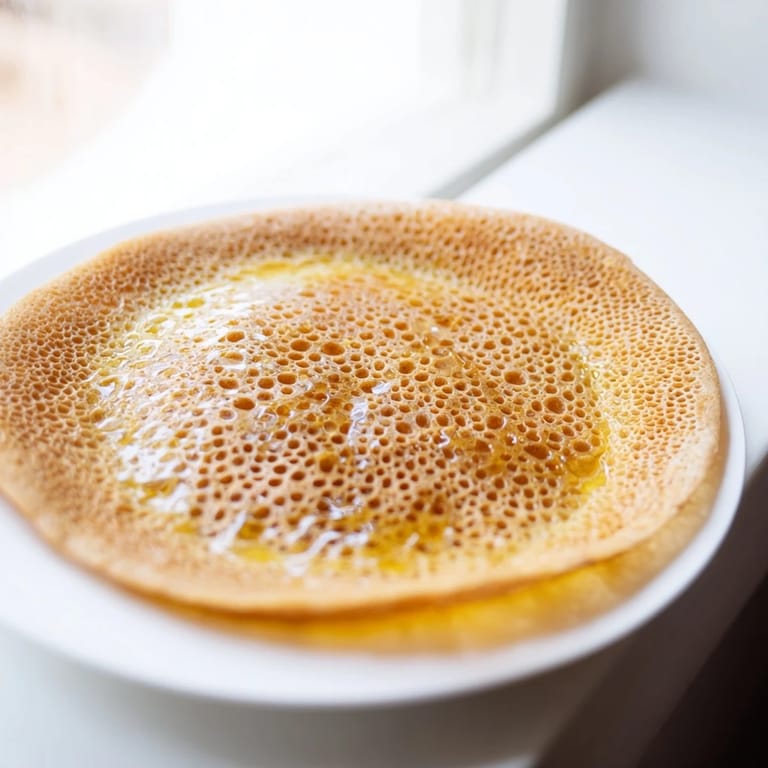
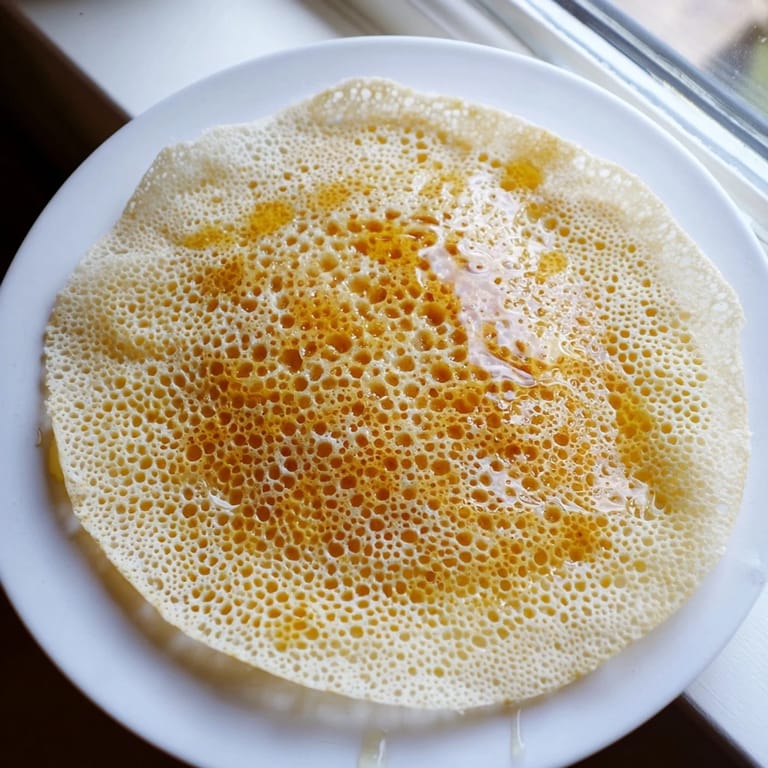
 My first baghrir moment came on a quiet morning in a tiny riad in Marrakech, where the smell of warm honey and melted butter floated through the courtyard like an invitation. I watched a woman at a communal stove create what looked like edible lace—thin, delicate, studded with a thousand tiny holes that caught the light. She never flipped it, just let the magic happen on one side, and when she handed me one still steaming, I understood why this humble pancake has been a treasured breakfast across North Africa for generations.
Years later, I made these for friends who were skeptical about anything called a pancake without eggs, and the moment they bit through that crispy-tender exterior into the airy inside, their whole faces changed. One friend actually closed her eyes and asked for the recipe before finishing her first one. That's when I realized baghrir isn't just breakfast—it's a conversation starter, a little edible gift that says you tried something real.
Ingredients
- Fine semolina: This is the star—it creates that signature honeycomb texture you can't replicate with regular flour, so don't skip it or substitute.
- All-purpose flour: Just enough to give the batter structure without making it heavy or dense.
- Warm water: Temperature matters here; too hot kills the yeast, too cool and nothing rises, so aim for bathwater-warm.
- Active dry yeast: This is what creates all those beautiful holes, so use fresh yeast and proof it properly in warm water if you're ever in doubt.
- Sugar and baking powder: Together they ensure lift and a slight sweetness that plays perfectly with honey drizzle.
- Salt: Just enough to balance the sweetness and bring out the nutty semolina flavor.
- Unsalted butter and honey: The finishing touch that turns these pancakes into something almost decadent.
Tired of Takeout? 🥡
Get 10 meals you can make faster than delivery arrives. Seriously.
One email. No spam. Unsubscribe anytime.
Instructions
- Mix your dry foundation:
- Combine semolina, flour, sugar, yeast, baking powder, and salt in a large bowl, making sure the yeast is evenly distributed so you don't end up with pockets of unriseable batter.
- Build the batter:
- Whisk in warm water gradually—this is key because dumping it all in at once creates lumps that are nearly impossible to break down, so go slow and patient.
- Let it rest and rise:
- Cover loosely and leave the batter at room temperature for about 30 minutes; you want it slightly bubbly and alive, not fully fermented, so don't abandon it overnight.
- Heat your pan:
- Use a nonstick skillet or crepe pan over medium heat, and crucially, don't grease it—the batter needs that tiny bit of friction to spread and create the holes.
- Pour and swirl:
- Pour roughly ¼ cup of batter into the center and gently swirl it to spread; it should naturally thin out and reach the edges, creating an almost lacy circle.
- Watch for the magic:
- Cook for about 2–3 minutes until the surface is completely covered with tiny holes and the top looks dry and matte—this is when you know it's ready to flip (or in this case, transfer to a plate).
- Keep the rhythm going:
- Stir the batter occasionally between baghrir to keep the semolina from settling, and try to maintain consistent pan temperature so each one cooks at the same speed.
- Warm your honey butter:
- In a small saucepan, gently melt butter with honey over low heat, stirring occasionally until they're glossy and unified.
- Serve immediately:
- Stack the baghrir while they're still warm and drizzle generously with the honey-butter mixture, so it soaks into all those beautiful holes.
 Pin It
 There's a moment during the second or third baghrir when you stop watching so carefully and just trust the process—when you realize you're not following a recipe anymore, you're participating in something people have been doing the same way for centuries. That's when baghrir stops being breakfast and becomes a small, edible meditation.
The Texture Secret
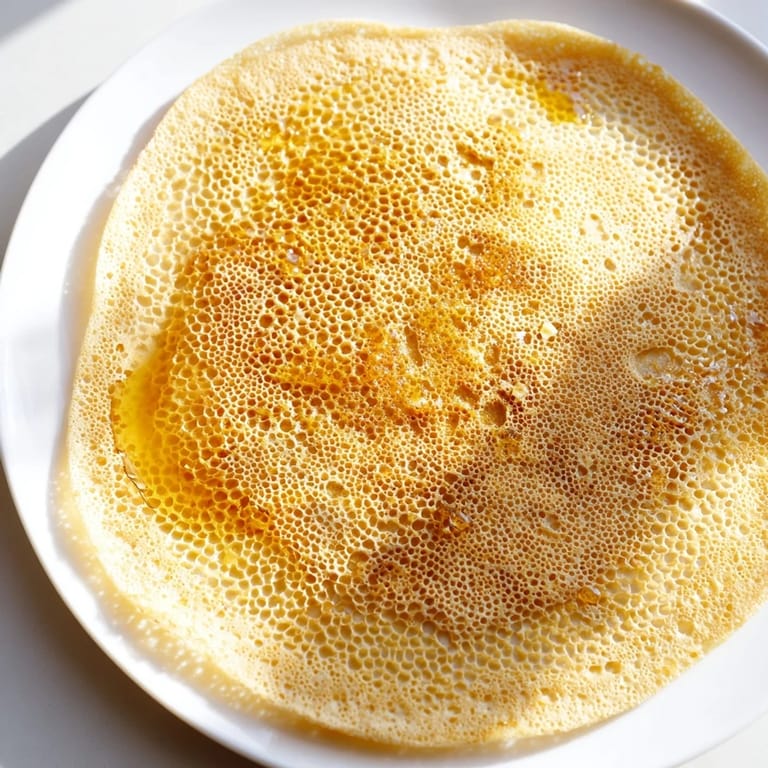
The honeycomb holes aren't a happy accident—they're the result of yeast creating tiny bubbles in the batter, combined with cooking on just one side so those bubbles stay intact. The semolina is crucial because its coarser particles create a slightly different structure than all-purpose flour alone, allowing the holes to form clearly and stay delicate rather than collapsing. Once you understand this, you'll never see a baghrir the same way again.
Timing and Temperature Matter
I've learned that making baghrir is as much about feel as it is about exact minutes—the 30-minute rest is a baseline, not a hard rule, because room temperature and humidity affect how quickly yeast works. In a warm kitchen, your batter might be ready in 20 minutes; in a cool one, it might take 40. The real indicator is seeing tiny bubbles breaking the surface and catching a slightly fermented smell when you lift the lid, which tells you the yeast has done its job.
Serving and Storage Wisdom
Baghrir are absolutely best enjoyed fresh and warm, when the contrast between the crispy exterior and pillowy interior is at its peak, but they'll keep in an airtight container for a day and can be gently reheated in a warm skillet for about 30 seconds per side. Some people fold them in half for elegance, others stack them high, and there's no wrong way—just get them to the table while they're still warm enough to let that honey-butter pool into the holes.
- Chopped toasted almonds or pistachios scattered on top add a wonderful textural contrast and feel unexpectedly fancy.
- A light dusting of cinnamon with your honey is another classic touch that feels like a small kitchen secret.
- Leftovers can become the best midnight snack when you eat one cold and slightly chewy, straight from the container.
 Pin It
 Make these when you want breakfast to feel like something more, when you want to create a memory instead of just eating something. Once you've made baghrir, you'll find yourself making them again, not because they're difficult, but because they're one of those rare dishes that tastes like home, even if that home is a place you've only visited in your dreams.
Questions About This Recipe
- → What gives Baghrir its honeycomb texture?
The honeycomb texture comes from the yeast fermentation and the batter resting period, which creates bubbles that form holes during cooking.
- → Should Baghrir be flipped while cooking?
No, Baghrir is cooked only on one side until the surface is dry and covered with holes, then removed from the heat.
- → Can I make the batter ahead of time?
Yes, but it’s best to cook Baghrir fresh for optimal texture. If needed, store the batter refrigerated and stir gently before cooking.
- → What is the best way to serve Baghrir?
Serve warm, generously drizzled with melted butter and honey for a classic finish that enhances the crepe’s natural flavors.
- → Can I add nuts or other toppings?
Yes, chopped nuts or a sprinkle of cinnamon can add extra texture and flavor to complement the traditional honey-butter drizzle.