 Pin It
 I discovered this tagine on a rainy afternoon while flipping through my grandmother's old cookbook, its pages stained with turmeric and what I suspect were tears of joy. The recipe itself was barely legible, but the margin notes—scribbled reminders about adding prunes at just the right moment—felt like she was standing in the kitchen beside me. That first time I made it, the apartment filled with such a warm, spiced perfume that my neighbor knocked on the door asking what magic I was performing. It took nearly three hours of patient simmering, but the moment I lifted the lid and saw the lamb falling apart at the gentlest nudge, I understood why she'd kept making this for forty years.
Years later, I made this for my sister's dinner party on a night when everything else felt chaotic, and something shifted the moment I served it. People slowed down, they actually tasted their food instead of just eating, and conversations deepened over shared bowls. That's when I realized this dish does something beyond nourishment—it creates space for people to be present together.
Ingredients
- Lamb shoulder, 1.5 kg cut into 2-inch cubes: This cut becomes impossibly tender when braised low and slow, and the marbling melts into the sauce creating natural richness.
- Olive oil, 2 tbsp: Use good quality oil for browning the meat—it builds the flavor foundation everything else sits on.
- Onions, 2 large finely chopped: They dissolve into the sauce and create a subtle sweetness that balances the spices.
- Garlic, 4 cloves minced: Mince it small so it distributes evenly rather than leaving harsh chunks.
- Fresh ginger, 1-inch piece grated: Fresh ginger adds brightness that powder can't touch—don't skip this step.
- Ground cinnamon, 1½ tsp: This is the backbone of the flavor profile, so taste as you go if your cinnamon is particularly strong.
- Ground cumin, 1 tsp: Cumin adds earthiness and depth without overpowering the sweeter spices.
- Ground coriander, 1 tsp: This subtle spice ties everything together with a warm, almost citrus note.
- Ground turmeric, 1 tsp: Besides the golden color it provides, turmeric brings a gentle warmth and anti-inflammatory benefit.
- Ground black pepper, ½ tsp: Black pepper keeps the spice blend from becoming one-dimensional.
- Ground allspice, ½ tsp: A pinch of allspice adds complexity and a hint of clove-like warmth.
- Ground ginger, ½ tsp: This complements the fresh ginger and adds a subtle powder-like warmth.
- Saffron threads, 1 pinch optional: If you have it, saffron elevates this to something truly special—the cost is worth it for the luxury it brings.
- Beef or lamb broth, 400 ml: Homemade broth makes a noticeable difference, but quality store-bought works when you're short on time.
- Canned chopped tomatoes, 400 g: Tomatoes add acidity to balance the sweetness and provide structure to the sauce.
- Honey, 2 tbsp: Raw or regular honey both work, adding subtle sweetness that prunes will echo.
- Pitted prunes, 200 g: These plump up in the braising liquid and create pockets of concentrated sweetness throughout.
- Whole blanched almonds, 80 g: Toasting them first brings out their nuttiness and prevents them from becoming mushy.
- Toasted sesame seeds, 2 tbsp: Sprinkle these at the very end for texture and a nutty final note.
- Fresh cilantro or parsley, chopped: Either works, though cilantro adds a brighter, more assertive finish.
- Salt, to taste: Hold off until the end because the broth and tomatoes already carry sodium.
Tired of Takeout? 🥡
Get 10 meals you can make faster than delivery arrives. Seriously.
One email. No spam. Unsubscribe anytime.
Instructions
- Set your stage:
- Preheat your oven to 160°C (325°F), or have a stovetop-safe tagine or Dutch oven ready. The low, gentle heat is what makes this magic happen.
- Brown the lamb properly:
- Heat 1 tbsp olive oil in your large pot over medium-high heat until it shimmers—don't rush this step. Working in batches so the meat actually browns instead of steaming, let each piece sit undisturbed for a minute or two before turning, then transfer to a plate once it has a golden crust.
- Build the flavor base:
- Add the remaining olive oil to the pot, then add your chopped onions, minced garlic, and grated ginger. Cook for about 5 minutes, stirring occasionally, until the aromatics soften and smell absolutely incredible—this is where the foundation of your dish is being laid.
- Bloom the spices:
- Sprinkle in all the spices and saffron if you're using it, then stir constantly for about 1 minute until the mixture becomes fragrant and coats the vegetables. This releases the oils in the spices and wakes them up.
- Bring it all together:
- Return the browned lamb to the pot, then add your chopped tomatoes, broth, and honey. Stir everything together until well combined, then let it come to a gentle simmer—you're looking for lazy bubbles at the surface, not an aggressive boil.
- Braise low and slow:
- Cover the pot and transfer it to the oven, or if staying on the stovetop, reduce the heat to low and keep it covered. Cook for 1 hour and 30 minutes, stirring occasionally so everything cooks evenly and the flavors meld.
- Toast the almonds:
- While the tagine is doing its thing, toast your whole blanched almonds in a dry skillet over medium heat for 2 to 3 minutes, shaking the pan occasionally, until they turn golden and smell toasty. Watch them closely—they go from golden to burnt in seconds.
- Add the sweet elements:
- After the 1 hour 30 minutes mark, add the prunes and toasted almonds to the tagine, give it a good stir, and return it to the oven, covered, for another 30 to 45 minutes. You'll know it's done when the lamb is so tender it falls apart at the slightest pressure and the sauce has thickened noticeably.
- Taste and adjust:
- Remove from heat and taste the sauce, adding salt gradually until it tastes right to you. Remember that the cilantro or parsley garnish will add a fresh note.
- Present with pride:
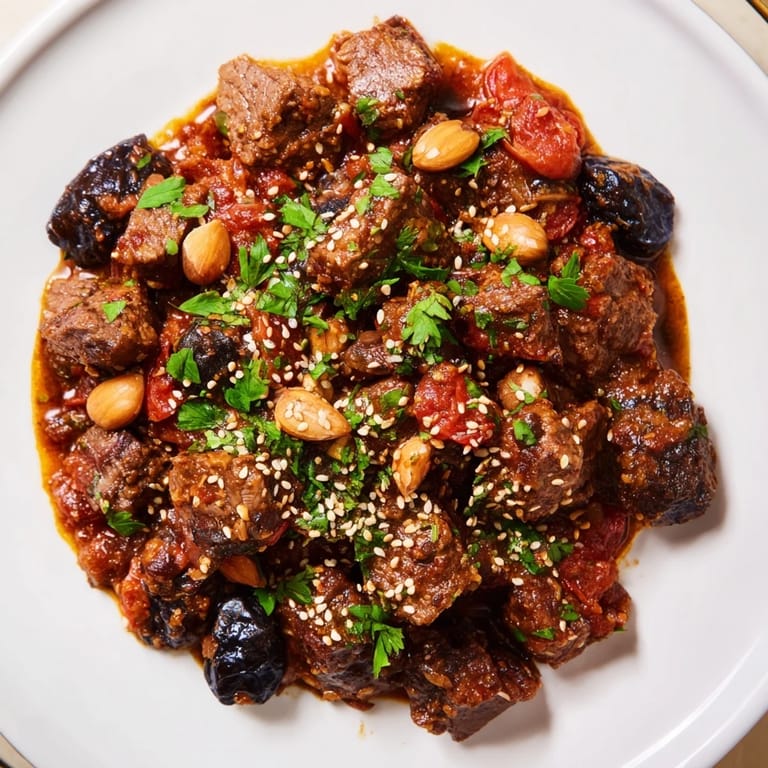
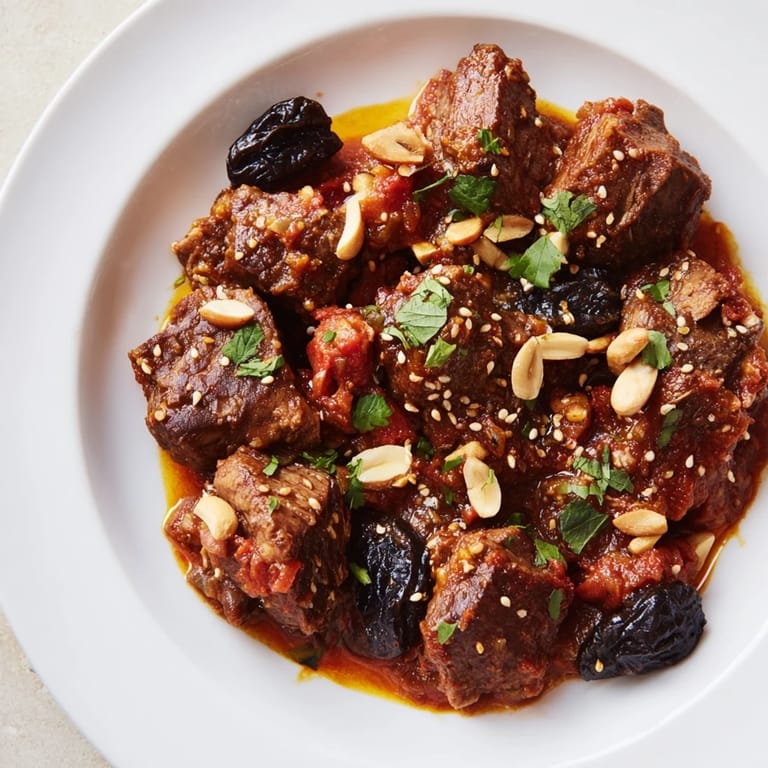
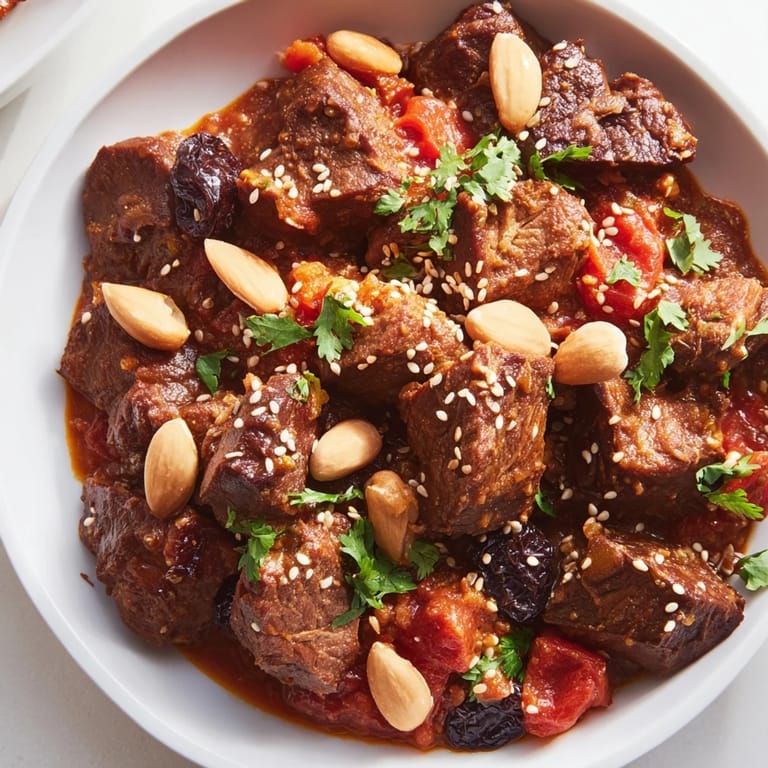
- Serve your tagine hot, garnished generously with sesame seeds and chopped fresh herbs. The final garnish is where everything comes together visually and adds that last little zing.
 Pin It
 The first time someone asked me for the recipe, I realized I'd been so caught up in the act of making it that I'd never actually written it down. That moment taught me that some things are worth sharing not because they're complicated, but because they're made with intention and fed to people you care about.
The Magic of Moroccan Spices
What makes this tagine feel so different from other braised meat dishes is the careful layering of warm spices that work in harmony rather than competition. Cinnamon and cumin form the bold base, while coriander and turmeric add subtle warmth and depth, and the smaller touches of allspice and black pepper keep everything balanced. The first time I tasted a properly spiced tagine, I understood that Moroccan cooking isn't about individual flavors shouting; it's about creating a conversation between sweet, warm, and savory notes that feels almost musical on your tongue.
Planning Ahead and Pairing
This dish actually improves when you make it a day or two ahead, which is a gift when you're planning to feed people. The flavors settle and deepen overnight in the refrigerator, and reheating gently brings everything back to life. Serve it alongside fluffy steamed couscous or saffron rice to soak up the sauce, or tear into crusty bread and use it to scoop up the precious liquid. For drinks, a Moroccan red wine or a glass of cooling mint tea afterward creates the perfect bookend to the meal.
Variations and Personal Touches
Once you understand the bones of this recipe, you can play with it in ways that feel right for your kitchen and your family. Some nights I swap apricots for prunes when I want something slightly tangier, and other times I add a pinch more saffron if I'm feeling luxurious. A tip from my aunt changed everything: marinating the lamb overnight in the spices and a bit of olive oil before browning it deepens the flavor so noticeably that I rarely skip it now. These small adjustments are how a recipe becomes yours, how it stops being something you make and starts being something you know.
- Marinating the lamb overnight in spices and olive oil transforms the depth of the finished dish.
- Substitute apricots for prunes to shift the flavor profile slightly more tart and less jammy.
- A pinch more saffron is never a mistake if you want to add that luxurious note.
 Pin It
 Make this tagine when you want to slow down and remember why cooking matters—it transforms simple ingredients into something that nourishes both body and spirit. The kitchen fills with warmth, the flavors deepen with patience, and the people you serve it to will feel the care in every spoonful.
Questions About This Recipe
- → What cut of lamb works best for this dish?
Lamb shoulder is ideal due to its tenderness and flavor when slow-cooked, yielding juicy, succulent meat.
- → Can I prepare this dish without a traditional tagine?
Yes, a heavy Dutch oven or covered oven-safe pot works well to slowly braise the lamb and develop deep flavors.
- → How are prunes used to enhance the stew?
Prunes add a subtle natural sweetness and a silky texture that balances the warm spices and savory meat.
- → Why are almonds toasted before adding?
Toasting intensifies their nutty flavor and provides a pleasant crunch contrasting the tender lamb and soft prunes.
- → What spices create the signature Moroccan flavor here?
Aromatic spices include cinnamon, cumin, coriander, turmeric, allspice, ginger, and optional saffron to bring depth and warmth.
- → What side dishes complement this North African stew?
Steamed couscous, saffron rice, or crusty bread are traditional accompaniments that soak up the rich sauce perfectly.