 Pin It
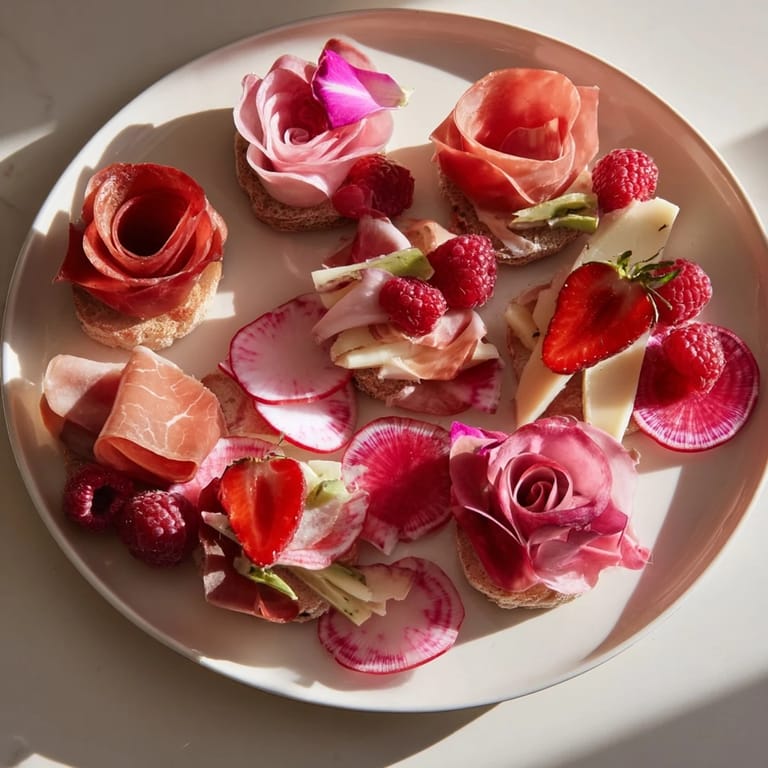
 I still remember the afternoon I discovered that food could be art. I was preparing for my sister's spring brunch, feeling uninspired by the usual charcuterie board, when I noticed how the afternoon light caught the pale pink of the prosciutto roses I'd been shaping. That moment sparked an idea—what if I arranged an entire platter like a watercolor painting, letting colors blend and flow into one another? The Pink Petal Watercolor Wash was born that day, and it's become my signature move for any gathering that deserves a little magic on the table.
The first time I made this for a spring gathering, my friend Sarah walked in, stopped dead in her tracks, and said, "Did you paint that?" Watching people react to beautiful food the way they react to art—that's when I knew this platter had something special. Now whenever someone hosts a brunch or celebration, they ask me to bring the watercolor board.
Ingredients
- Prosciutto: One hundred grams sliced paper-thin—the key is asking your butcher to slice it for you, which gives you those delicate pieces that fold into roses without tearing. I learned this after mangling my first batch with a dull knife.
- Mortadella: One hundred grams adds a softer, more delicate pink tone that prosciutto alone can't achieve. The subtle spices give it depth.
- Pink radishes: Six to eight small ones, sliced thin on a mandoline if you have one, though a sharp knife works fine too. They add peppery freshness that brightens the richer meats and cheeses.
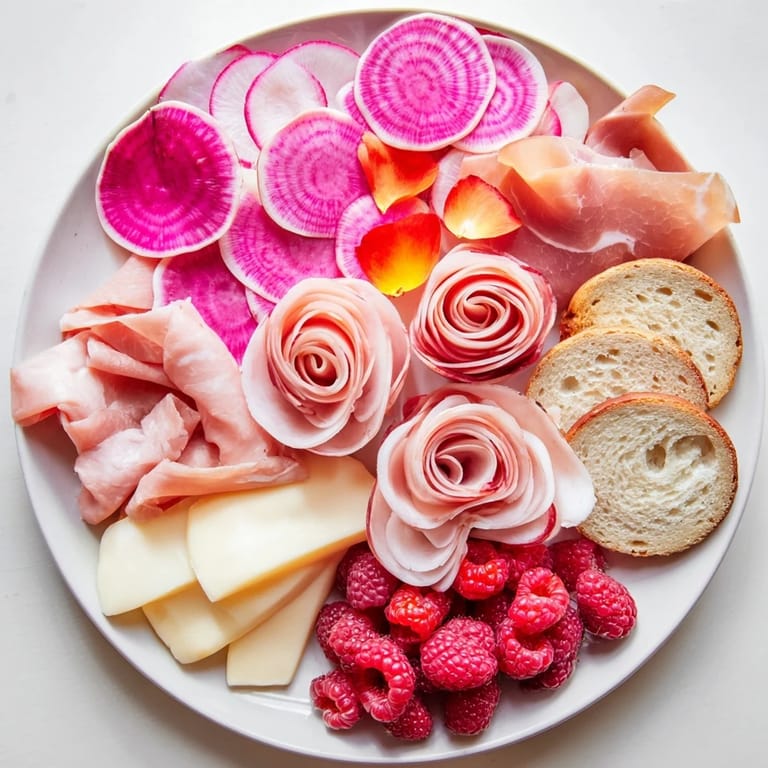
- Watermelon radish: One whole radish sliced thin—this is the secret weapon. Those pale red concentric rings look like actual watercolor brushstrokes, and guests always ask what it is.
- Beet: One small beet, cooked ahead of time and cooled, then sliced thin. Cook it separately so the earthy color stays true and doesn't bleed onto other ingredients.
- Pink-hued cheese: One hundred grams of something special like port wine Derby, rosé goat cheese, or a berry-washed rind—this is where the platter gets its unified color story. The investment in the right cheese makes all the difference.
- Brie or camembert: One hundred grams cut into wedges provides creamy contrast to everything else and bridges the gap between the savory meats and fresh fruits.
- Baguette: One small baguette sliced on the bias—the angle makes the slices feel more intentional and elegant. If serving gluten-free guests, use your favorite crackers instead.
- Rice crackers: One package adds a delicate crunch and another textural layer without competing with the other flavors.
- Fresh strawberries: One cup halved adds natural sweetness and completes the color palette. Halve them just before serving so they stay fresh.
- Raspberries: One cup whole brings brightness and a little tartness that cuts through the richness beautifully.
- Edible rose petals or microgreens: Optional, but these finishing touches transform the platter from lovely to absolutely show-stopping.
Tired of Takeout? 🥡
Get 10 meals you can make faster than delivery arrives. Seriously.
One email. No spam. Unsubscribe anytime.
Instructions
- Find your canvas:
- Choose a large platter or wooden board—the bigger, the better, because you want room for colors to flow and blend. I use a pale cream linen board because it makes the pinks pop without competing for attention.
- Create the roses:
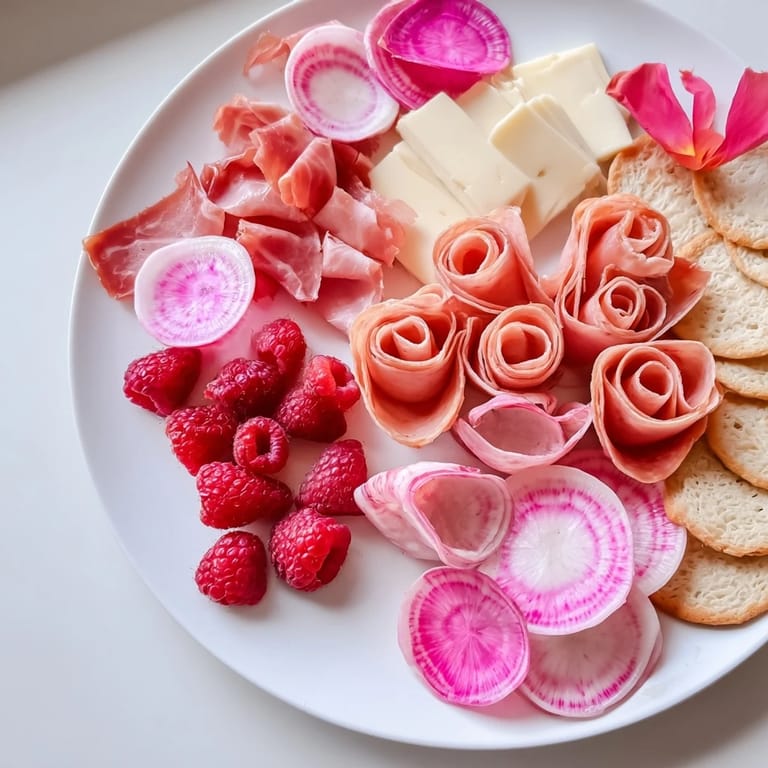
- Take each prosciutto slice and gently fold or roll it into a loose rose shape, then arrange these in small clusters across your board. They should look effortless and organic, not perfectly symmetrical—that's part of their charm.
- Layer the mortadella:
- Place mortadella slices in loose, open folds beside the prosciutto roses. Let them overlap slightly, the way petals naturally fall. You're building dimension here, not covering every inch.
- Paint with vegetables:
- This is where it starts to feel like actual art. Arrange your pink radish, watermelon radish, and beet slices in overlapping, slightly fanned layers. Think of brushstrokes—they should flow across the board, with colors bleeding into one another. The watermelon radish, in particular, should be positioned where it catches the light so those beautiful rings shine through.
- Place the cheeses:
- Cluster the pink-hued cheese slices and brie or camembert wedges in groups, allowing them to sit among the vegetables and meats. Position them where the colors harmonize—let the pink cheese sit near the prosciutto roses, the brie where it can echo the strawberries.
- Add structure and texture:
- Arrange baguette slices and rice crackers in gentle curves along one edge or interspersed throughout, depending on your layout. They should feel like they're part of the overall composition, not an afterthought.
- Finish with fruit:
- Scatter strawberry halves and whole raspberries in small piles. These add both sweetness and the final brushstrokes of color that tie everything together.
- The final flourish:
- If you're using edible rose petals or microgreens, scatter them now, focusing on spaces where they'll catch light and draw the eye. Then step back, admire your work, and serve immediately so everything tastes as fresh as it looks.
 Pin It
 Last spring, I made this platter for my grandmother's eightieth birthday lunch, and three generations of our family stood around that board for a full five minutes before anyone took a bite. My nephew, who's six, said it looked like a princess's treasure. That's when I realized this dish isn't just about flavor or even nutrition—it's about creating a moment that people remember.
Choosing Your Cheeses Wisely
The cheese selection is what transforms this from a nice platter into a cohesive work of art. I spent months experimenting with different varieties before landing on the combination that works best. Port wine Derby has this naturally rosy hue that photographs beautifully and tastes complex without being overwhelming. Rosé goat cheese brings a creamy element and a subtle tang that plays wonderfully against the rich prosciutto. If you can find a berry-washed rind cheese, even better—it adds visual depth and a subtle fruity note. The brie or camembert acts as your creamy neutral, the ingredient that lets guests take a break from the boldness of everything else and reset their palate. When you're shopping, ask your cheesemonger for recommendations based on what you find—they often have access to limited varieties that will make your board unique.
The Art of Vegetable Slicing
Thin slicing is everything here, and I've learned this lesson through trial and error. A mandoline slicer is genuinely worth the investment if you plan to make elegant platters regularly—it creates consistent, paper-thin slices that catch light beautifully and cook evenly (if you were to cook them, which you won't here). If you don't have a mandoline, a very sharp knife and a steady hand will work, though it takes more time and patience. The key is to slice each vegetable at the same thickness so visually, everything feels intentional. I used to get frustrated with radishes slipping around while I sliced them—now I cut them in half lengthwise first, which gives you a flat surface to work with. For beets, always cook and cool them completely before slicing, and wear gloves unless you enjoy having pink hands for a week.
Timing and Preparation
While this platter only takes twenty minutes to assemble, the smartest approach is to do some prep work in advance. Cook your beet the day before and store it in an airtight container in the refrigerator—it actually tastes better when it's had time to absorb its own flavors. Slice your baguette up to two hours ahead, store it covered so it doesn't dry out, and toast it lightly if you prefer a bit of crunch. Get your cheeses out of the refrigerator about thirty minutes before you plan to serve—they taste so much better when they're not ice-cold, and the flavors bloom more fully. The vegetables can be sliced a few hours ahead, but store them in a damp paper towel in the refrigerator so they stay crisp. Wait until the last possible moment to arrange everything, and serve immediately so the strawberries and raspberries maintain their fresh appearance.
- If you're making this for a big event, assemble it on a board you can move easily—a cutting board works great for this
- Keep a damp cloth nearby while you're arranging so you can wipe your hands between ingredients—it prevents flavors and colors from transferring
- Have your edible petals or microgreens ready to go in a separate small bowl, applied right at serving time for maximum impact
 Pin It
 This platter taught me that cooking isn't always about following rules—sometimes it's about looking at what you have and imagining something beautiful. Every time you make it, it'll be a little different, and that's exactly as it should be.
Questions About This Recipe
- → How do I create the rose shapes with prosciutto?
Gently roll or fold thin slices of prosciutto into small rose-like forms for an elegant visual effect.
- → Can I make this platter vegetarian?
Yes, omit the meats and add more cheese and vegetable varieties to maintain the vibrant presentation.
- → What cheeses work best for the pink hues?
Pink-hued cheeses like rosé goat cheese, port wine Derby, or berry-washed rind cheeses complement the color palette beautifully.
- → How should I slice the vegetables for layering?
Use very thin slices, preferably with a mandoline slicer, to create delicate overlapping layers that mimic watercolor strokes.
- → What are some ideal garnishes to finish this platter?
Edible rose petals or fresh microgreens add an elegant touch and enhance the delicate theme.
- → Which wines pair well with this dish?
Rosé wines offer a lovely complement to the flavors and delicate color scheme of the platter.