 Pin It
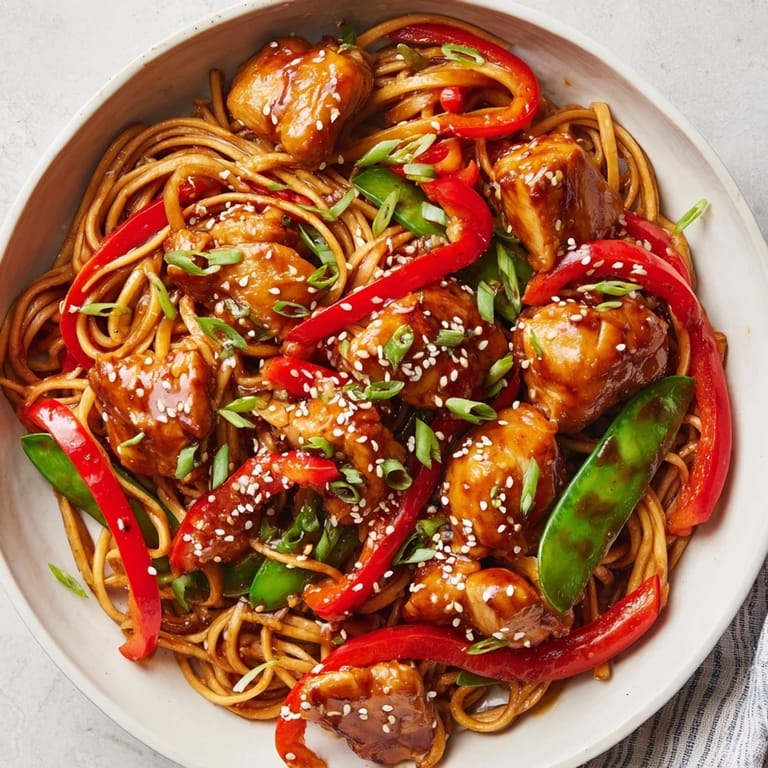
 There's a particular Tuesday evening that stands out—I was standing in my kitchen with a half-empty jar of hoisin sauce and some ground chicken that needed using up, when I realized I'd been craving the snap and sizzle of a good stir-fry. That night, I threw together linguine with the chicken and whatever vegetables I had on hand, and something magical happened when those Asian flavors met the pasta. It became the dish I make now whenever I want something that feels both comforting and a little bit adventurous, ready in the time it takes to cook pasta.
I remember making this for a friend who mentioned she'd been eating the same three meals on rotation, and watching her face light up when she took that first bite was worth every minute at the stove. She asked for the recipe immediately, and now it's in regular rotation at her house too—which somehow made it feel less like just my dinner and more like something that actually matters.
Ingredients
- Linguine, 350 g: The slightly thicker noodles hold onto the sauce better than thin spaghetti, and they have just enough texture to feel substantial alongside the chicken.
- Ground chicken, 450 g: Buy it fresh if you can and cook it the same day; it browns faster and tastes noticeably better than frozen.
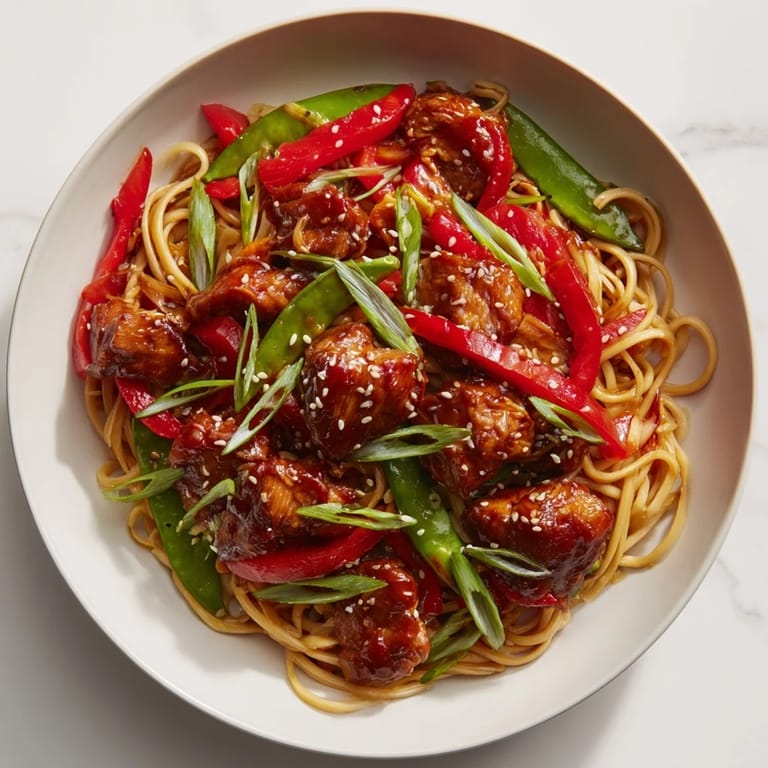
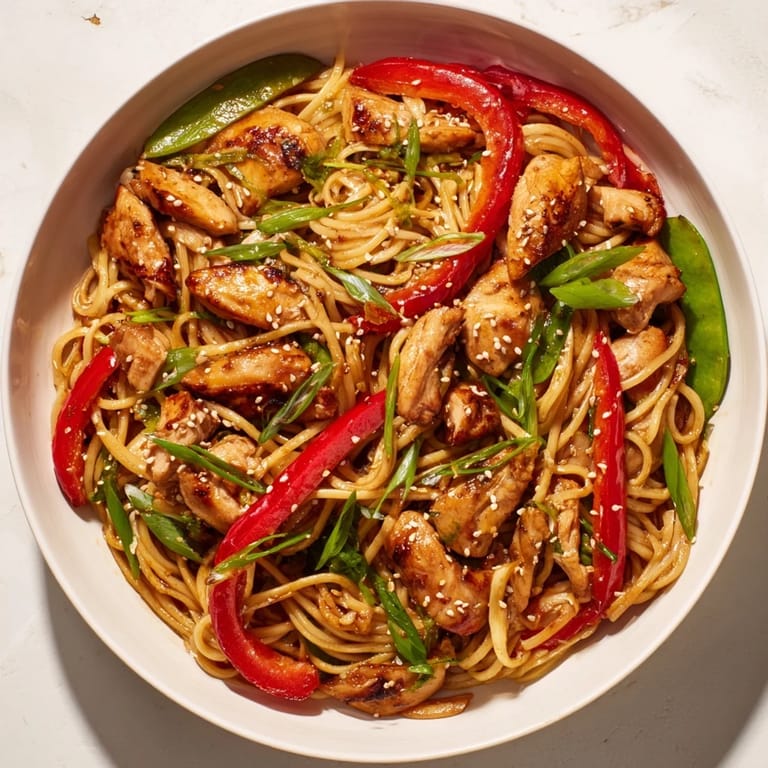
- Red bell pepper, 1 thinly sliced: The sweetness cuts through the savory hoisin beautifully, and the color makes the dish look alive.
- Snap peas, 1 cup halved: They stay crisp if you don't overcook them, which means you'll get that texture contrast that makes eating interesting.
- Green onions, 2 thinly sliced: Reserve a handful for the end—raw green onion on top adds a bright sharpness that brings everything into focus.
- Garlic and ginger, 2 cloves and 1-inch piece: Mince them right before cooking so they release their oils; the smell alone will make you hungry.
- Hoisin sauce, 5 tbsp: This is the backbone of the dish, so don't skimp on quality—a good hoisin should taste rich and complex, not just sweet.
- Low-sodium soy sauce, 2 tbsp: Low-sodium lets you control the salt instead of the sauce controlling you.
- Rice vinegar, 1 tbsp: The acidity keeps the dish from feeling heavy, balancing all that richness.
- Toasted sesame oil, 2 tsp: A little goes a long way; it's about aroma and nutty depth, not quantity.
- Chili garlic sauce, 1 tsp optional: Add it if you like heat, but know that this dish is naturally savory-forward and doesn't need spice to shine.
- Honey, 1 tbsp: This rounds out the sauce, softening the sharp edges of vinegar and soy without making it cloying.
- Toasted sesame seeds, 2 tbsp: Toast them yourself if you have time—raw sesame seeds taste flat in comparison, and homemade makes a real difference.
Tired of Takeout? 🥡
Get 10 meals you can make faster than delivery arrives. Seriously.
One email. No spam. Unsubscribe anytime.
Instructions
- Get your water boiling and pasta ready:
- Fill a large pot with salted water—it should taste like the sea—and bring it to a rolling boil. Cook your linguine to just al dente, which means it should still have a slight firmness when you bite it. The pasta will finish cooking a bit more when you toss it with the hot sauce, so don't let it get soft.
- Mix your sauce while the pasta cooks:
- In a small bowl, whisk together hoisin, soy sauce, rice vinegar, sesame oil, chili garlic sauce if you're using it, and honey until everything is combined and smooth. Taste it straight from a spoon—it should feel balanced, not too salty or too sweet, with a gentle savory undertone.
- Brown the chicken until it's cooked through:
- Heat a large skillet or wok over medium-high heat and add a splash of neutral oil. Once it's shimmering, add your ground chicken and break it up with a spoon, stirring occasionally until there's no pink left, which usually takes about 5 minutes. You want it lightly browned, not gray.
- Wake up the aromatics:
- Add your minced garlic, grated ginger, and most of the green onions (save some for garnish) to the chicken. Stir constantly for about a minute until the kitchen smells incredible—that's when you know the aromatics are releasing their oils.
- Add the vegetables and cook until they're tender-crisp:
- Toss in your red bell pepper and snap peas, stirring often, for about 2 to 3 minutes. You want them soft enough to enjoy but still with a slight snap when you bite them—overcooked vegetables taste like defeat.
- Pour in the sauce and coat everything:
- Add your sauce to the skillet and toss everything together so the chicken and vegetables are evenly coated. The sauce will cling to the chicken and warm through in about a minute.
- Bring the pasta into the party:
- Add your cooked, drained linguine to the skillet and toss everything together. If it looks a little dry, add a splash of that reserved pasta water—start with a couple tablespoons and add more as needed until the sauce coats the pasta without pooling at the bottom.
- Finish and serve:
- Take the skillet off the heat, sprinkle with toasted sesame seeds and your reserved green onions or fresh cilantro if you like it. Serve immediately while everything is still hot and the flavors are singing.
 Pin It
 There was a night when I made this for my partner after they'd had a rough day, and they ate the whole plate without saying much until the end, when they just said, "thank you." That's when I realized this dish had become more than just dinner—it was a way of saying I was thinking of you without having to use those exact words.
Why This Fusion Works
Pasta absorbs sauce in a way that rice or noodles do their own way, and hoisin has this deep, complex sweetness that feels completely at home nestled between garlic and ginger. The ground chicken is lean enough that it doesn't make you feel sluggish afterward, but savory enough that it genuinely satisfies. There's something about combining the two cuisines that feels honest rather than gimmicky—Asian aromatics and sauces have been pairing with wheat noodles for centuries in different forms, so this is just another conversation in that tradition.
Timing and Prep Strategy
The secret to making this in 35 minutes is doing your prep work before you turn on the heat. Slice your vegetables, mince your garlic and ginger, measure out your sauce ingredients, and reserve your pasta water before you even put a pot on the stove. Once you start cooking, everything moves quickly, and you won't have time to scramble looking for the sesame oil while your chicken is sitting there browning.
Variations That Keep Things Interesting
The beautiful thing about this dish is that it's flexible without losing its identity. Ground turkey works just as well as chicken if that's what you have, and pork brings a slightly richer flavor that some people prefer. For vegetarians, firm tofu or a plant-based ground meat substitute will take on all these flavors beautifully, though you might want to use a vegetarian hoisin to be safe. Some nights I add a handful of mushrooms or baby bok choy, and other times I'll swap the linguine for ramen noodles if I want something a bit more casual. The sauce is really the constant—once you get that right, you can build around it however you like.
- Vegetarian hoisin sauces exist and taste nearly identical to the traditional version if you're cooking for mixed diets.
- If you add mushrooms, slice them thin and cook them with the bell pepper so they get tender all the way through.
- Leftover sauce keeps for a week in the refrigerator and is wonderful on grilled vegetables or chicken the next day.
 Pin It
 Make this when you want something that tastes like you spent hours in the kitchen but actually took you less time than scrolling through your phone would have. It's the kind of meal that turns a regular evening into something worth remembering.
Questions About This Recipe
- → Can I substitute ground chicken with other proteins?
Yes, ground turkey or pork can be used in place of chicken, or for a vegetarian twist, firm tofu or plant-based ground alternatives work well.
- → How do I keep the vegetables crisp?
Sauté the vegetables just until tender-crisp, around 2–3 minutes, to maintain their crunch and vibrant color.
- → What sauce ingredients create the flavor profile?
Hoisin sauce, soy sauce, rice vinegar, toasted sesame oil, and a touch of honey combine to produce a balanced sweet, savory, and tangy sauce.
- → Is chili garlic sauce required?
Chili garlic sauce is optional and adds a mild heat, but the dish is flavorful and well-balanced without it.
- → How can I adjust the consistency of the sauce?
Reserved pasta water can be added gradually when tossing the linguine to achieve a smooth, coating sauce consistency.
- → What garnishes enhance the final dish?
Toasted sesame seeds and fresh cilantro or scallions add aroma, texture, and vibrant color as finishing touches.