 Pin It
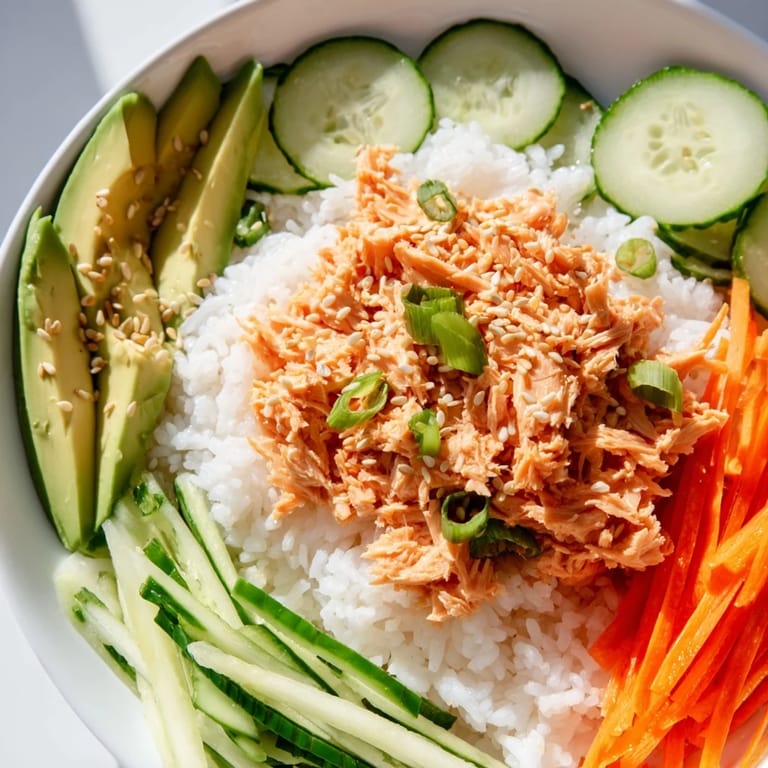
 There's something about opening a tin of salmon that transports me straight to my grandmother's kitchen, though she'd never admit canned fish was legitimate. One lazy weeknight, I found myself staring at that familiar aluminum can in my pantry and decided to prove her wrong, layering it with sriracha mayo and bright vegetables over jasmine rice. The heat, the creaminess, the unexpected complexity that emerged from five minutes of stirring—it felt like I'd accidentally invented something entirely my own.
I made this for my partner on a Wednesday when we were both too tired to think, and watching them go back for seconds told me everything. That moment when someone who usually picks at dinner actually enjoys eating, not as obligation but as genuine pleasure—that's when I knew this bowl had staying power. The colors helped too; there's something about those crisp vegetables and creamy salmon that makes even a quick meal feel intentional.
Ingredients
- Jasmine or sushi rice: The fragrance matters more than you'd think, and rinsing until the water runs clear prevents gumminess that ruins everything.
- Canned salmon: Drain it thoroughly, then flake it gently with a fork so you get tender pieces instead of a paste.
- Mayonnaise: Don't skip the fat; it's what carries the sriracha flavor and makes the whole thing luxurious.
- Sriracha sauce: Start with less than you think you need and taste as you go, because this dish should warm you, not punish you.
- Toasted sesame oil: A little goes far, and the toasted variety has a depth that regular sesame oil simply can't match.
- Fresh vegetables: The cucumber stays crispest if sliced just before serving, and avocado brown faster than you expect so wait until the last moment.
- Toasted sesame seeds: Toast them yourself if you can; the difference between pre-toasted and homemade is the difference between okay and unforgettable.
- Scallions: The raw bite cuts through the richness perfectly, so don't cook them or you lose the whole point.
Tired of Takeout? 🥡
Get 10 meals you can make faster than delivery arrives. Seriously.
One email. No spam. Unsubscribe anytime.
Instructions
- Rinse and cook the rice:
- Run cold water over the rice in a fine-mesh strainer until the water flows clear—this removes the starch that makes rice stick together. Combine with fresh water in a saucepan, bring to a rolling boil, then cover and drop the heat to low for twelve to fifteen minutes.
- Build the spicy salmon:
- Drain your salmon can thoroughly, then use a fork to gently break the fish into flakes. In a bowl, fold the salmon with mayonnaise, sriracha, soy sauce, and sesame oil, tasting as you go so you control the heat level.
- Prepare the vegetables:
- This is where speed matters—slice the cucumber thin enough to catch light, slice the avocado just before assembly so it doesn't oxidize, and shred the carrot if you haven't already. If using edamame, pop them in the microwave for a minute until heated through.
- Assemble the bowls:
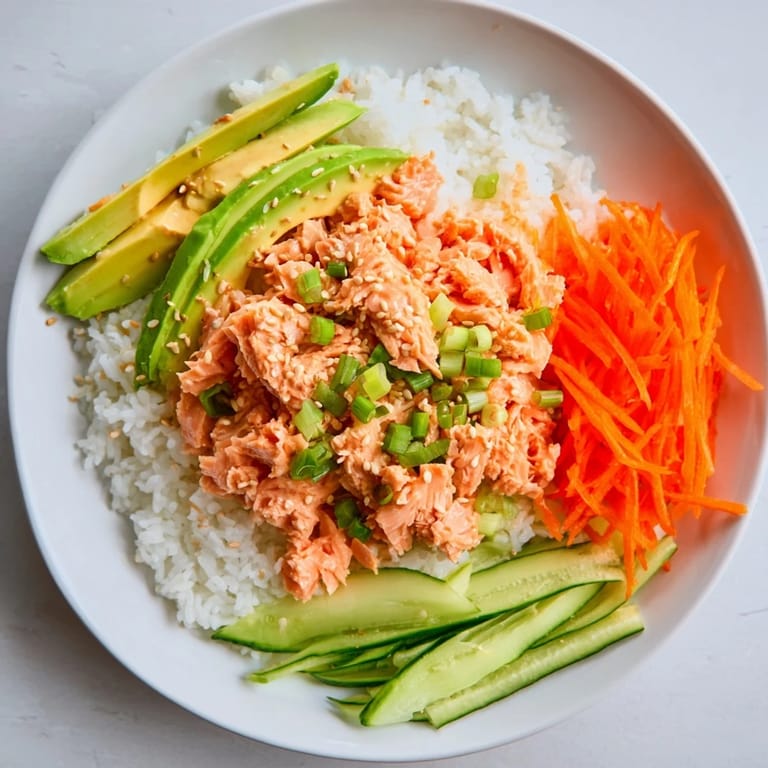
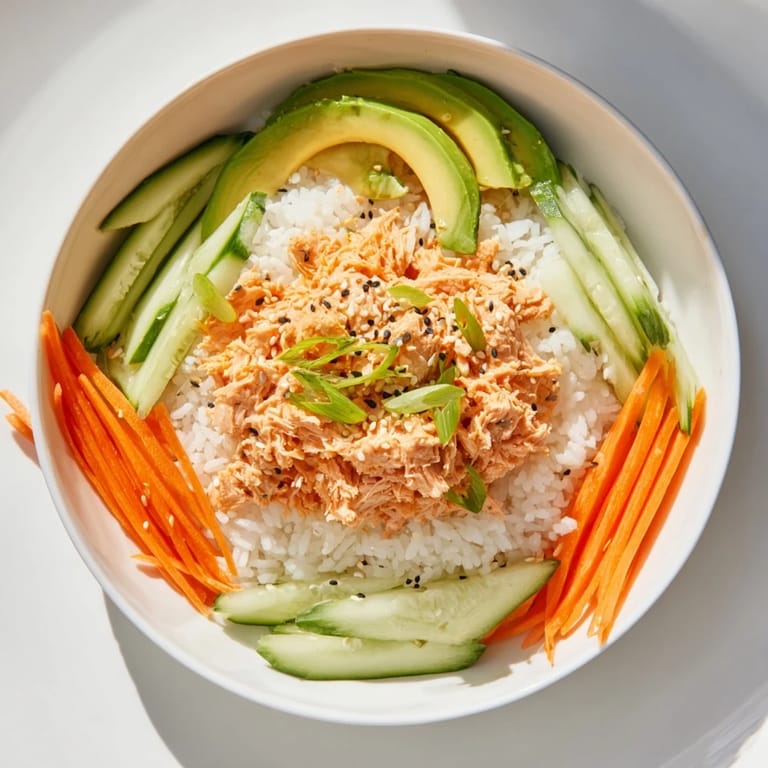
- Divide the warm rice between two bowls, creating a small well in the center where you'll place half the salmon mixture. Arrange the carrot, cucumber, and avocado in sections around the bowl so each spoonful gets a little of everything.
- Finish and serve:
- Scatter scallions and sesame seeds across the top, add nori strips if you want that oceanic note, then drizzle with extra sriracha or soy sauce. Eat immediately while the rice is still steaming.
 Pin It
 My friend asked for the recipe after I fed it to her without warning, which felt like the highest compliment—not because it's complicated, but because she thought it must be. There's a quiet victory in feeding someone something genuinely delicious that took you less time than a commute to make.
On Canned Salmon and Dignity
Canned salmon has this unfair reputation, like you're settling if it's not fresh. What nobody tells you is that canned salmon is cooked and preserved at peak freshness, which means it's sometimes more reliable than the supposedly fresh stuff sitting in a display case. The bones are soft enough to eat if you want the calcium, but I drain and flake, leaving them behind. This bowl respects canned salmon for what it is: accessible protein that doesn't require a fish counter or a tight grocery budget.
Why Rice Gets Its Own Saucepan
I used to make rice in whatever pan was closest, and it would turn out different every time. Switching to a dedicated saucepan with a lid changed everything because the lid traps steam, which is the actual mechanism that cooks rice. Jasmine rice in particular needs to be treated gently—too much heat after the initial boil and it breaks down into starch. Low heat for the full time, lid on, no lifting, no stirring.
Customization Without Apology
The beauty of a rice bowl is that it bends to whatever you have on hand or whatever your body is craving. Brown rice works if you have twelve extra minutes and don't mind the texture shift, or cauliflower rice if you're riding that wave. Swap the salmon for canned tuna or even shredded rotisserie chicken, pile on pickled ginger for an extra sharp note, throw in radish slices for crunch you didn't know you needed.
- Edamame can be skipped entirely, swapped for snap peas, or doubled if you want more protein.
- The nori strips are optional but they add a subtle oceanic depth that feels intentional.
- Make the sriracha mayo in bulk and it keeps for days, turning this meal from twenty minutes to five minutes of assembly.
 Pin It
 This bowl exists in that sweet spot where it's simple enough to make on autopilot but interesting enough to keep coming back to. Sometimes the best dishes are the ones we cook for ourselves on nights when we deserve something good.
Questions About This Recipe
- → Can other types of rice be used?
Yes, substitute jasmine or sushi rice with brown rice or even cauliflower rice for a healthier or lower-carb option.
- → How can the spice level be adjusted?
Adjust the amount of sriracha sauce mixed into the salmon to control the heat according to your preference.
- → Is it possible to add more crunch?
Yes, adding radish slices or pickled ginger can provide extra crunch and tangy flavor to the bowl.
- → Can canned tuna be used instead of salmon?
Canned tuna works well as an alternative, offering a different but equally tasty seafood base.
- → What toppings enhance the overall taste?
Scallions, toasted sesame seeds, and optional nori strips contribute texture and depth to each serving.