 Pin It
 My kitchen smelled like burnt sugar and autumn the first time I roasted acorn squash to make soup, which sounds worse than it actually was. I'd left the oven door slightly ajar out of habit, and the caramelizing edges of the squash sent this warm, almost smoky sweetness into the air that made me stop mid-chop and just breathe it in. That moment alone convinced me this soup needed to happen regularly, especially when the weather turned crisp and I wanted something that felt both elegant and deeply comforting.
I served this to my neighbor unexpectedly one October evening when she stopped by with wine and we ended up cooking together. She'd never made squash soup before and was skeptical about the cinnamon until she tasted it, then suddenly she was asking for the recipe and wondering if she could roast butternut instead. We sat at the kitchen counter eating bowls with crusty bread while the kitchen was still warm and steamy from the pot, and it felt like the exact kind of simple generosity that matters.
Ingredients
- 2 medium acorn squash (about 2 lbs total), halved and seeded: Roasting caramelizes the natural sugars and makes the flesh so tender it practically falls apart when you scoop it out; don't skip the roasting step or you'll end up with watery soup.
- 1 medium yellow onion, chopped: This builds the flavor base that keeps the soup from being one-note sweet; a good golden sauté matters here.
- 2 cloves garlic, minced: Just enough to whisper in the background without overwhelming the delicate squash flavor.
- 1 medium carrot, peeled and chopped: Adds subtle depth and a touch of natural color that brightens the finished soup.
- 4 cups vegetable broth and 1 cup water: The water keeps the broth from overpowering the squash; use homemade if you have it, as quality matters when so few ingredients are doing heavy lifting.
- 1/2 cup heavy cream or coconut milk: This turns the soup from pleasant to silky; coconut milk creates a different vibe but works beautifully if that's what you're making.
- 2 tbsp olive oil: Half goes on the squash before roasting, half into the pot for sautéing the vegetables.
- 1 tsp salt, 1/2 tsp black pepper, 1/4 tsp ground nutmeg, and 1/4 tsp ground cinnamon: These spices are the secret; they elevate simple roasted squash into something that tastes intentional and sophisticated.
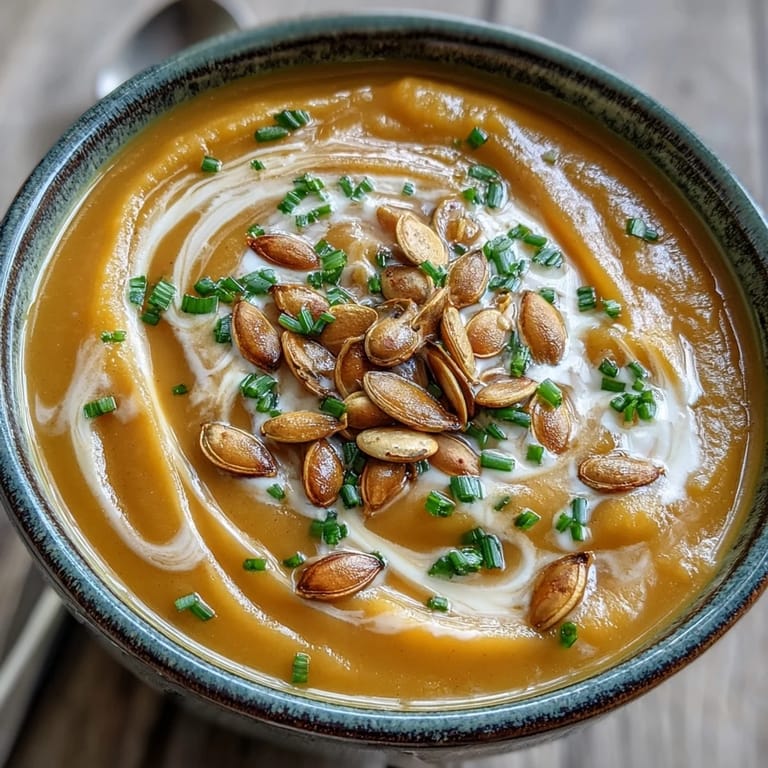
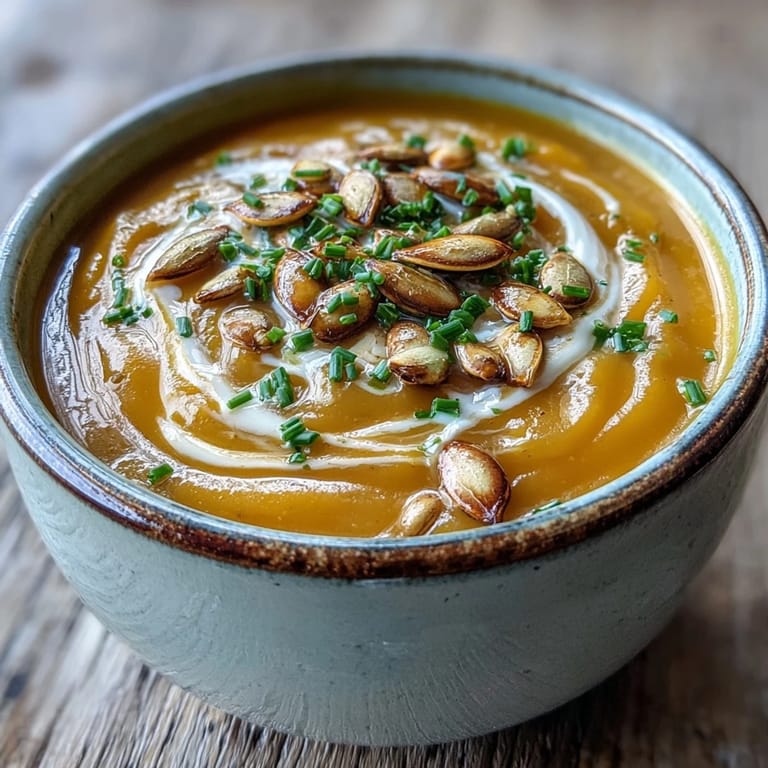
- Toasted pumpkin seeds, fresh chives, and cream for garnish: These aren't just decorative; the seeds add texture and the chives cut through the richness with a sharp, green note.
Tired of Takeout? 🥡
Get 10 meals you can make faster than delivery arrives. Seriously.
One email. No spam. Unsubscribe anytime.
Instructions
- Heat your oven and prepare the squash:
- Preheat to 400°F and line a baking sheet with parchment paper. Brush the cut sides of your halved squash with a tablespoon of olive oil, then place them cut side down on the sheet. This positioning lets them caramelize and intensifies the sweetness.
- Roast until deeply tender:
- Roast for 30 to 35 minutes until the flesh is soft enough to scoop easily with a spoon; you'll know it's ready when the kitchen smells irresistibly sweet and a fork slides through without resistance. Let it cool just enough to handle, then scoop the flesh away from the skin and set aside.
- Start building the flavor base:
- Heat your remaining olive oil in a large pot over medium heat, then add the chopped onion, carrot, and garlic. Sauté for 5 to 7 minutes, stirring occasionally, until everything softens and the onion turns translucent and golden.
- Combine and simmer:
- Add your roasted squash, vegetable broth, water, salt, pepper, nutmeg, and cinnamon to the pot. Bring everything to a boil, then immediately lower the heat and let it simmer gently for about 10 minutes so the spices can mingle with the broth.
- Blend to silky smoothness:
- Remove from heat and use an immersion blender to puree the soup right in the pot, or carefully transfer it in batches to a countertop blender if you prefer. Blend until completely smooth with no visible chunks.
- Finish with cream and adjust seasoning:
- Stir in your cream or coconut milk, then taste and adjust the salt and spices to your preference. Reheat gently if it's cooled during blending, but don't let it boil or the cream can separate.
- Serve with intention:
- Ladle into bowls and top with toasted pumpkin seeds for crunch, fresh chives for brightness, and a drizzle of cream if you're feeling generous. The garnishes aren't optional; they're what make each spoonful interesting.
 Pin It
 There's something about serving this soup that transforms an ordinary Tuesday dinner into something that feels nourishing in a way that goes beyond calories. My partner said it tasted like autumn in a bowl, which is exactly what I was hoping for.
Why This Soup Becomes a Seasonal Ritual
Once you make this soup a few times, you'll start thinking of it when the weather shifts and squash appears at farmers markets. It's the kind of recipe that teaches you something useful about roasting vegetables, blending soups, and balancing sweet with savory in a single dish. Every time you make it, you'll probably tweak something slightly based on what you have or what you're craving that day, and that's exactly how it should be.
Variations and Substitutions That Work
Butternut squash swaps in beautifully if that's what your market has, though it's slightly sweeter so you might want an extra pinch of salt. I've added a small piece of fresh ginger during the sauté stage and enjoyed the complexity it brought, and a friend suggested sage instead of cinnamon one time which shifted the whole mood of the soup into something more savory and herb-forward. The base is flexible enough that you can honestly let what's in your pantry and what season you're in guide your choices.
Serving Suggestions and Storage
Serve this with crusty bread, grilled cheese, or alongside a simple green salad for a lighter meal. It also freezes beautifully for up to three months if you store it in airtight containers, though I'd recommend freezing it before adding the cream so you can adjust the consistency when reheating. Some people like it thicker, some prefer it poured over rice, and some eat it straight from the pot while standing at the counter at nine in the evening because they're hungry and it's there.
- Make a double batch when you have time and freeze half for a moment when cooking feels like too much.
- If your soup breaks or looks grainy after blending, strain it through a fine mesh sieve for a restaurant-quality texture.
- Leftover garnishes like pumpkin seeds keep for days in an airtight container, so you can make soup without the full production next time.
 Pin It
 This soup has a quiet way of becoming one of those recipes you make without thinking, the one that's always in your rotation when the seasons change. It's evidence that simple ingredients and a little patience create something genuinely beautiful.
Questions About This Recipe
- → Can I make this ahead of time?
Absolutely. This actually improves overnight as flavors meld. Prepare up to 3 days ahead, refrigerate, and reheat gently before serving.
- → What's the best way to achieve the smoothest texture?
Roasting the squash first concentrates sweetness and softens flesh thoroughly. Using an immersion blender directly in the pot eliminates messy transfers and ensures consistent results.
- → Can I freeze leftovers?
Yes. Cool completely, portion into airtight containers, and freeze up to 3 months. Thaw overnight in refrigerator before reheating.
- → How do I adjust the consistency?
For thicker results, reduce broth by ½ cup. To thin, add additional warm broth or water ¼ cup at a time until desired consistency reaches.
- → What other squash varieties work well?
Butternut squash offers similar sweetness. Delicate squash provides milder flavor while kabocha creates an even creamier finish.