 Pin It
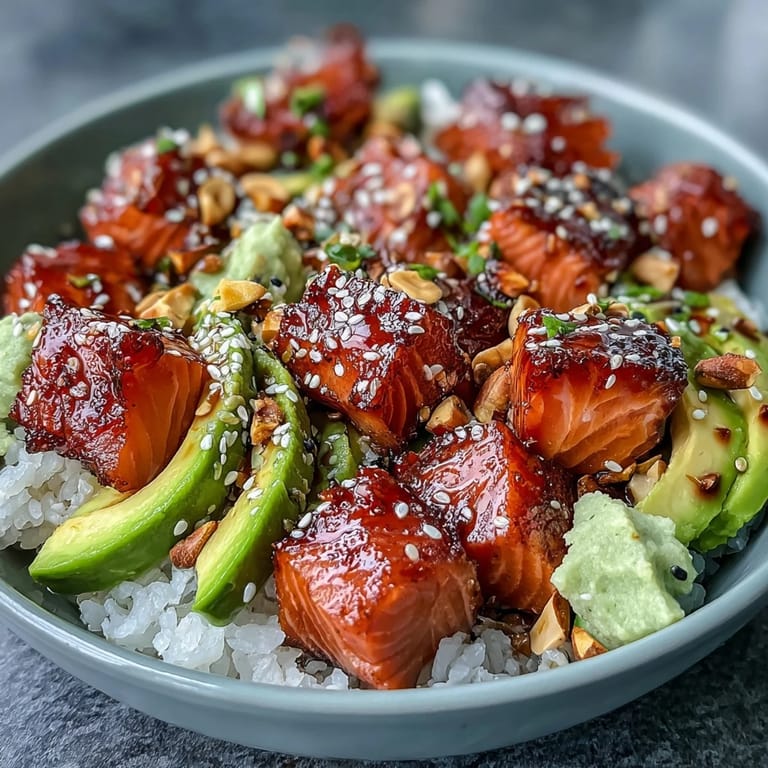
 There's something about assembling a bowl that feels less like cooking and more like creating. My friend Sarah showed up one Tuesday evening with a bag of sushi rice, fresh salmon, and the kind of energy that meant dinner was about to be an experience rather than just a meal. Within minutes, our kitchen smelled like toasted sesame oil and her hands were moving through prep work with the ease of someone who'd done this a hundred times before. She explained that the magic wasn't in any single ingredient but in how they all came together—creamy, spicy, crunchy, and somehow perfectly balanced. That night, I understood why this bowl had become her answer to almost every question about what to cook.
I made this for my parents last month when they were visiting, and watching my dad—who claims he doesn't like "fusion food"—quietly go back for seconds told me everything. He spent the meal asking questions about the wasabi-to-chili-oil ratio, and by the end, he was already thinking about how he'd recreate it at home. My mom loved that she could taste every component distinctly; nothing got muddled or overshadowed. It became one of those meals where the food sparked actual conversation instead of just filling the table with silence.
Ingredients
- Fresh salmon fillet (250 g), skinless and cubed: Quality matters here—ask your fishmonger for sushi-grade if possible, and the fresher it is, the less "fishy" it tastes.
- Tamari sauce (2 tbsp): This is your umami anchor, and choosing tamari over regular soy gives you a slightly deeper, less salty result.
- Toasted sesame oil (1 tsp): A little goes a long way; it's potent, and that's exactly what you want for building flavor.
- Rice vinegar (1 tsp for marinade, 1 tbsp for rice): This keeps everything bright and cuts through the richness of the avocado and salmon.
- Honey or agave (1 tsp): A subtle sweetness that rounds out the savory elements and helps the marinade cling to the salmon.
- Cooked sushi rice (200 g or 1 cup uncooked): Short-grain rice holds the dressing better than long-grain, and getting it slightly warm makes everything feel cohesive.
- Sugar and salt for rice seasoning: These are small but essential for making the rice taste like itself rather than just a blank canvas.
- Ripe avocado (1 large): Check it the day before; it should yield slightly to pressure but not feel mushy.
- Roasted peanuts (2 tbsp, roughly chopped: Buying whole roasted peanuts and chopping them yourself keeps them fresher and gives better texture control.
- Chili oil (1 tbsp): Start with less and add more; you can always adjust at the table, but you can't take heat back out.
- Wasabi paste (1 tsp): Real wasabi is ideal but harder to find—either way, use what you love and trust your taste buds.
- Nori strips, cucumber, spring onions, sesame seeds: These are your textural and visual variety—don't skip them just because they seem optional.
- Cilantro or microgreens for garnish: Fresh herbs add a brightness that makes the whole bowl feel less heavy and more alive.
Tired of Takeout? 🥡
Get 10 meals you can make faster than delivery arrives. Seriously.
One email. No spam. Unsubscribe anytime.
Instructions
- Marinate the salmon:
- Whisk together tamari, sesame oil, rice vinegar, and honey in a medium bowl, then add your salmon cubes and toss until every piece is coated. The 10–15 minutes in the fridge lets the flavors sink in without overdoing it, and cold salmon stays firmer when you eventually eat it.
- Season the rice:
- Mix your warm cooked sushi rice with rice vinegar, sugar, and salt while it's still hot so the seasonings meld in properly. This step is easy to rush, but taking a moment to let the rice actually taste seasoned makes an enormous difference.
- Prep your toppings:
- Slice the avocado, chop peanuts, cut nori into strips, and slice cucumber and spring onions all at once so assembly becomes almost meditative rather than chaotic. Having everything ready means you're not standing there thinking about what goes next when you're trying to eat.
- Build your bowls:
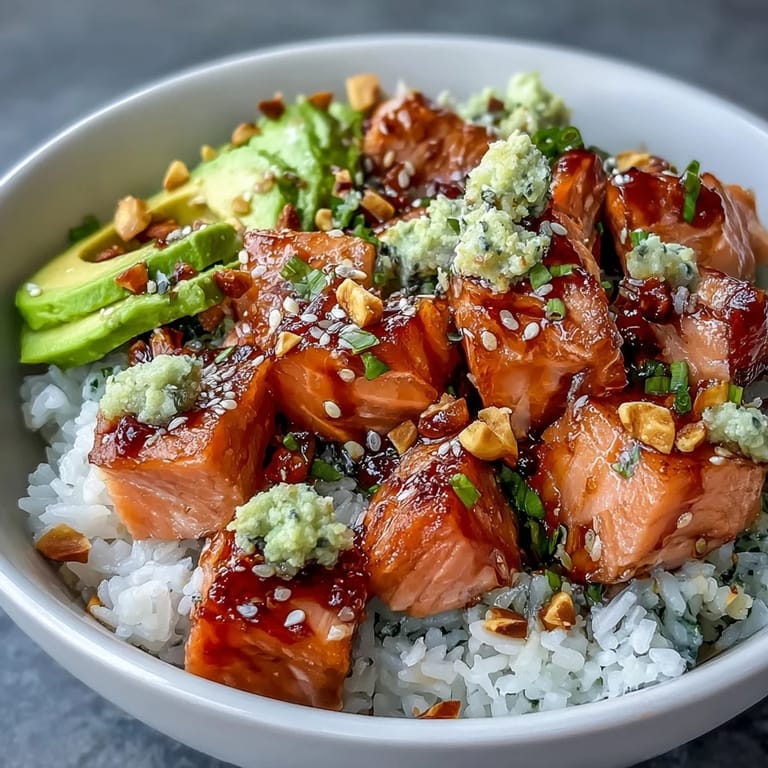
- Divide the seasoned rice between two serving bowls as your foundation, then arrange the marinated salmon on top along with avocado, cucumber, and spring onions in whatever pattern feels right to you. Think of it as plating rather than just assembling—it tastes better when it looks like someone cared.
- Add heat and crunch:
- Drizzle chili oil across everything, dot wasabi paste in small spots (so people can adjust their spice level bite by bite), then sprinkle peanuts, sesame seeds, and nori strips over the top. Finish with cilantro or microgreens and serve with lime wedges on the side.
 Pin It
 There was a moment during that dinner with my parents when everyone stopped talking for just long enough to really taste what was in their bowl, and that felt like success. It wasn't fancy or complicated, but it was exactly what we all needed in that moment—something nourishing that didn't feel like an obligation.
Why This Bowl Works So Well
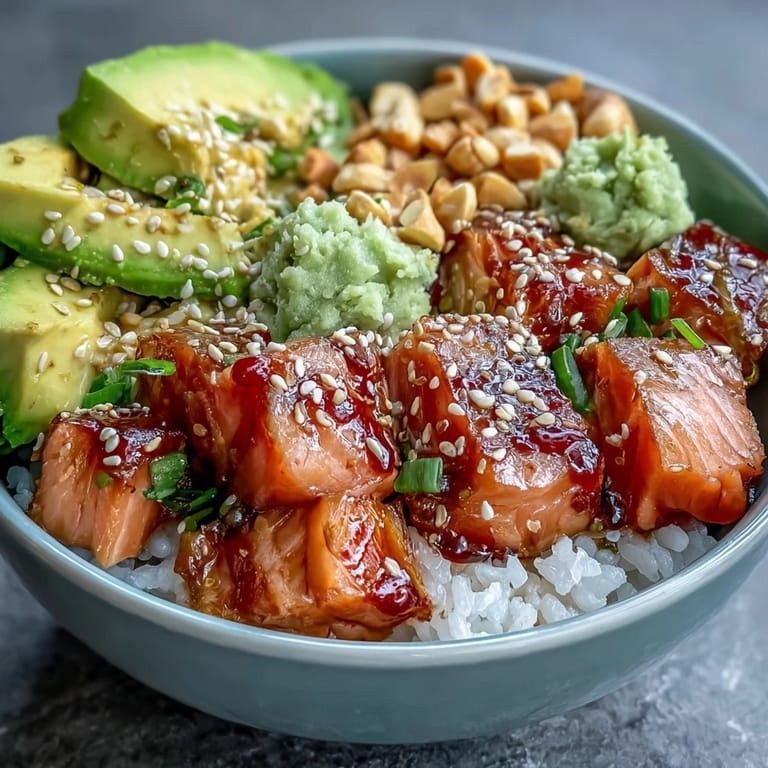
The genius of this dish is that it respects every flavor on the plate. The salmon brings richness, the avocado adds creaminess, the peanuts and sesame give you something to crunch, and then the wasabi and chili oil show up to remind your palate that you're actually eating something alive and present. Nothing drowns anything else out—each component gets its moment without apology. It's the kind of meal that keeps you engaged from the first bite to the last, which is rarer than you'd think.
Making It Your Own
The beauty of a bowl is that it's inherently flexible without becoming formless. Swap the salmon for seared tuna or marinated tofu if you're in a different mood, use cashews instead of peanuts if that's what you have, or throw in pickled ginger if you want an extra layer of brightness. I've made versions with edamame, with sliced radishes, with different dressings entirely—and the core structure always holds. The important thing is respecting the balance between hot and cold, spicy and cool, soft and crunchy; everything else is just details.
Rice Matters More Than You Think
Short-grain sushi rice is non-negotiable here because it has enough starch to stick together and hold onto the seasoning dressing rather than just sliding around in your bowl. Cooking it properly means the grains stay separate but somehow feel connected, which is a metaphor for the entire bowl if you want to get poetic about it. When you dress the rice while it's warm, those seasonings actually absorb instead of just sitting on top like an afterthought.
- Rinse your rice before cooking if you want fluffier grains, or skip it if you prefer stickier rice that holds the bowl together better.
- Use a rice cooker if you have one—it's the easiest way to get consistent results without standing over a pot.
- Taste the rice before you serve it; if it needs more salt or vinegar, this is your last chance to adjust.
 Pin It
 This bowl became my answer to the question "what should we make?" because it's honest food that doesn't pretend to be something it isn't. Make it, taste it, and let it become yours too.
Questions About This Recipe
- → Can I make this bowl ahead of time?
Prepare components separately in advance. Marinate salmon up to 4 hours before cooking. Cook rice and store toppings in airtight containers. Assemble just before serving to maintain texture and freshness.
- → What's the best way to cook the salmon?
Pan-sear marinated salmon cubes over medium-high heat for 2-3 minutes per side until golden and cooked through. Alternatively, roast at 400°F (200°C) for 8-10 minutes. Avoid overcooking to keep it tender.
- → Can I use other grains instead of rice?
Yes, quinoa, brown rice, or cauliflower rice work well. Adjust cooking times accordingly. For sushi-style presentation, short-grain white rice provides the best texture and flavor absorption.
- → How can I make this vegetarian?
Replace salmon with firm tofu cubes or tempeh. Marinate using the same tamari-sesame mixture. Pan-fry until golden and crispy for similar protein content and texture.
- → What other toppings can I add?
Pickled ginger, edamame, radish slices, mango, or seaweed salad enhance flavors. Add soft-boiled eggs for extra protein. Microgreens or shredded carrots add color and crunch.
- → Is this suitable for meal prep?
Yes, store rice, salmon, and toppings separately in containers. Reheat salmon gently and assemble fresh. Keep wasabi and chili oil on the side to control spice levels when serving.