 Pin It
 My first encounter with a proper black currant tart happened at a tiny patisserie tucked behind a Paris side street, where the pastry chef's hands moved with such certainty that I watched instead of eating. Years later, standing in my own kitchen on a gray afternoon, I realized I could recreate that moment, that delicate balance of buttery crust giving way to glossy curd and the surprising tartness of fresh berries. What started as nostalgia became something better, a ritual I've repeated enough times to know it by heart.
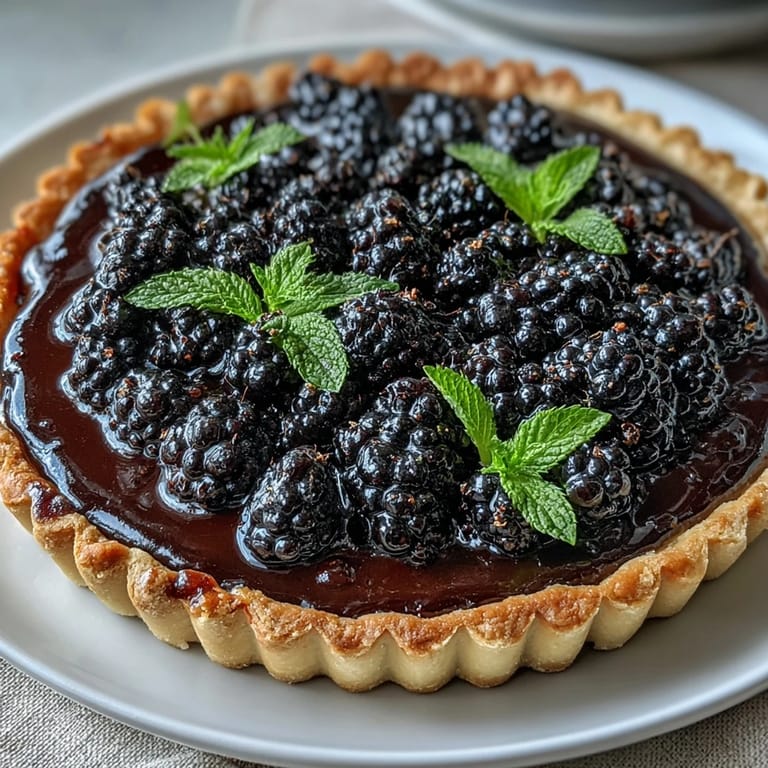
I made this for my sister's birthday last June when she'd been going through a rough season, and watching her face when she took that first bite reminded me why cooking for people matters. The tart sat on the table looking almost too beautiful to touch, with those dark berries jeweled across the deep curd, and somehow it said everything I couldn't put into words.
Ingredients
- All-purpose flour: The foundation of a tart shell that's tender without being fragile, measured by weight for accuracy since flour settles differently each time.
- Unsalted butter, cold and cubed: This is non-negotiable, the secret to those flaky layers you're chasing, so keep it in the freezer until the exact moment you need it.
- Powdered sugar: It dissolves into the dough more smoothly than granulated, creating an almost silky base before you add the liquid.
- Fine sea salt: A small amount that makes every other flavor in the tart speak louder.
- Egg yolk: Acts as a binder and brings richness to the dough without toughening it.
- Cold water: Add it sparingly, drop by drop, because too much turns your pastry dense and sad.
- Fresh or frozen black currants: Frozen works beautifully if fresh aren't available, and they break down just as well when cooked.
- Granulated sugar: Sweetens the curd while cooking, balancing the fruit's natural tartness.
- Lemon juice: Brightens the black currant flavor and helps set the curd through its acidity.
- Eggs and egg yolk: These create the curd's silky, custard-like texture through gentle cooking, so patience is everything here.
- Butter for curd: Swirled in at the end, it adds a luxurious mouthfeel that makes the whole thing feel indulgent.
- Fresh berries for topping: Black currants are traditional, but raspberries and blueberries add visual contrast and different flavor notes.
Tired of Takeout? 🥡
Get 10 meals you can make faster than delivery arrives. Seriously.
One email. No spam. Unsubscribe anytime.
Instructions
- Make the dough come together:
- In your food processor, pulse flour, powdered sugar, and salt until they're evenly combined, then add your cold butter cubes and pulse just until the mixture looks like coarse breadcrumbs with some pea-sized pieces of butter still visible. Add the egg yolk and a tablespoon of cold water, pulse gently, and stop the moment the dough barely holds together when pinched, resisting the urge to overwork it.
- Rest the dough:
- Shape it into a flat disk, wrap it in plastic, and let it chill for thirty minutes while you do something else, because this resting time is when the gluten relaxes and the butter stays cold enough to create layers. I usually use this time to wash up or mentally prepare for the next step.
- Line your tart pan:
- Preheat your oven to 350°F, then roll the chilled dough on a lightly floured surface until it's about an eighth of an inch thick and a few inches wider than your pan. Transfer it gently into your 9-inch tart pan, press it up the sides and into the corners, trim the overhanging edges with a knife, then prick the base all over with a fork to prevent puffing.
- Blind bake the shell:
- Chill the lined pan for ten minutes, then line it with parchment paper and fill it with pie weights or dried beans, baking for fifteen minutes until the edges just begin to color. Remove the weights and parchment, then bake another ten to twelve minutes until the entire crust turns a light golden color and feels dry to the touch.
- Build the curd from scratch:
- Combine fresh or frozen black currants with sugar and lemon juice in a saucepan over medium heat, stirring occasionally until the fruit softens and bursts, releasing all its deep color and flavor into the liquid. Pour the cooked mixture through a fine-mesh sieve, pressing gently with the back of a spoon to extract as much curd as possible while leaving skins and seeds behind.
- Cook the curd base:
- Return the strained purée to your saucepan, whisk in the eggs and egg yolk, then cook over low heat while stirring constantly, watching for the moment when the mixture thickens enough to coat the back of a spoon with a thin layer that holds its shape. This usually takes seven to ten minutes, and you must resist the urge to turn up the heat, because rushing this step ends in scrambled eggs.
- Finish with butter:
- Remove from heat and whisk in the cubed butter until the curd becomes silky and smooth, then pour it into a bowl and press plastic wrap directly onto its surface to prevent a skin from forming. Let it chill for about thirty minutes until it's set enough to spread but still slightly soft.
- Bring it all together:
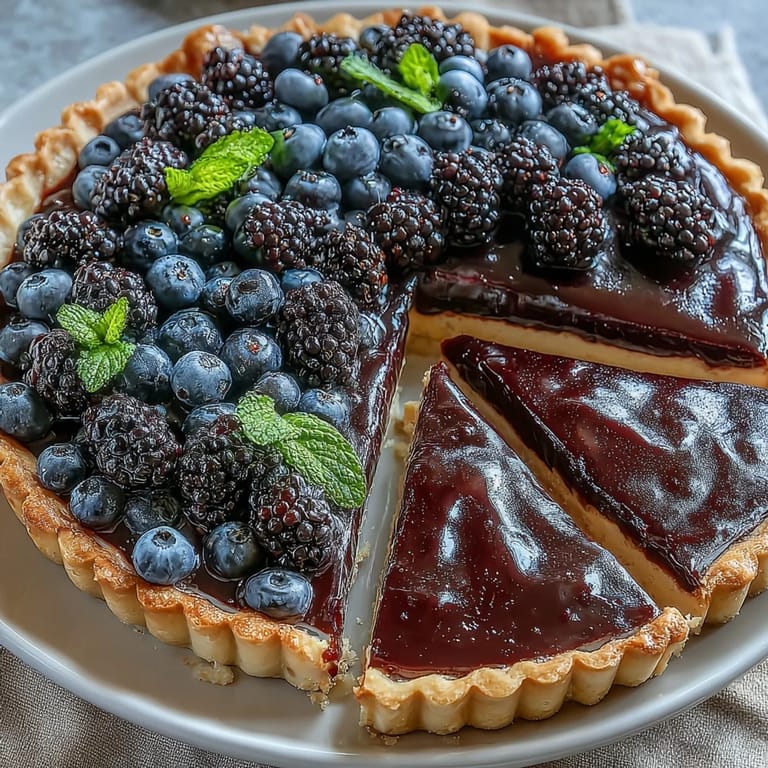
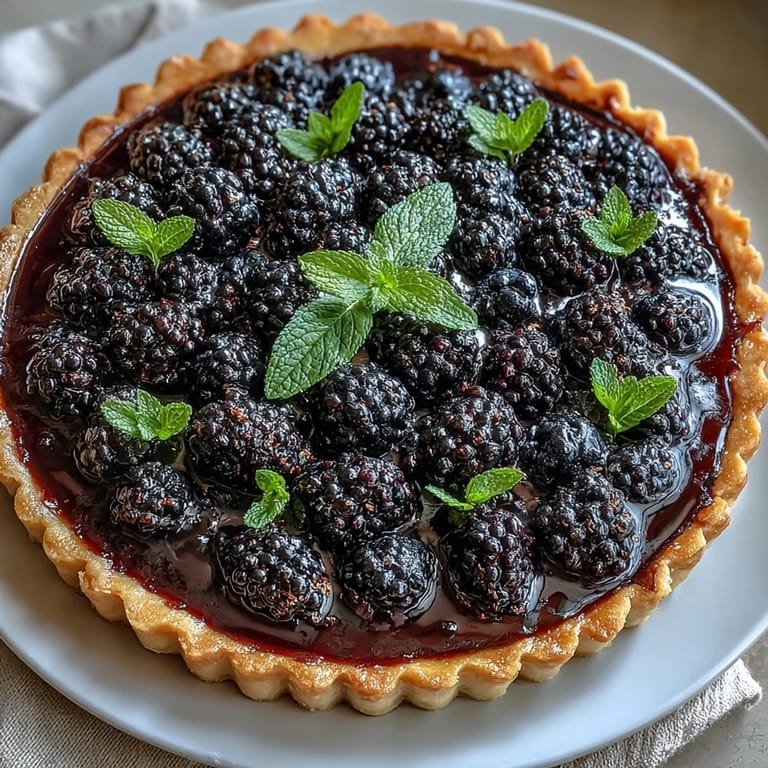
- Spread the cooled black currant curd evenly into your baked tart shell, then arrange fresh berries across the top in whatever pattern feels right, scatter some mint leaves if you have them, dust lightly with powdered sugar if desired, and chill the entire tart for at least an hour before slicing. This final chill helps the layers set so each piece stays intact instead of sliding around on the plate.
 Pin It
 What stuck with me most wasn't just the taste, but the way a tart with dark, glossy filling and scattered berries transformed an ordinary dinner into something worth slowing down for. People's eyes would actually widen when they saw it, and that moment of quiet appreciation before the first bite is when I understood why the French take their desserts seriously.
The Crust Matters More Than You Think
I've made countless tarts, and the difference between a crust that shatters beautifully and one that's tough enough to require actual effort comes down to two things: keeping your butter cold and knowing when to stop. The moment your dough barely comes together is the moment you should put down the food processor, even if it looks slightly shaggy, because the warmth of your hands and the friction of mixing will develop the gluten you're trying to avoid overworking.
Handling Black Currants Like a Pro
Black currants have a strong, almost mineral flavor that some people find challenging, but once they're cooked down into a curd, something magical happens and they become elegant rather than assertive. If you absolutely cannot find black currants, red currants make a stunning substitute with a slightly brighter acidity, and the color difference on your finished tart can actually be a feature rather than a compromise.
Serving and Storage Wisdom
This tart is best served the same day you assemble it, while the crust still has some snap and the curd hasn't begun to separate. The unbaked crust can rest in the freezer for a week, and the curd keeps refrigerated for up to three days, so you can actually split the work across two days if you're feeling strategic about your time.
- A dollop of lightly whipped cream or a scoop of vanilla ice cream alongside each slice makes the tart feel like a proper dinner party moment.
- If you want extra shine on those berries, warm a few tablespoons of apricot jam and brush it gently over the fresh fruit just before serving.
- Store any leftovers covered in the refrigerator, though I'll be honest, there are rarely any.
 Pin It
 Making this tart has become my quiet way of saying I care, of taking the time to build something beautiful from scratch. It's the kind of dessert that tastes even better when shared.
Questions About This Recipe
- → How do I make the tart crust crisp and flaky?
Use cold butter cut into the flour and avoid overworking the dough to ensure a tender and flaky crust. Chilling the dough before rolling helps maintain its texture.
- → What’s the best way to prepare black currant curd?
Simmer black currants with sugar and lemon juice until soft, then strain to remove seeds. Whisk in eggs and cook gently until thickened, then add butter for richness.
- → Can I substitute other berries for black currants?
Yes, red currants or a mix of raspberries and blueberries work well, providing a similar tartness and vibrant color.
- → How long should the tart chill before serving?
Chill the curd for about 30 minutes before filling the shell, then refrigerate the assembled tart for at least 1 hour to set properly.
- → What tools are needed to prepare this tart?
A tart pan, food processor, rolling pin, saucepan, fine-mesh sieve, mixing bowls, and whisk are essential for preparation.