 Pin It
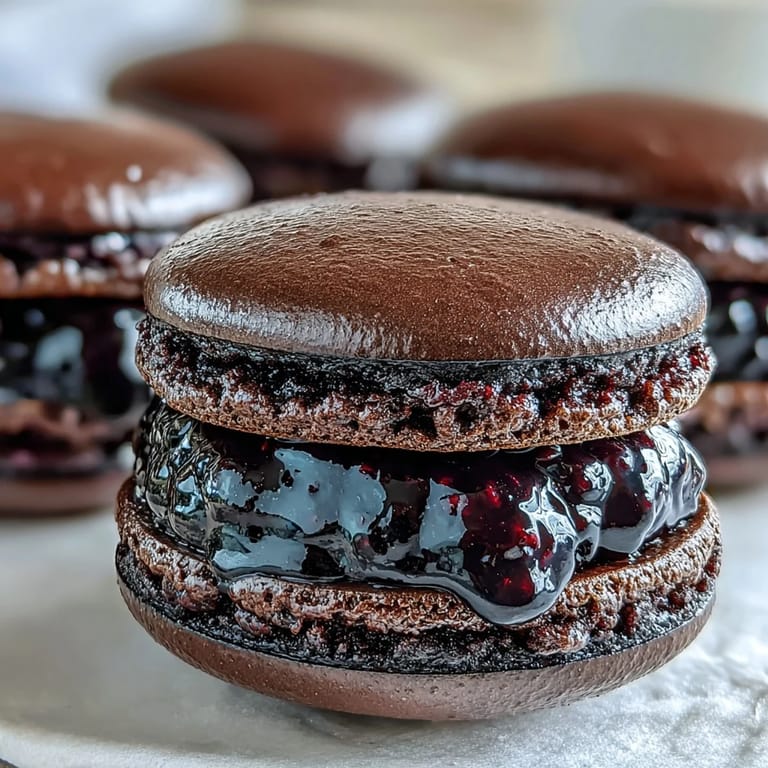
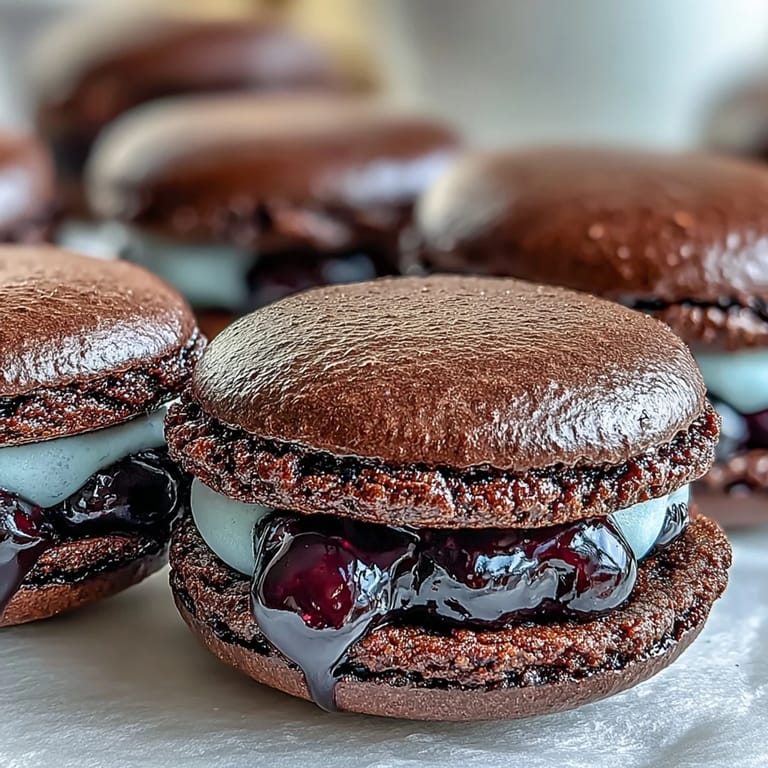
 My first attempt at macarons was a disaster—I piped them confidently, watched them spread like pancakes in the oven, and learned the hard way that French pastry doesn't forgive impatience. But something about that failure made me determined to master them, and when I finally cracked the technique, the reward was these impossibly delicate shells filled with a tangy blackcurrant ganache that tastes like luxury. There's something almost meditative about making macarons once you stop fighting the process and start trusting it.
I made these for my sister's engagement party, and watching her face light up when she bit into one—that perfect snap of the shell followed by the tangy-sweet filling—made every minute of resting time and careful folding worth it. She still asks me to make them for every occasion, which is both flattering and slightly terrifying because I know she'll notice if they're not perfect.
Ingredients
- Aged egg whites (120 g, about 4 large eggs): This is non-negotiable—aging them in the fridge for 24–48 hours changes everything because it helps them whip to stiff, stable peaks that hold the air bubbles you need for those signature domes.
- Powdered sugar and almond flour (200 g and 120 g): Processing and sifting these together removes lumps and ensures the shells will be smooth and glossy rather than rough.
- Granulated sugar (100 g): This is what transforms those foamy egg whites into a glossy meringue that's strong enough to hold the dry ingredients.
- Gel blackcurrant or purple food coloring (optional): Use gel instead of liquid—liquid coloring will mess with your meringue consistency, and I learned this by accident.
- Blackcurrant purée (100 g, strained of seeds): Fresh or frozen blackcurrants work; strain them carefully to remove seeds that can get stuck between your teeth mid-bite.
- White chocolate (120 g, finely chopped): Chop it small so it melts evenly into the hot purée without needing extra heat.
- Unsalted butter (30 g, softened): This brings richness and helps the ganache set to the perfect piping consistency.
- Lemon juice (1 tsp): Brightens the blackcurrant without adding moisture; it's the secret that keeps the ganache from tasting one-note.
Tired of Takeout? 🥡
Get 10 meals you can make faster than delivery arrives. Seriously.
One email. No spam. Unsubscribe anytime.
Instructions
- Set up your space first:
- Line your baking sheets with parchment paper or silicone mats—this prevents sticking and makes cleanup blissful. Having everything ready means you won't panic once you start working with the meringue.
- Process and sift the dry ingredients:
- Pulse the almond flour and powdered sugar in a food processor until they're combined and superfine, then sift into a bowl to catch any stubborn lumps. This step feels tedious but it's the difference between smooth shells and ones with tiny cracks.
- Whip the meringue to glossy peaks:
- In a grease-free bowl, beat the aged egg whites with a pinch of salt until foamy, then gradually add the granulated sugar while the mixer runs. Keep beating until you have stiff, glossy peaks that hold their shape—they should look almost shiny and proud.
- Color the meringue gently:
- Add a few drops of gel food coloring and fold it in until you have an even blackcurrant hue throughout.
- Fold with intention and restraint:
- Add the dry almond mixture in three additions, folding gently with a spatula after each addition. The batter should eventually flow in thick, slow ribbons, and you should be able to draw a figure-8 without it breaking—this takes patience and a light hand.
- Pipe the shells with precision:
- Transfer the batter to a piping bag fitted with a 1 cm round tip and pipe circles about 3.5 cm in diameter onto the prepared sheets. Space them slightly apart because they won't spread much, but they need room to breathe.
- Release air bubbles:
- Tap the baking sheets firmly on the counter a few times to release trapped air, then use a toothpick to pop any remaining bubbles you can see on the surface.
- Let them rest and develop feet:
- Leave the shells at room temperature for 30–45 minutes until they form a thin, papery skin and no longer feel tacky when you touch them lightly. This resting period is when the magic happens—the shells set up so they develop those signature ruffled feet when baked.
- Bake low and slow:
- Preheat the oven to 150°C (300°F) and bake one tray at a time for 13–15 minutes, rotating the tray halfway through. The shells should be set and able to lift gently from the parchment without cracking.
- Cool completely before moving them:
- Let the baked shells cool on the parchment paper until they're completely room temperature—this prevents them from cracking or breaking.
- Make the ganache while shells cool:
- Place chopped white chocolate in a heatproof bowl, heat the blackcurrant purée until it's just starting to simmer, then pour it over the chocolate and let it sit for a minute before stirring gently until smooth. Stir in the softened butter and lemon juice until fully combined, then let the mixture cool until it's thick enough to pipe but still creamy.
- Match and fill the shells:
- Pair up the cooled macaron shells by size for a more professional look, then pipe a small amount of blackcurrant ganache onto one shell and sandwich it gently with its partner.
- Age the finished macarons:
- Place them in an airtight container and refrigerate for at least 24 hours—this is when the shells soften slightly and the flavors marry together, turning a good macaron into an exceptional one. Bring them to room temperature before serving so the ganache becomes silky again.
 Pin It
 There was a moment when a friend bit into one of these and closed her eyes, and I realized macarons aren't just cookies—they're tiny edible jewels that carry all the precision, timing, and quiet hope you put into them. Every successful batch feels like a small victory.
Why Blackcurrant Matters Here
Blackcurrant is tart and fruity in a way that cuts through the sweetness of macarons, preventing them from tasting cloying. The white chocolate softens the pucker without hiding it, creating a filling that's genuinely refreshing instead of just sugary. It's the reason people always ask what the flavor is—they expect traditional raspberry or pistachio, and the blackcurrant surprises them.
Getting Comfortable With Your Batter
The hardest part of macaron-making isn't the ingredients or the techniques—it's learning to trust what your batter looks like. You can't rely on a timer or an exact count of folds because humidity, room temperature, and how long your egg whites aged all affect consistency. The batter should look glossy, flow slowly, and form a thick ribbon when you lift the spatula; if you watch videos of macaronage, you'll start to see what that looks like, and your hands will eventually know when to stop.
Storage and Serving Secrets
Macarons are best eaten 1–2 days after assembly when the shells have softened slightly and absorbed just enough moisture from the ganache to feel tender instead of crispy. They'll keep in an airtight container in the fridge for up to 5 days, and you can even freeze them for up to a month if you need to prepare ahead—just thaw them in the fridge overnight before serving.
- Always serve them at room temperature so the ganache becomes silky and the shells regain their delicate crunch.
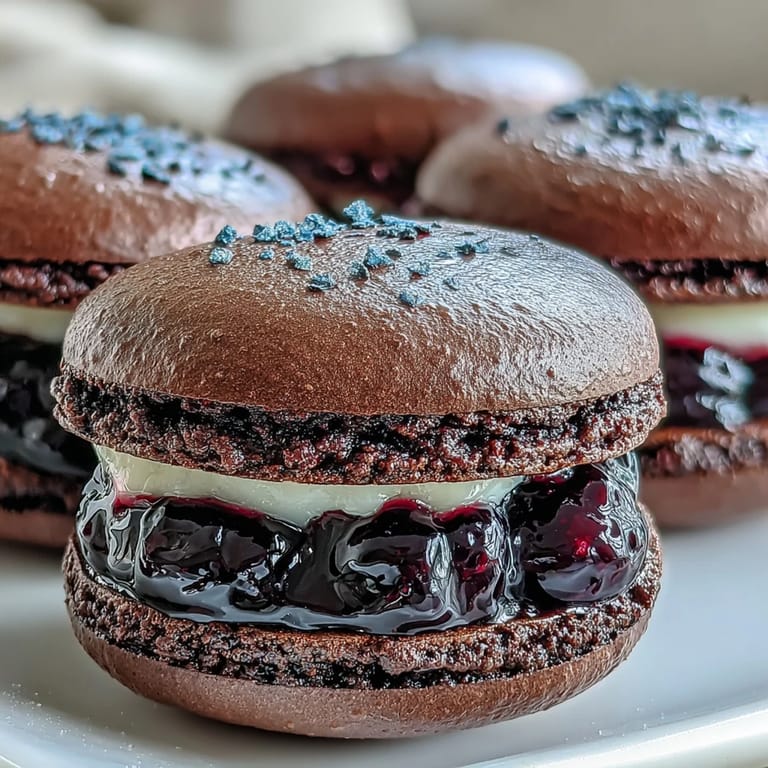
- For extra shine and surprise, you can brush the finished shells lightly with blackcurrant liqueur mixed with a tiny pinch of edible glitter.
- If your blackcurrant purée is too seedless, you can add a few fresh berries for texture, but taste first because the filling gets tangier.
 Pin It
 Making macarons teaches you that patience and precision can create something genuinely beautiful, and sharing them with people you care about makes it all mean something. Once you nail the technique, these become your secret weapon for impressing people.
Questions About This Recipe
- → Why must I age the egg whites?
Aged egg whites (refrigerated 24-48 hours) lose moisture, creating a more stable meringue with better volume. This leads to smoother shells with fewer cracks and those signature feet.
- → Can I use frozen blackcurrants?
Yes, frozen blackcurrants work beautifully. Thaw completely, then blend and strain to create the purée. The consistency and flavor remain excellent for the ganache filling.
- → How do I know when the shells are done baking?
Gently touch the top of a shell—it shouldn't wiggle. Try lifting one from the parchment; if it releases cleanly without sticking, they're ready. The tops should be set and smooth.
- → Why do my macarons crack?
Cracking typically results from insufficient resting time (no skin formation), oven temperature too high, or overmixed batter. Ensure shells rest 30-45 minutes until tacky-free and use an oven thermometer for accuracy.
- → How long will these keep?
Store assembled macarons in an airtight container in the refrigerator for up to 5 days. For best texture and flavor development, serve 1-2 days after assembly. They can also be frozen for up to 3 months.
- → Can I make the ganache ahead?
Absolutely. Prepare the blackcurrant ganache up to 2 days in advance and refrigerate. Bring to room temperature and stir gently before piping. The filling may need slight warming to achieve pipeable consistency.