 Pin It
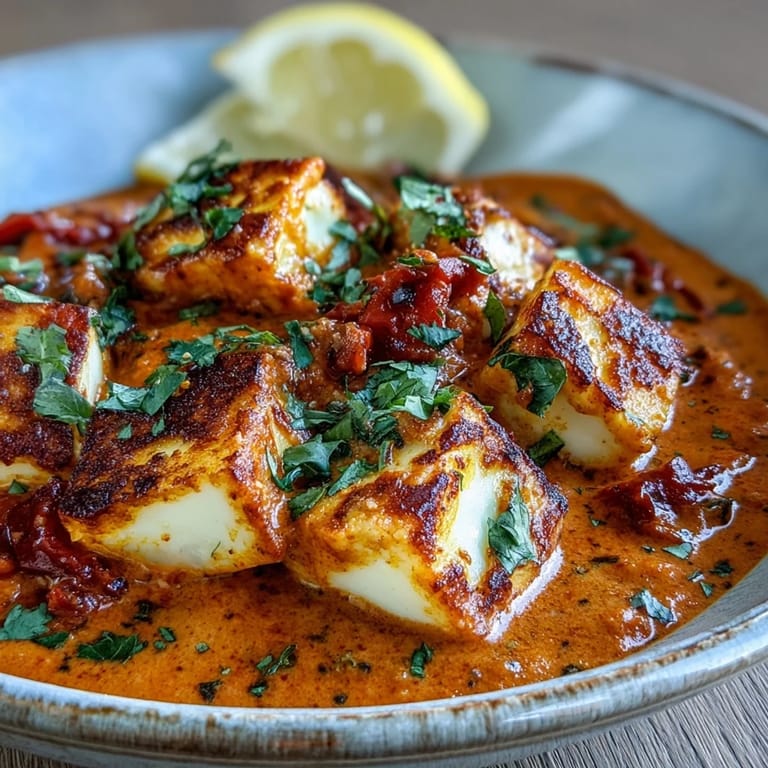
 My kids used to wrinkle their noses at curry night until I swapped paneer for halloumi and watched their faces light up at that first squeaky, golden bite. The saltiness of the cheese against the creamy tomato sauce became an instant weeknight win. Now they ask for it by name, and I love how forgiving it is when dinner needs to happen fast. It's become one of those recipes I make without thinking, the kind where my hands know exactly what to do while my mind wanders. Sometimes the simplest swaps create the biggest shifts at the table.
I remember serving this to friends who claimed they didn't like vegetarian mains, watching them go quiet as they sopped up every last bit of sauce with naan. One of them asked if I'd used cream, surprised when I said it was just coconut milk and tomatoes doing all the work. That night taught me that texture matters as much as flavor, and halloumi delivers both without any fuss. It's the kind of dish that makes people rethink what a meatless meal can be. I've made it at least a dozen times since, tweaking the spice levels depending on who's coming over.
Ingredients
- Halloumi cheese: The star of the show, halloumi holds its shape beautifully when fried and adds a salty richness that balances the spices perfectly.
- Onion: Finely chopped onion creates the sweet, savory base that anchors the entire curry.
- Garlic and ginger: These aromatics bring warmth and depth, and I always grate the ginger finely so it melts into the sauce.
- Red bell pepper: Diced pepper adds a touch of sweetness and a pop of color that makes the dish feel vibrant.
- Canned chopped tomatoes: The backbone of the sauce, providing acidity and body without any extra prep work.
- Garam masala: This spice blend is the heart of the curry, offering complexity in one fragrant scoop.
- Ground cumin and coriander: These earthy spices layer in warmth and a subtle nuttiness that rounds out the flavor.
- Turmeric: A pinch gives the sauce its golden hue and a gentle, earthy undertone.
- Chili powder and paprika: Adjust these to your comfort level, they add warmth without overwhelming the dish.
- Coconut milk: Full fat coconut milk creates that silky, luxurious texture that coats every piece of halloumi.
- Tomato paste: Concentrates the tomato flavor and helps thicken the sauce as it simmers.
- Vegetable oil: Just enough to fry the halloumi and sauté the aromatics without making the curry greasy.
- Fresh cilantro and lemon wedges: A bright, herby finish and a squeeze of citrus lift the whole dish at the end.
Tired of Takeout? 🥡
Get 10 meals you can make faster than delivery arrives. Seriously.
One email. No spam. Unsubscribe anytime.
Instructions
- Fry the halloumi:
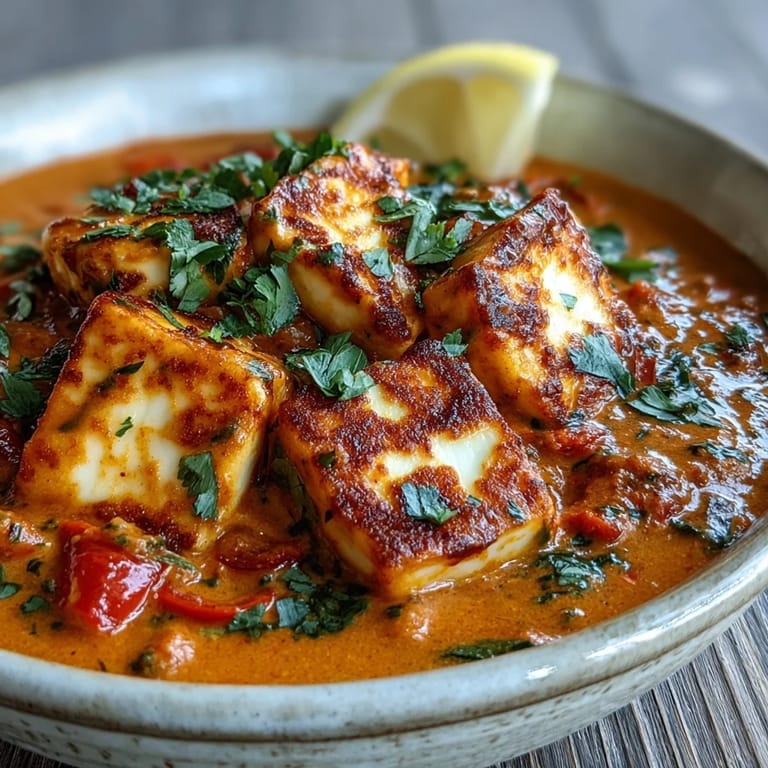
- Heat the oil in a large nonstick skillet over medium high heat, then add the halloumi cubes and fry for 2 to 3 minutes per side until they turn golden and develop a slight crust. Remove them and set aside on a plate, resisting the urge to snack on them right away.
- Sauté the onion:
- Lower the heat to medium and add the chopped onion to the same pan, letting it cook for 3 to 4 minutes until soft and translucent. The leftover oil from the halloumi will give the onion a subtle richness.
- Add the aromatics and pepper:
- Stir in the garlic, ginger, and red bell pepper, cooking for another 2 to 3 minutes until your kitchen smells incredible. This is the moment the curry starts to come alive.
- Toast the spices:
- Add the tomato paste along with the garam masala, cumin, coriander, turmeric, chili powder, and paprika, stirring constantly for about 1 minute. Toasting the spices unlocks their full flavor and prevents any raw, bitter notes.
- Build the sauce:
- Pour in the canned tomatoes and coconut milk, stirring everything together until smooth, then season with salt and black pepper. Let it simmer for 8 to 10 minutes, stirring occasionally, until the sauce thickens and the flavors meld beautifully.
- Return the halloumi:
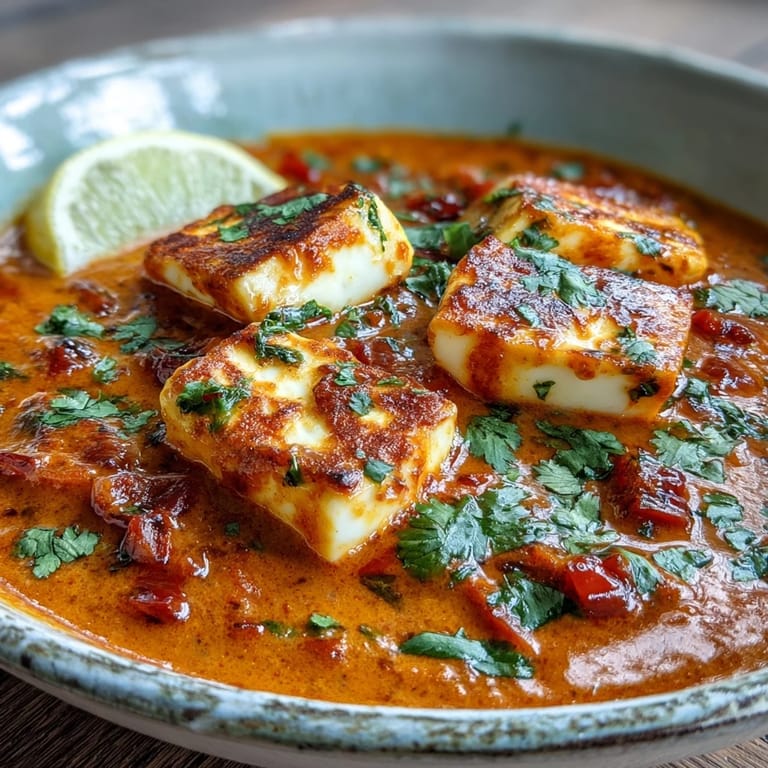
- Gently nestle the fried halloumi back into the pan and let it simmer for 5 minutes so the cheese absorbs the curry flavors without losing its texture. This step is where the magic happens.
- Finish and serve:
- Taste and adjust the seasoning if needed, then garnish with fresh cilantro and serve with lemon wedges on the side. A squeeze of lemon right before eating brightens every bite.
 Pin It
 One rainy Tuesday, I made this curry while my daughter did homework at the kitchen table, and she kept looking up to ask what smelled so good. By the time we sat down to eat, she'd already decided it was her new favorite dinner. That's when I realized this recipe had earned its place in our regular rotation, not because it was fancy, but because it made an ordinary night feel a little bit special. Food has a way of doing that when you let it.
Serving Suggestions
I almost always serve this with steamed basmati rice, letting the grains soak up the creamy sauce like little flavor sponges. Warm naan or roti works beautifully too, especially if you like tearing off pieces and scooping up the halloumi. For a lighter option, try it over cauliflower rice or alongside a crisp cucumber salad to balance the richness. A dollop of plain yogurt on the side adds a cool, tangy contrast that some of my guests can't get enough of. However you serve it, make sure there's plenty of sauce to go around.
Customization Ideas
If you want more heat, toss in a chopped green chili with the garlic and ginger, or stir in a pinch of cayenne at the end. I've swapped the red bell pepper for zucchini or spinach when I needed to use up vegetables, and both worked perfectly. For a more traditional Indian flavor, replace the halloumi with paneer and adjust the salt since paneer is much milder. You can also add a handful of cashews for extra creaminess and a subtle nutty crunch. This recipe is flexible enough to handle whatever your fridge throws at it.
Storage and Reheating
Leftovers keep well in an airtight container in the fridge for up to three days, and honestly, they taste even better after the flavors have had time to marry. Reheat gently on the stovetop over low heat, adding a splash of water or coconut milk if the sauce has thickened too much. I don't recommend freezing this because the halloumi can become a bit grainy once thawed, though the sauce itself freezes beautifully if you want to make it ahead. When reheating, resist the urge to crank up the heat or the cheese might turn rubbery.
- Store in the fridge for up to three days in a sealed container.
- Reheat on the stovetop with a splash of liquid to loosen the sauce.
- Freezing is not ideal for halloumi, but the sauce can be frozen separately for up to two months.
 Pin It
 This curry has become one of those recipes I turn to when I want comfort without complication, and I hope it finds a cozy spot in your kitchen too. There's something deeply satisfying about a dish that works for both busy weeknights and relaxed weekend dinners with friends.
Questions About This Recipe
- → Can I substitute halloumi with another cheese?
Yes, paneer is the best substitute as it has a similar texture and holds its shape when cooked. You can also use firm tofu for a dairy-free option, though the flavor will be different.
- → How can I make this curry spicier?
Increase the chili powder to 1 teaspoon, add a chopped green chili with the aromatics, or finish with fresh red chili flakes. You can also add a pinch of cayenne pepper for extra heat.
- → Can I prepare this dish ahead of time?
Yes, you can prepare the curry sauce in advance and refrigerate for up to 2 days. Fry the halloumi fresh just before serving for the best texture, then warm it gently in the reheated sauce.
- → What can I serve alongside this curry?
Steamed basmati rice, warm naan bread, or chapati work perfectly. You can also serve with quinoa for a lighter option, or alongside roasted vegetables and cucumber raita for a complete meal.
- → Why is my halloumi rubbery after cooking?
Overcooking halloumi makes it tough. Fry it quickly over medium-high heat until just golden, then remove it from the pan. Add it back to the sauce only for the final 5 minutes to warm through and absorb flavors.
- → Can I freeze leftover curry?
The sauce freezes well for up to 3 months, but halloumi can become crumbly when frozen and thawed. For best results, freeze only the sauce and add freshly fried halloumi when reheating.