 Pin It
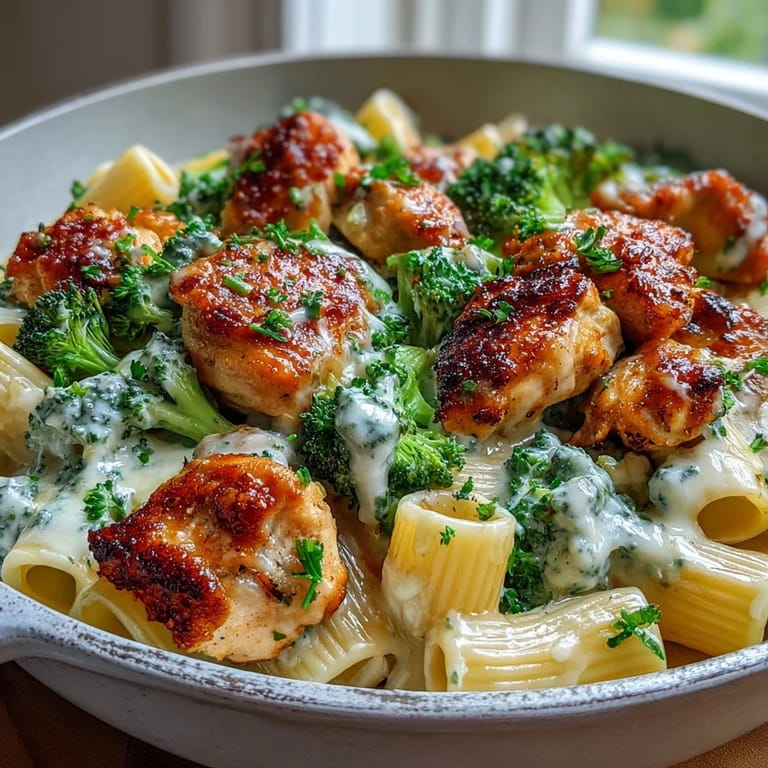
 There's something about the smell of garlic hitting hot butter that makes everything feel like it's going to turn out right. My sister called me one Wednesday asking what to make for dinner, and I found myself describing this pasta without even thinking about it, rattling off the ingredients like I'd been making it forever. The truth is, I'd only made it twice before, but something about the creamy sauce and the way the broccoli stays crisp convinced me it was a keeper. She made it that night and texted me a photo of an empty bowl, which told me everything.
I made this for my roommate on a random Tuesday when she seemed stressed about exams, and watching her face light up over a bowl of pasta felt oddly meaningful. She ate it standing at the counter, and by the time she finished, she asked for the recipe. That's when I realized comfort food isn't really about the ingredients, it's about the moment you choose to make something warm for someone.
Ingredients
- Boneless, skinless chicken breasts: Cut them into bite-size pieces so they cook quickly and distribute evenly throughout the pasta, making every forkful feel intentional.
- Penne, rigatoni, or rotini pasta: The shape matters because you want the sauce clinging to every surface, and tubular pasta holds onto that creamy coating better than spaghetti ever could.
- Small broccoli florets: Use florets that are similar in size so they cook at the same rate, and resist the urge to overcrowd the pan when you add them.
- Garlic and onion: The garlic is your flavor anchor here, so don't skip the mincing step, and toast it gently until it's fragrant but not brown or it turns bitter.
- Heavy cream and milk: The combination creates a sauce that's rich but not walloping, and the milk lightens things just enough to keep it from feeling too heavy.
- Freshly grated Parmesan cheese: Pre-shredded cheese has anti-caking agents that can make your sauce grainy, so grate it yourself if you can and add it at the end when heat is gentle.
- Unsalted butter: This is your cooking fat, and unsalted gives you control over the salt level throughout the entire dish.
- Low-sodium chicken broth: Low-sodium matters because you're adding Parmesan and it's already salty, so this gives you room to build flavor without oversalting.
Tired of Takeout? 🥡
Get 10 meals you can make faster than delivery arrives. Seriously.
One email. No spam. Unsubscribe anytime.
Instructions
- Get the chicken started:
- Melt butter in your skillet over medium heat and let it foam slightly before adding chicken pieces seasoned with salt and pepper. Cook for 4 to 5 minutes until the edges turn golden, which means they're sealed and tender inside.
- Build the flavor base:
- Add your chopped onion and minced garlic to the same skillet and let them soften for about 2 minutes until the kitchen smells like something good is happening. You'll know it's right when the garlic loses its sharp edge and the onion turns translucent.
- Create the sauce foundation:
- Pour in the chicken broth, milk, and heavy cream, stirring everything together as you bring it to a gentle simmer. Watch for tiny bubbles breaking the surface, which means you're at the right temperature to cook the pasta gently.
- Cook the pasta and broccoli together:
- Add the dry pasta and broccoli florets directly to the simmering liquid, stir well, then cover and let it cook over medium-low heat for 10 to 12 minutes. Stir occasionally and check that the pasta is becoming tender and the liquid is gradually being absorbed into something creamy and cohesive.
- Bring everything together:
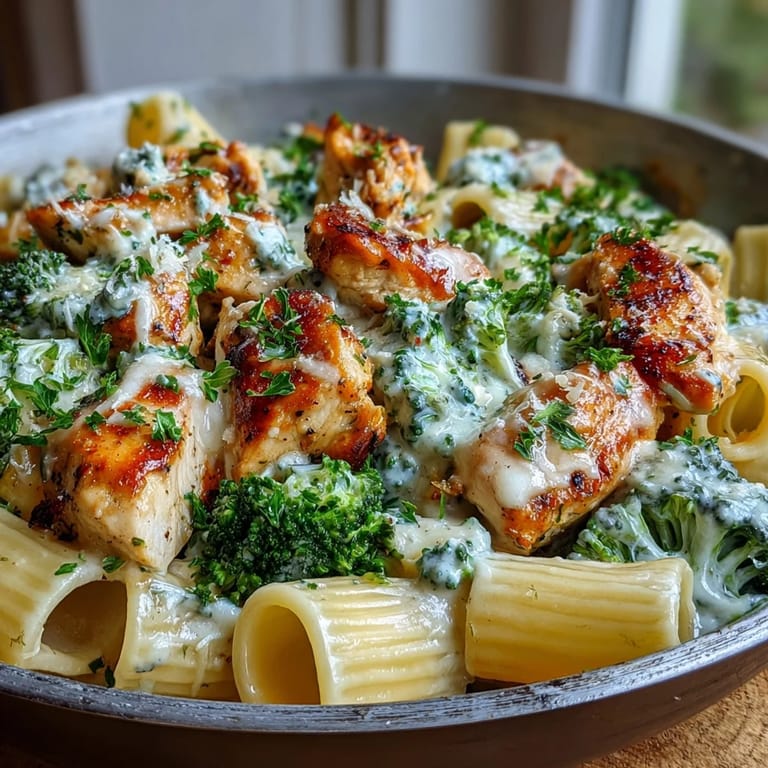
- Return the cooked chicken to the skillet, then sprinkle in the grated Parmesan cheese, Italian herbs, and red pepper flakes if you're using them. Stir gently until the cheese melts and the whole thing transforms into a creamy, luxurious sauce that coats every piece of pasta and vegetable.
- Taste and adjust:
- This is the moment where your personal preference takes over, so taste a spoonful of sauce and add more salt or pepper if it needs it. Everyone's palate is different, so trust what your taste buds are telling you.
- Serve while it's warm:
- Divide into bowls and shower each one with fresh parsley and extra Parmesan cheese, which adds a bit of brightness and texture to balance the creamy richness.
 Pin It
 My mom asked me to make this for a family gathering, and halfway through cooking, my nephew wandered into the kitchen asking what was happening. I let him stir the sauce and watch the cheese melt, and something about his quiet focus reminded me that food is really just an excuse to spend time with people you care about. That bowl he ate was probably the best part of my week.
Why This Pasta Works in Real Life
This dish doesn't require you to be a good cook, just attentive. You're essentially cooking everything in one pot with cream and broth instead of boiling pasta separately and making a sauce on another burner, which means fewer pans and fewer things to get wrong. The beauty is that even if your timing isn't perfect, the creamy sauce covers for you because it keeps everything moist and delicious even if the pasta cooks a minute longer than intended.
Making It Your Own
A squeeze of fresh lemon juice right before serving adds a brightness that cuts through the richness and makes people pause and wonder what you did differently. You can swap in rotisserie chicken if you're short on time, or add frozen broccoli if fresh isn't available, and honestly the dish works beautifully either way. Some people add red pepper flakes for heat, others stir in a handful of spinach at the end, and both choices make perfect sense for what you're in the mood for.
The Small Details That Matter
Medium-low heat during the pasta cooking phase is the difference between a creamy sauce and one that's broken or curdled, so resist the urge to turn up the heat if you're impatient. The pasta will get tender, but it takes time for the cream and broth to do their work, and rushing this step is where most people stumble. Stir occasionally so nothing sticks to the bottom, and if your sauce seems too thick before the pasta finishes cooking, splash in a bit more broth or hot water to loosen things up.
- Fresh Parmesan grated at home stays smooth in the sauce, while pre-shredded can get grainy and clumpy.
- Keep the heat gentle once the cream is in the pan because high heat and dairy don't play nicely together.
- Taste as you go so you understand how the flavors are building and can adjust before serving.
 Pin It
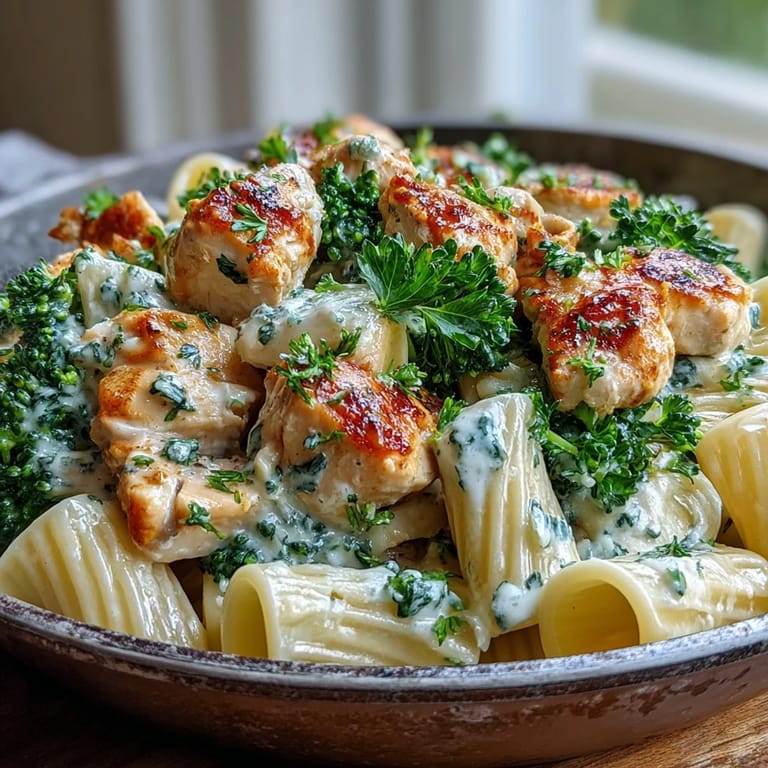
 This recipe taught me that the best meals are the ones that feel effortless to make but feel special to eat, and that's exactly what this pasta delivers. Make it for someone, or just for yourself on a night when you deserve something that tastes like care.
Questions About This Recipe
- → Can I use different pasta shapes?
Absolutely. Penne, rigatoni, and rotini all work beautifully as their nooks and crannies catch the creamy sauce. Short pasta with ridges or tubes holds the garlic Parmesan coating exceptionally well.
- → How do I prevent the sauce from separating?
Keep the heat at medium-low or medium once the cream is added. High heat can cause dairy to break. Stir frequently while the pasta cooks, and add the Parmesan off the heat or just after turning off the burner for the smoothest results.
- → Can I make this with rotisserie chicken?
Yes, using a rotisserie chicken is an excellent shortcut. Simply shred or chop the cooked meat and add it during the last 5 minutes of cooking, just long enough to heat through. This reduces total time to about 25 minutes.
- → How do I store and reheat leftovers?
Store in an airtight container in the refrigerator for up to 3 days. The pasta will absorb more sauce as it sits, so add a splash of broth or milk when reheating. Warm gently over medium-low heat, stirring occasionally, until heated through.
- → Can I make this vegetarian?
Certainly. Omit the chicken and swap the chicken broth for vegetable broth. You might want to add an extra cup of broccoli or incorporate other vegetables like bell peppers or spinach to maintain the hearty, satisfying texture.
- → Why cook the pasta directly in the sauce?
Cooking pasta in the creamy broth allows the noodles to release starch into the liquid, naturally thickening the sauce. The pasta also absorbs the garlic and Parmesan flavors from the inside out, creating a more cohesive and flavorful dish than boiling separately.