 Pin It
 My friend called in a panic two days before her housewarming, worried she'd bitten off more than she could chew with entertaining. I showed up with a simple philosophy: a charcuterie board does the heavy lifting for you, turning thirty minutes of assembly into an hour of guests happily grazing and mingling. There's something magical about a well-built board—it looks effortlessly fancy while being completely foolproof, and honestly, it saved her from cooking an entire meal while unpacking boxes.
I watched my friend's nervous energy completely dissolve the moment people started arriving and immediately gravitating toward the board. Within minutes, what had been a source of stress became the heart of the party—conversations happened around it, strangers became friends over debating whether the blue cheese or brie was better, and she got to actually enjoy her new place instead of worrying about appetizers.
Ingredients
- Prosciutto (120 g): Drape these paper-thin slices loosely—they'll catch light and add visual drama, plus their salty richness balances creamy cheeses beautifully.
- Salami (120 g): Choose a good quality slice with some marbling; it should taste peppery and not plastic-y, which makes the difference between forgettable and memorable.
- Smoked ham (120 g): This adds a subtle sweetness that nobody consciously notices but everyone appreciates.
- Chorizo slices (100 g): If you can find Spanish chorizo already sliced, it's your shortcut to depth of flavor.
- Brie, sliced (150 g): Let it sit at room temperature for at least an hour before serving so it becomes spreadable and silky—cold brie defeats the purpose.
- Aged cheddar, cubed (150 g): The sharpness cuts through richness and keeps people reaching back.
- Gouda, sliced (120 g): This one bridges sweet and savory, somehow making everything around it taste better.
- Blue cheese, crumbled (100 g): A small amount goes a long way; it's the wild card that makes people pause and taste intentionally.
- Hummus (100 g): Spoon it into a shallow bowl and drizzle the surface with olive oil just before serving—it looks more intentional that way.
- Tzatziki (100 g): This cool, herby dip is the bridge between people who love bold flavors and those who want something refreshing.
- Roasted red pepper dip (100 g): The color alone adds energy to your board, and it pairs surprisingly well with everything.
- Assorted crackers (150 g): Mix textures—some sturdy for dips, some delicate for cheese, some seeded for nutty flavor.
- Baguette, sliced (100 g): Toast these lightly if you're assembling early; it keeps them crisp and prevents sogginess.
- Breadsticks (100 g): They're functional but also give people something to hold while they mingle, which matters more than you'd think.
- Red and green grapes (2 cups combined): These provide moisture and sweetness, and their round shapes fill awkward gaps naturally.
- Cherry tomatoes (1 cup): Halve them if you're worried about people biting into whole ones messily; I've learned this the hard way.
- Cucumber slices (1 cup): Cool and refreshing, these also absorb and balance the richness of the heavier items.
- Red bell pepper, sliced (1 whole): The bright color is essential for visual appeal, and people love the slight sweetness.
- Baby carrots (1 cup): Serve them whole so guests can dip them easily without needing teeth marks.
- Mixed nuts (½ cup): Toast them lightly beforehand if you have time—it doubles their impact without any effort.
- Olives, pitted (½ cup): Buy them already pitted; it's worth the few extra dollars because nobody wants to fish for pits while socializing.
- Dried apricots (¼ cup): These add chewiness and a subtle tartness that keeps your palate from getting tired.
- Dried figs (¼ cup): Sweet enough to satisfy without being dessert, they anchor the flavor journey beautifully.
- Fresh herbs for garnish: Sprigs of rosemary and thyme aren't just pretty—they release fragrance and hint at sophistication.
Tired of Takeout? 🥡
Get 10 meals you can make faster than delivery arrives. Seriously.
One email. No spam. Unsubscribe anytime.
Instructions
- Start with your base:
- Lay out your large board or platter where you can work comfortably without moving it—you'll want to arrange everything while standing so you can see proportions and balance. If your board feels bare, use a neutral cloth underneath to frame what you're building.
- Build the meat foundation:
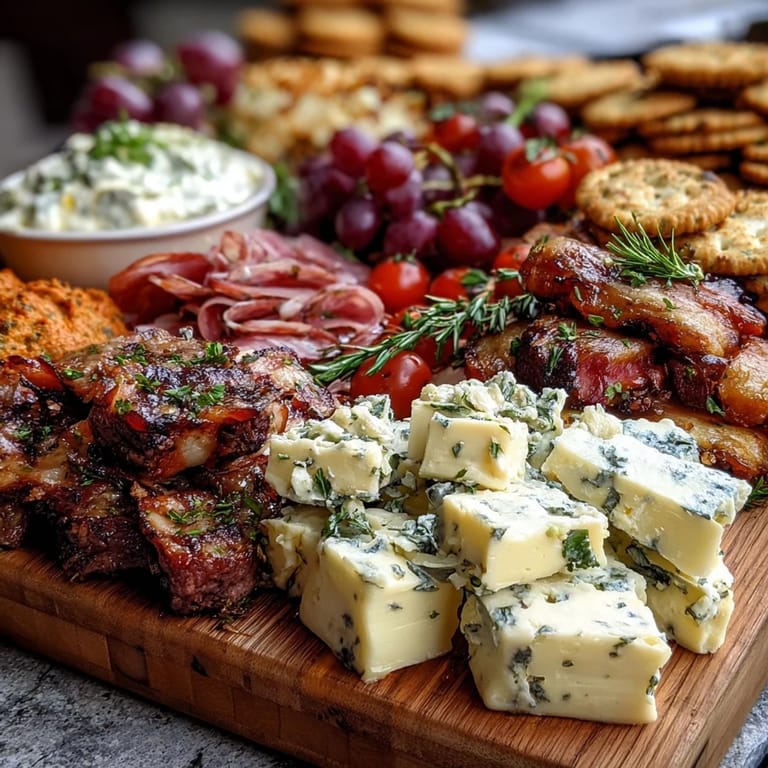
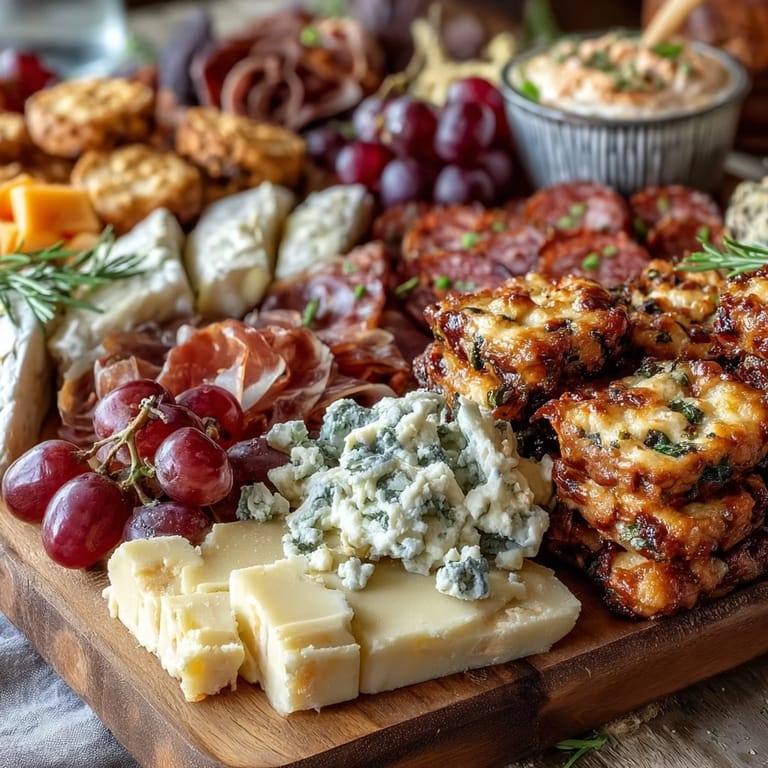
- Fold prosciutto, salami, and ham into loose, casual shapes—think graceful waves rather than neat stacks. Let them overlap gently so colors show through, and leave some board visible; crowding everything instantly reads as cluttered instead of generous.
- Position your cheese strategically:
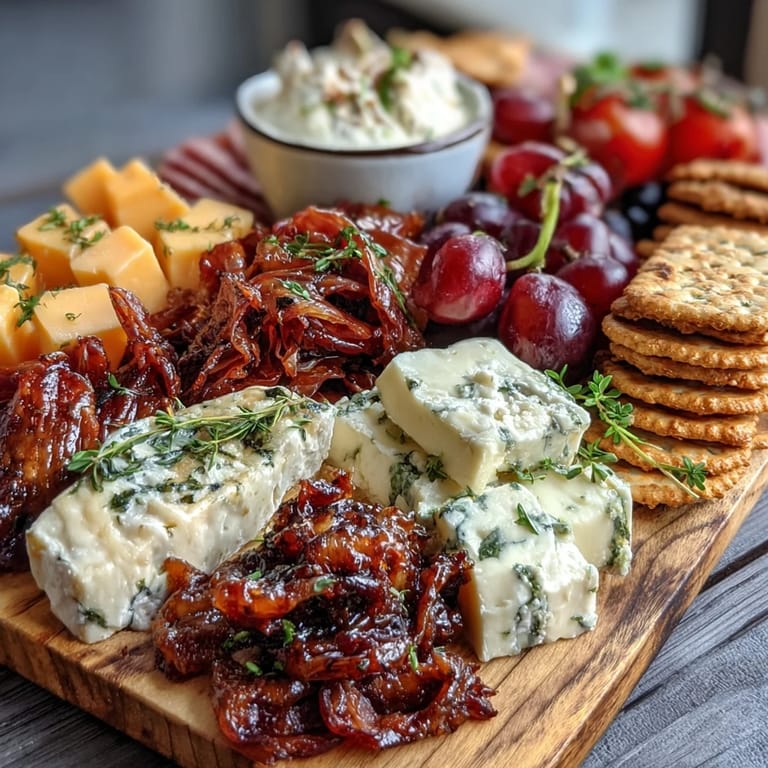
- Place hard cheeses (cheddar, gouda) in clusters, softer ones (brie) in their own zone so they stay distinct. Crumble the blue cheese into small piles scattered across the board rather than one big heap—it invites tasting rather than intimidating.
- Nestle the dips:
- Set small bowls or shallow dishes into the board, pressing slightly so they feel anchored rather than floating. Spoon dips evenly so the surface looks intentional, and leave a tiny spoon in each one so guests don't use fingers or crackers directly in the bowl.
- Arrange the carbs:
- Fan crackers in several small sections rather than one giant pile; people approach a fanned arrangement more confidently than they dig into a heap. Position breadsticks standing up in a small glass tucked into the board, or lean them artfully against other elements.
- Fill the gaps with produce:
- Scatter grapes, tomatoes, cucumber, and pepper slices in the empty spaces, letting them create natural pathways across the board. This step determines whether your board looks abundant or sparse, so don't be shy about color distribution.
- Scatter nuts and dried fruits:
- Create small clusters of mixed nuts, olives, apricots, and figs rather than spreading them evenly—clustering makes the board feel curated and gives guests natural stopping points. These items also anchor heavier items and prevent everything from sliding when the board shifts.
- Add the finishing touch:
- Tuck fresh herb sprigs into gaps and across the board just before serving—this is your final statement that effort and care went into this. The herbs smell wonderful and photograph beautifully, which matters if anyone's documenting the moment.
 Pin It
 What struck me most was how my friend stood back after everything came together, took a breath, and genuinely relaxed for the first time in days. A charcuterie board isn't just food—it's permission to throw a celebration without perfection, to feed people generously without burning yourself out in the process.
Building a Board That Looks Effortless
The secret I've discovered is that a beautiful board isn't about symmetry—it's about rhythm and balance. You're looking for variety in color, texture, and height; if everything sits flat at the same level, it feels boring no matter how good the ingredients are. Let meats bunch, stack cheeses at slightly different angles, stand crackers up, and let herbs reach different heights. This variation is what catches people's eyes and makes them want to explore.
Timing and Temperature Matters More Than You'd Think
I learned to assemble the board no more than two to three hours before guests arrive—any earlier and produce starts losing its crispness, dips begin looking tired, and you lose that fresh-right-now feeling. The moment before serving, do a quick refresh: pat any moisture off vegetables, fluff herbs, make sure dips look intentional with a small swirl, and check that nothing has shifted. This tiny adjustment takes thirty seconds but makes the difference between a board that looks thrown together and one that feels genuinely hosted.
Making It Personal and Memorable
The beauty of a charcuterie board is that it adapts to your guests, your season, your mood, and your access to ingredients. I've built summer versions overflowing with stone fruits and lighter cheeses, winter ones with darker cured meats and aged cheddars, vegetarian boards bursting with roasted vegetables and spreads for friends who don't eat meat. The formula stays the same; the personality changes every time.
- Include one unexpected element—candied nuts, a spicy jam, smoked paprika drizzled over olive oil—so people discover something surprising.
- Set out small napkins and small plates nearby; it signals that grabbing and standing around is exactly what you hoped would happen.
- If you're serving wine or drinks, position the board so it's not blocking access to beverages, letting circulation happen naturally throughout the gathering.
 Pin It
 A charcuterie board is one of those rare dishes where doing less actually creates more—more conversation, more joy, more feeling that you've truly welcomed people into your space. It's honest, generous, and completely achievable.
Questions About This Recipe
- → What meats are typically included?
Prosciutto, salami, smoked ham, and chorizo slices offer a variety of savory and smoky flavors for the board.
- → Which cheeses complement this board best?
Brie, aged cheddar, gouda, and blue cheese provide a balance of creamy, sharp, and tangy notes.
- → How can I accommodate dietary preferences?
Substitute meats or cheeses as desired, and offer gluten-free crackers or additional vegetarian dips to suit guests.
- → What fresh produce works well here?
Red and green grapes, cherry tomatoes, cucumber slices, bell pepper, and baby carrots brighten the board and add texture.
- → Any tips for assembling the board?
Arrange meats in loose folds, space cheeses evenly, serve dips in small bowls nestled among items, and sprinkle nuts and dried fruit to fill gaps.