 Pin It
 There's something magical about the smell of sautéed garlic and onions hitting your kitchen on a quiet afternoon. I discovered this soup almost by accident, rummaging through the fridge on a chilly day with nothing but vegetables and dried herbs to work with. What emerged was so bright and nourishing that it became my go-to whenever I need something that feels both comforting and alive. The beauty of it is how forgiving it is—swap vegetables, adjust herbs, and it still tastes like home.
I'll never forget serving this to my neighbor on the day she moved in—she took one taste and asked for the recipe right there in my doorway. That moment taught me that simple food made with care creates connection. Now whenever someone stops by on a rainy day, this is what I reach for.
Ingredients
- Olive oil: Two tablespoons is just enough to coat the pot and coax out the sweetness of your aromatics without making the soup feel slick.
- Onion and garlic: The aromatic foundation—sauté them until they're completely soft and fragrant, which takes about three minutes and is absolutely non-negotiable.
- Carrots, celery, and bell pepper: These three create the classic Mediterranean flavor backbone, so don't skip them even if you're tempted to streamline.
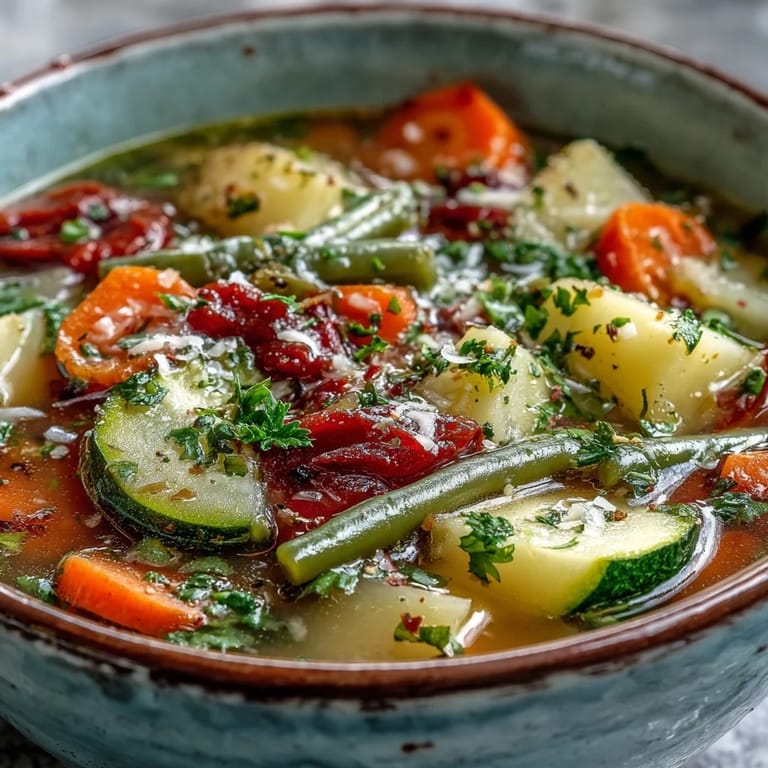
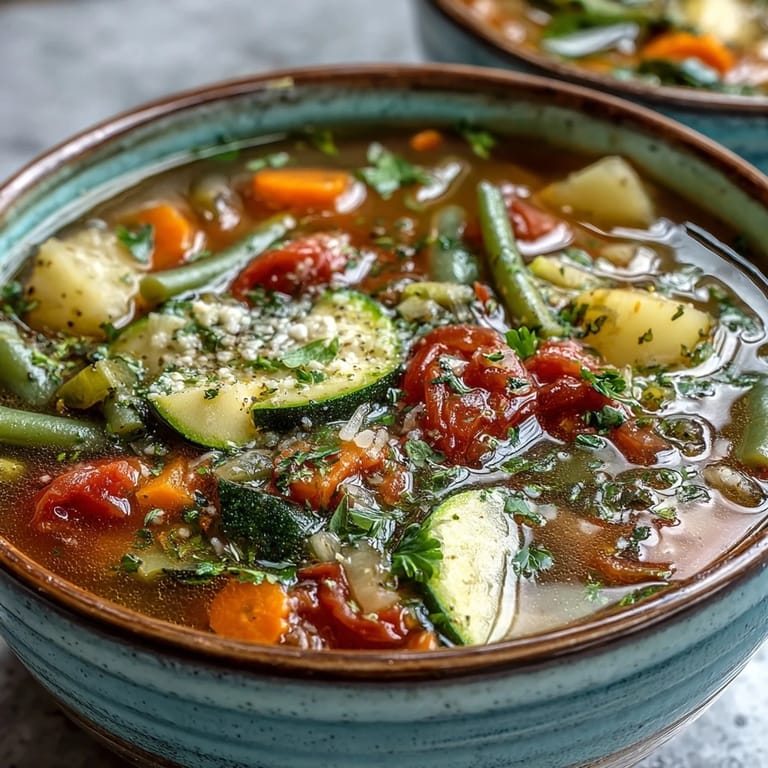
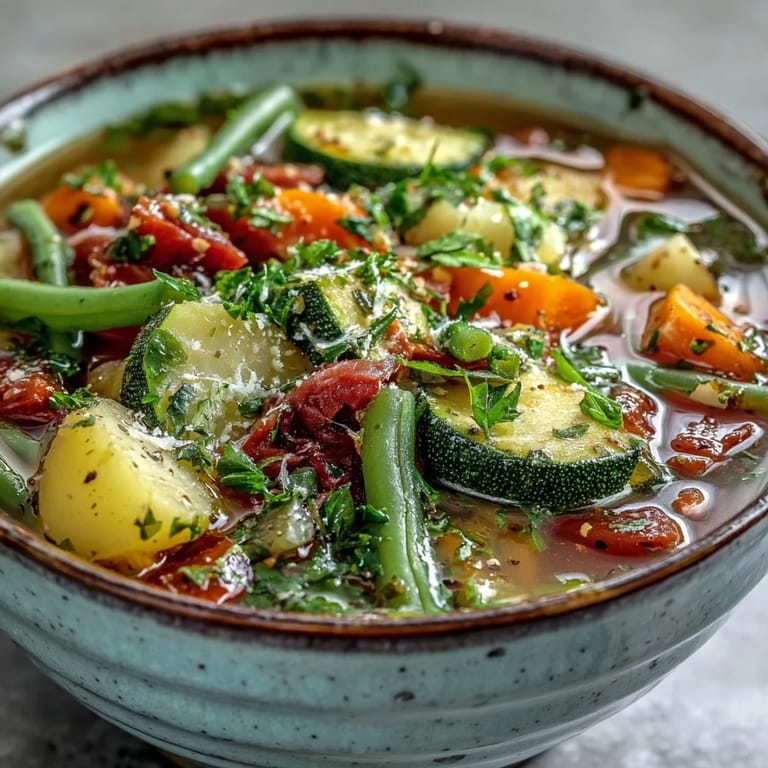
- Zucchini and green beans: They add textural variety and keep the soup feeling fresh rather than stodgy.
- Potato: A medium dice works best; it softens into the broth and adds body without dominating.
- Diced tomatoes with juices: Use canned here—fresh tomatoes often lack the depth needed, and the can juice is liquid gold for your soup.
- Vegetable broth: A good quality broth makes an enormous difference; cheap broth tastes thin and won't carry the herbs properly.
- Baby spinach: Added at the very end, it wilts in seconds and brings a peppery freshness that brightens everything.
- Dried oregano, basil, thyme, and rosemary: These four herbs are the soul of the soup—use dried, not fresh, because you need them to infuse the broth over time.
- Bay leaf: One leaf, and remember to fish it out before serving or your guests will find an unpleasant surprise.
- Salt and black pepper: Taste as you go; vegetables release water as they cook, so what seemed perfectly seasoned early on might taste flat halfway through.
- Cannellini beans (optional): They add protein and substance if you want something heartier, but the soup is complete without them.
Tired of Takeout? 🥡
Get 10 meals you can make faster than delivery arrives. Seriously.
One email. No spam. Unsubscribe anytime.
Instructions
- Start with your aromatics:
- Heat the olive oil in a large pot over medium heat and add the diced onion and minced garlic. Sauté for two to three minutes, stirring occasionally, until the kitchen smells incredible and the onion turns translucent. You'll know it's right when you can barely see the pieces of garlic anymore.
- Build your vegetable base:
- Stir in the sliced carrots, celery, diced zucchini, bell pepper, and green beans. Cook for five to six minutes, stirring every minute or so, until the edges of the vegetables just start to soften and the pot is fragrant with raw vegetable essence. Don't rush this step—it develops flavor.
- Add the liquid and seasonings:
- Pour in the canned diced tomatoes with all their juices, then add the vegetable broth and diced potato. Sprinkle in the oregano, basil, thyme, rosemary, and bay leaf, then season with salt and pepper. Stir everything together so the herbs are evenly distributed throughout.
- Simmer until tender:
- Bring the soup to a boil, then immediately reduce the heat and let it simmer uncovered for twenty to twenty-five minutes. The potatoes and carrots should be completely soft when you press one with a spoon, and the broth will have absorbed all the herb flavors. Taste it here—this is your last chance to adjust seasoning.
- Add beans if using:
- If you're incorporating the cannellini beans, stir them in now and let everything simmer together for five more minutes so they warm through and taste integrated, not like an afterthought.
- Finish with spinach:
- Remove the pot from heat and fish out the bay leaf with a spoon. Stir in the baby spinach and let it rest for one to two minutes until the leaves are completely wilted and dark green.
- Taste and serve:
- Give the soup a final taste and adjust the salt or pepper if needed. Ladle into bowls and garnish with fresh parsley and Parmesan cheese if desired.
 Pin It
 The first time I made this soup for my daughter when she came home sick, she ate two bowls and asked me to leave the pot on the stove. That's when I understood that food isn't just nutrition—it's reassurance, delivered one spoonful at a time.
The Herb Lesson
I learned the hard way that dried herbs need time to bloom in liquid. I once added them right before serving, thinking they'd taste the same, and the soup was disappointingly flat. Now I add them with the broth so they have the full simmer time to release their essential oils into the liquid. It's the difference between a soup that tastes like herbs and one where the herbs actually sing.
Vegetable Prep and Timing
Consistent cutting matters more than you'd think. If your vegetables are dramatically different sizes, some will be soft while others are still crunchy, which throws off the whole eating experience. I aim for pieces about the same size—roughly half-inch cubes for zucchini and potato, quarter-inch slices for carrots and celery. The soup finishes in thirty-five minutes of cooking time, which is plenty for everything to become tender if they're cut evenly.
Making It Your Own
This soup is a canvas, and I've learned that the best versions come when you listen to what your kitchen offers. Some days I add a splash of red wine, other times I throw in fresh basil from the garden at the very end instead of relying only on dried herbs. The foundation is strong enough to hold variations without falling apart.
- For extra heartiness, stir in small pasta shapes like ditalini or orzo about ten minutes before the soup finishes cooking.
- If you have fresh herbs on hand, add them after removing the bay leaf—they brighten the soup in a way dried herbs can't.
- This soup freezes beautifully for up to three months, so make a double batch and thank yourself later.
 Pin It
 This soup has become my answer to almost every cooking question—when someone asks what to make on a busy weeknight, what to bring to someone recovering, or what to serve when you want to feel capable in the kitchen. It never fails.
Questions About This Recipe
- → Can I make this soup ahead of time?
Absolutely. This soup actually tastes better the next day as flavors have more time to meld together. Prepare it up to 3 days in advance and store in the refrigerator. Reheat gently on the stovetot, adding a splash of broth if needed.
- → Is this soup freezer-friendly?
Yes, it freezes beautifully. Cool completely before transferring to airtight containers or freezer bags. Freeze for up to 3 months. Thaw overnight in the refrigerator and reheat on the stovetop.
- → Can I use fresh herbs instead of dried?
Certainly. Use three times the amount of fresh herbs compared to dried. Add fresh delicate herbs like basil and parsley in the last few minutes of cooking to preserve their bright flavor.
- → What vegetables can I substitute?
Feel free to use whatever seasonal vegetables you have on hand. Swiss chard, kale, butternut squash, green peas, or chopped tomatoes all work well. Keep the total vegetable quantity roughly the same.
- → How can I make this more filling?
Add small pasta shapes like ditalini, orzo, or small shells during the last 10 minutes of cooking. The cannellini beans also add protein and substance. A slice of crusty bread on the side makes it a complete meal.
- → Is this suitable for meal prep?
Perfect for meal prep. Portion into individual containers for easy lunches throughout the week. The pasta will soften over time, so if adding pasta, consider cooking it separately and adding when reheating.