 Pin It
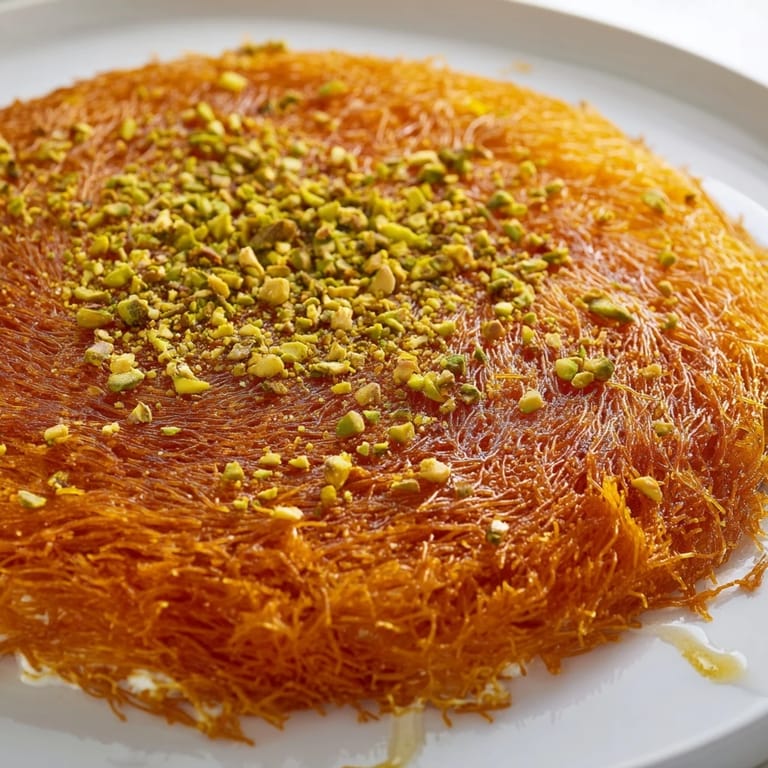
 The first time I tasted authentic knafeh was at a family gathering where my aunt emerged from the kitchen with this golden, crispy creation that seemed to glow under the kitchen lights. The contrast between the warm, stretchy cheese and the shatteringly crisp pastry was nothing short of magic, and I spent the rest of the evening watching how carefully she handled it, how the honey syrup transformed it from good to unforgettable. Years later, when I finally attempted it myself, I understood why she moved with such intention through each step—this dessert demands respect, but rewards you with something truly special.
I made this for my partner's birthday last spring, and I remember the nervous energy of flipping it onto the platter—that split second before you know if it's going to stay intact or crumble. When it released perfectly golden and whole, the relief and joy were almost as sweet as the dessert itself. Watching everyone's faces light up as they bit into it, hearing the satisfying crunch, made every careful step worthwhile.
Ingredients
- Akawi cheese: This is the soul of knafeh—its mild, slightly salty character and ability to melt into silky strings is irreplaceable, though good low-moisture mozzarella works if you can't find it in your area.
- Ricotta cheese: Adds creaminess and helps the filling stay cohesive rather than becoming a pool of oil.
- Kataifi (shredded phyllo): The delicate, thread-like strands create that signature shattering crispness that defines this dessert.
- Unsalted butter: You need this to coat every strand evenly so the pastry crisps beautifully rather than baking unevenly.
- Granulated sugar: The foundation of your syrup, which needs to be slightly thickened so it soaks in without turning the pastry soggy.
- Water: Balances the sweetness and helps the syrup achieve the right consistency.
- Lemon juice: Cuts through the richness with brightness and prevents the syrup from being cloying.
- Orange blossom and rose water: These are what transform good syrup into something that tastes like a memory—use them generously.
- Pistachios: The final touch that adds color, texture, and a subtle nutty flavor that complements the floral syrup.
Tired of Takeout? 🥡
Get 10 meals you can make faster than delivery arrives. Seriously.
One email. No spam. Unsubscribe anytime.
Instructions
- Soak and Prepare the Cheese:
- If using Akawi, soak it for several hours or overnight, changing the water hourly to draw out excess salt—this step is what prevents your knafeh from being inedibly salty. Pat everything dry before combining with the ricotta, which should be smooth and creamy like a canvas for the cheese to rest on.
- Butter the Pastry:
- Gently separate the kataifi strands in a large bowl, then drizzle the melted butter over them while tossing gently, as if you're giving them a warm bath. Every strand should glisten with butter before it hits the pan.
- Build the Base Layer:
- Grease your baking dish generously and spread half the buttered kataifi across the bottom, pressing it down into an even, compact layer that will hold the cheese without crumbling. This becomes your foundation.
- Layer the Cheese:
- Spread the cheese mixture evenly over the kataifi base, resisting the urge to press down too hard, then crown it with the remaining kataifi strands, pressing just gently enough to secure everything without compacting it.
- Bake to Golden Perfection:
- Bake at 180°C for 30–35 minutes until the top is a deep golden brown and you can hear a faint crackle when you shake the pan slightly. Don't open the oven too often, as you want the heat to stay consistent and build that crucial crispness.
- Prepare the Syrup:
- While the knafeh bakes, combine sugar, water, and lemon juice in a saucepan and bring to a boil, then reduce heat and let it simmer for 8–10 minutes until it coats the back of a spoon lightly. Remove from heat, stir in the orange blossom and rose water, and let it cool completely so the hot knafeh doesn't cook it further when you pour.
- The Flip:
- This is the moment that matters—run a thin knife around the edges of the hot knafeh to loosen it, then place your serving platter firmly over the baking dish and flip with confidence in one smooth motion. If it hesitates, give it a gentle shake to release.
- Finish with Syrup and Garnish:
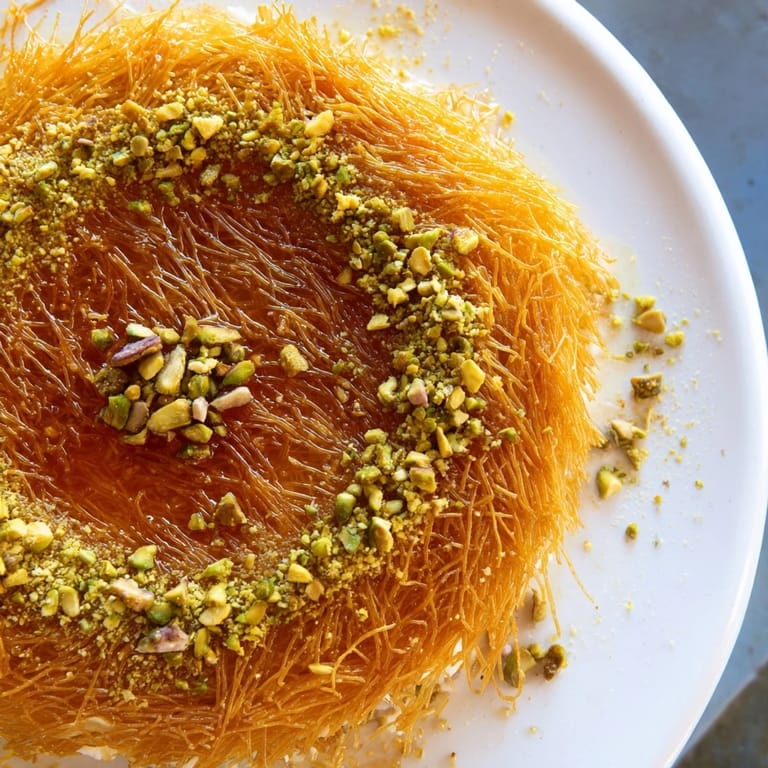
- Pour about half the syrup over the hot knafeh immediately after flipping, letting it soak in, then scatter the pistachios generously across the top and drizzle with honey if you're feeling generous. Serve while it's still warm, with extra syrup on the side for those who want it.
 Pin It
 There's something about serving this warm, still slightly crunching under your teeth, that makes people pause mid-conversation. It transforms a dessert course into an event, and suddenly everyone's talking about flavor and texture and memory. That's when you know you've made something worth making.
The Art of the Perfect Flip
The flip is genuinely the moment where knafeh separates the confident from the nervous baker. I've watched people hover over the pan with their platter, second-guessing themselves, and the hesitation is what causes problems. The trick is to loosen the edges generously with a thin knife, place your platter firmly over the top, and commit to the motion in one smooth, decisive flip. If you do it quickly and with purpose, gravity and physics handle the rest.
Why the Syrup Matters So Much
Knafeh without syrup is just cheese and pastry, but knafeh with properly infused syrup is poetry. The orange blossom and rose water are not optional extras—they're the voice of this dessert, and they need to be generous and fragrant enough to cut through the richness of the cheese. I've learned to smell the syrup before pouring; if it smells floral and bright, you're in the right place.
Serving and Storage Wisdom
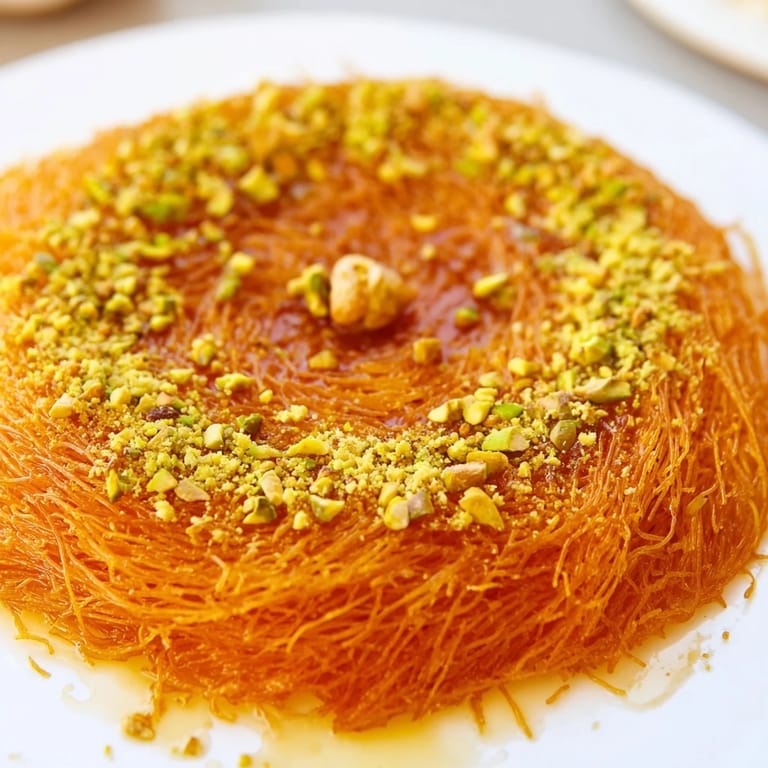
This dessert is best enjoyed immediately after assembly, while the contrast between crispy and melty is at its peak. If you must make it ahead, assemble everything but don't pour the syrup until just before serving. Leftover knafeh can be gently reheated in a warm oven, though it will lose some of its pristine crispness, and any remaining syrup should be stored separately and warmed through before serving alongside it.
- For a crunchier top, broil the knafeh for 1–2 minutes after baking, watching carefully so the pastry doesn't burn.
- Pair with strong Turkish coffee or fresh mint tea to balance the sweetness and let your palate reset between bites.
- If you can't find Akawi cheese, fresh low-moisture mozzarella works admirably, though the flavor will be slightly milder and less complex.
 Pin It
 This knafeh has become my go-to for moments when I want to serve something that feels both special and from the heart. Every time someone closes their eyes after the first bite, I remember why I fell in love with making it.
Questions About This Recipe
- → What cheeses are used in this dish?
Akawi cheese and ricotta combine to create a soft, stretchy filling. Mozzarella can substitute Akawi if needed.
- → How is the kataifi prepared for baking?
The shredded phyllo dough is separated gently and coated with melted butter before layering to ensure crispness.
- → What flavors are added to the syrup?
The syrup includes orange blossom water, rose water, and lemon juice, which provide fragrant floral and citrus notes.
- → Can the dish be made ahead of time?
It’s best served fresh and warm for optimal texture, though leftover portions can be gently reheated.
- → What garnishes enhance this dish?
Chopped pistachios add crunch and color, while a honey drizzle offers extra sweetness.