 Pin It
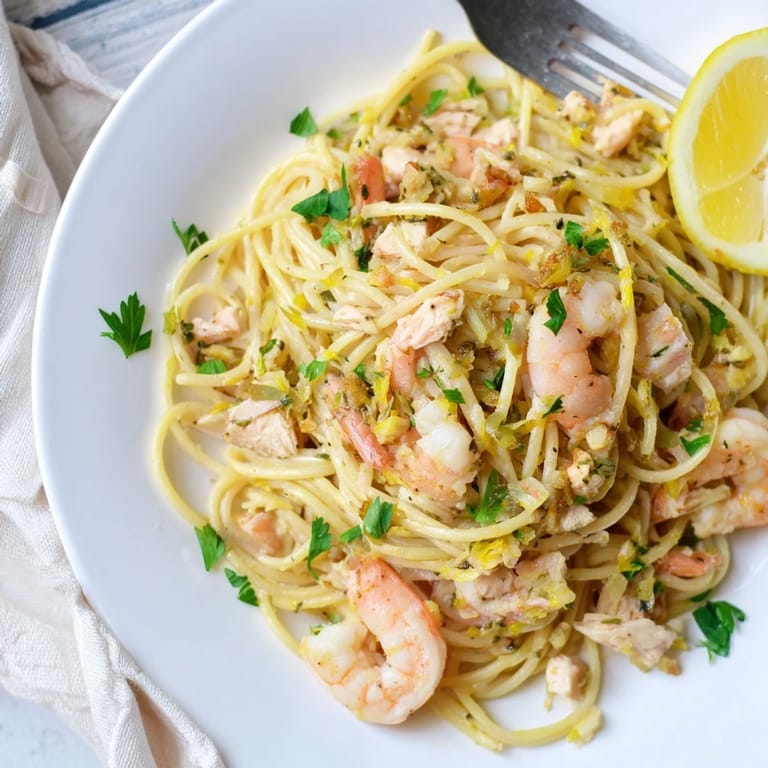
 The smell of garlic sizzling in butter still reminds me of the night I threw this together after forgetting I'd invited friends over. I had leftover shrimp in the freezer, a chicken breast I needed to use, and a lemon rolling around in the crisper drawer. What started as panic cooking turned into something I now make on purpose at least twice a month. The lemon cuts through the richness in a way that makes you want to twirl one more forkful even when you're full.
I remember serving this to my sister who claims she doesn't like shrimp. She ate two full plates and then texted me the next morning asking for the recipe. I think the lemon butter sauce won her over, or maybe it was the way the pasta soaks up all that garlicky goodness. Either way, it's become my go-to when I need to impress someone without spending all evening in the kitchen.
Ingredients
- Large shrimp, peeled and deveined: Look for shrimp that smell like the ocean, not fishy, and make sure they're completely thawed and patted dry so they get a nice sear instead of steaming.
- Boneless, skinless chicken breast: Cut them into bite-sized pieces that match the shrimp in size so everything cooks evenly and you get a little of both in every bite.
- Linguine or spaghetti: Either works beautifully here, the key is cooking it just to al dente since it'll finish in the sauce and you don't want it mushy.
- Garlic, minced: Fresh garlic is non-negotiable in this dish, it blooms in the butter and creates the aromatic backbone that makes your kitchen smell like an Italian bistro.
- Shallot, finely chopped: Shallots add a sweeter, more delicate onion flavor that doesn't overpower the lemon, but a small yellow onion works in a pinch.
- Lemon zest and juice: Use a microplane for the zest to avoid the bitter white pith, and roll the lemon on the counter before juicing to get every last drop.
- Fresh parsley, chopped: The brightness of fresh parsley at the end wakes up the whole dish, dried just won't give you the same pop of color and flavor.
- Unsalted butter, divided: Using unsalted lets you control the seasoning, and dividing it means you get richness in every stage of cooking without it burning.
- Olive oil: A good quality olive oil helps prevent the butter from burning when you're searing the proteins at higher heat.
- Dry white wine: It's optional but adds a layer of acidity and depth, anything you'd actually drink works, I usually use whatever's open in the fridge.
- Low-sodium chicken broth: This extends the sauce and adds savory depth without making it too salty, especially important since you're adding pasta water later.
- Salt, black pepper, and red pepper flakes: Season as you go, tasting at each step, and the red pepper flakes are optional but give a gentle warmth that plays nicely with the lemon.
Tired of Takeout? 🥡
Get 10 meals you can make faster than delivery arrives. Seriously.
One email. No spam. Unsubscribe anytime.
Instructions
- Boil the pasta:
- Get your water boiling with enough salt that it tastes like the sea, then cook the pasta until it still has a slight bite in the center. Before draining, scoop out a mugful of that starchy pasta water because it's liquid gold for bringing the sauce together later.
- Prep your proteins:
- Use paper towels to pat the shrimp and chicken completely dry, any moisture will make them steam instead of sear. Season both sides generously with salt and pepper so every bite has flavor.
- Sear the chicken:
- Heat your skillet until it's nice and hot, then add the oil and butter and let it shimmer before adding the chicken in a single layer. Let it sit undisturbed for a couple minutes to get that golden crust, then flip and cook until there's no pink in the middle.
- Cook the shrimp:
- Add a bit more oil to the same pan and cook the shrimp just until they curl and turn pink, about a minute or two per side. Overcooked shrimp get rubbery fast, so pull them when they're barely opaque in the center.
- Build the sauce base:
- Turn the heat down to medium and melt the remaining butter, then add your shallot and garlic and stir constantly until they smell incredible but haven't browned. This step takes less than two minutes but it's where all the magic starts.
- Deglaze and simmer:
- Pour in the wine if you're using it and scrape up all those tasty browned bits from the bottom of the pan. Let it bubble and reduce for about a minute, then add the broth, lemon zest, and juice and let everything simmer together until it smells bright and garlicky.
- Combine everything:
- Toss the chicken and shrimp back into the pan along with your drained pasta, using tongs to lift and turn everything so it gets coated in that lemony butter. Add splashes of the reserved pasta water until the sauce clings to the noodles without being soupy.
- Finish and serve:
- Stir in the fresh parsley and red pepper flakes if you like a little heat, then taste and adjust the salt and pepper. Plate it up hot with extra parsley on top and lemon wedges on the side for anyone who wants an extra citrus hit.
 Pin It
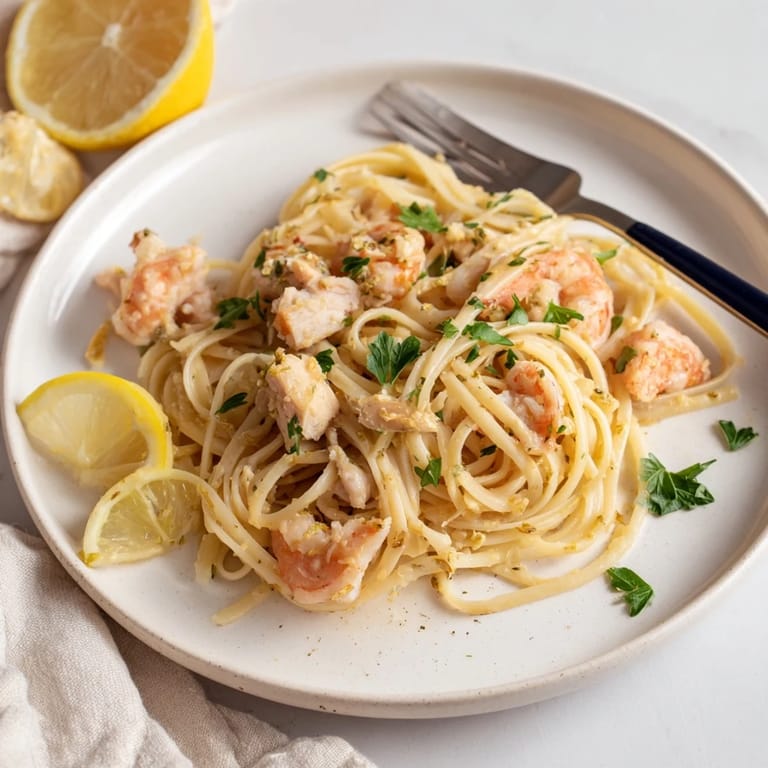
 There's something about twirling pasta loaded with shrimp and chicken in a lemony butter sauce that makes dinner feel like a celebration, even on a Wednesday. My husband once said this dish tastes like vacation, and now every time I make it, someone at the table mentions the beach or a bistro they loved in some coastal town. Food has a funny way of taking you places without leaving your kitchen.
Making It Your Own
If you want a creamier sauce, stir in a couple tablespoons of heavy cream when you add the broth and it'll turn into something luscious and velvety. I've also swapped the linguine for penne when that's what I had on hand, and it worked just fine because the sauce gets into all those little ridges. You can easily make this gluten-free by using your favorite gluten-free pasta, just watch the cooking time since some brands get mushy faster than regular pasta. On nights when I'm feeling indulgent, I add a handful of halved cherry tomatoes in the last minute of cooking and they burst into sweet little pockets of flavor.
What to Serve Alongside
A simple arugula salad with a squeeze of lemon and shaved Parmesan is all you really need on the side, it keeps things light and adds a peppery contrast. I usually tear up some crusty bread to mop up every bit of that garlicky butter sauce left in the bowl, because wasting it would be a crime. If you're pouring wine, go for a chilled Sauvignon Blanc or Pinot Grigio, the acidity matches the lemon and doesn't fight with the shrimp. For a heartier meal, roasted asparagus or broccolini with a little olive oil and sea salt rounds out the plate beautifully.
Storage and Reheating
Leftovers keep in an airtight container in the fridge for up to two days, though the shrimp won't be quite as tender after reheating. I reheat gently in a skillet over low heat with a splash of chicken broth or water to loosen the sauce, microwaving tends to make the shrimp rubbery. If you know you'll have leftovers, slightly undercook the pasta the first time so it doesn't turn to mush when reheated.
- Add a squeeze of fresh lemon juice after reheating to bring back some of that brightness.
- Store the lemon wedges separately so the acid doesn't make the seafood taste off overnight.
- This doesn't freeze well because of the shrimp and the delicate sauce, so plan to eat it within a couple days.
 Pin It
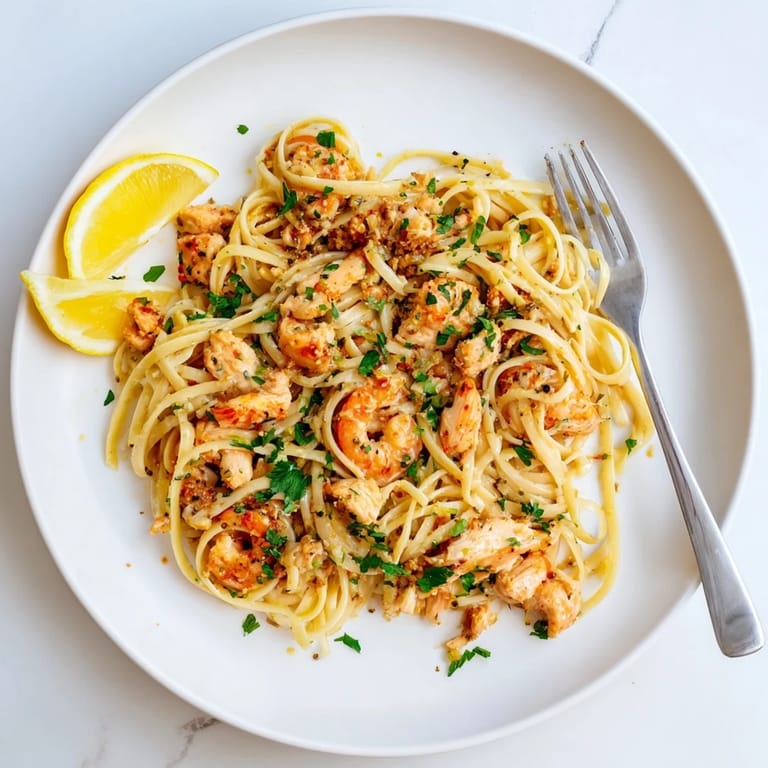
 This dish has become one of those recipes I make without thinking, the kind that feels like catching up with an old friend. I hope it becomes that for you too, something easy and delicious that makes any night feel a little more special.
Questions About This Recipe
- → How do I prevent the shrimp from becoming rubbery?
Cook shrimp for only 1-2 minutes per side until the shells turn pink and the flesh becomes opaque. Overcooked shrimp becomes tough and dry. Remove them from heat immediately once they reach this stage.
- → Can I make this dish ahead of time?
Cook the pasta and proteins up to a few hours in advance. Store them separately in the refrigerator. Prepare the sauce fresh just before serving, then combine everything. This prevents the pasta from becoming mushy.
- → What if I don't have white wine?
White wine is optional and primarily adds depth of flavor. You can omit it entirely or substitute with extra chicken broth or a splash of lemon juice for acidity.
- → How can I make the sauce creamier?
Stir in 2-3 tablespoons of heavy cream or crème fraîche after returning the proteins to the pan. This creates a luxurious, velvety sauce while maintaining the bright lemon flavor.
- → What pasta shapes work best for this dish?
Linguine and spaghetti are traditional choices that allow the sauce to cling beautifully. You can also use fettuccine, pappardelle, or even small shells. Avoid very thick or ridged pastas that trap excess sauce.
- → Can I double this recipe for a larger group?
Yes, the recipe doubles easily. Increase all ingredients proportionally and use a larger skillet or work in batches. The cooking times remain relatively the same, though the sauce may need slightly more simmering time.