 Pin It
 The first time I tasted mango sticky rice, I was sitting on a Bangkok street corner at dusk, the air thick with humidity and the smell of grilled meats from nearby vendors. A woman handed me a small plastic container with such care, as if she was sharing something precious, and when I took that first bite—the warmth of the sticky rice against the cool sweetness of mango—something clicked. Years later, I finally learned to make it myself, and now whenever I do, the kitchen fills with this gentle coconut steam that takes me right back to that moment.
I made this for my sister's birthday dinner last summer, and I remember her closing her eyes after that first spoonful, then looking at me with this surprised expression like I'd just revealed a secret. She asked if I'd learned this from a professional, which made me laugh because I'd honestly just been experimenting in my own kitchen. That moment taught me that food doesn't need fancy credentials to feel special, it just needs to be made with attention and care.
Ingredients
- Glutinous (sticky) rice: This is non-negotiable—regular jasmine rice won't give you that signature creamy, clingy texture that makes the dish work. Look for bags labeled sweet rice or glutinous rice at Asian markets.
- Full-fat coconut milk: Canned is perfectly fine, but give it a good shake before opening because the cream separates and you want that richness distributed throughout.
- Granulated sugar: Keeps the sauce clear and lets the coconut flavor shine without competing notes.
- Salt: Just a whisper of it prevents the sweetness from becoming cloying and brightens the whole dish.
- Ripe mangoes: This is where ripeness matters most—you want fruit that yields gently to pressure, with a fragrant aroma at the stem end. Under-ripe mangoes will taste like nothing but starch.
- Toasted sesame seeds or mung beans: Optional but worth the small effort because they add a nutty contrast and visual interest to what's already a beautiful plate.
Tired of Takeout? 🥡
Get 10 meals you can make faster than delivery arrives. Seriously.
One email. No spam. Unsubscribe anytime.
Instructions
- Start with clean rice:
- Rinse the sticky rice under cold running water, rubbing it gently between your fingers until the water runs clear—this removes the starch coating and helps each grain stay separate while steaming. Soaking for at least 4 hours (or overnight) softens the rice and ensures even cooking.
- Steam until translucent:
- Place the drained rice in a cheesecloth-lined steamer basket over boiling water and let it cook undisturbed for 25 to 30 minutes—the grains should look glossy and slightly see-through when done. If you peek too often, you'll let the steam escape and extend the cooking time.
- Warm the coconut sauce gently:
- Combine the coconut milk, sugar, and salt in a saucepan and heat it slowly, stirring occasionally, until the sugar dissolves completely—never let it boil or the coconut flavor becomes slightly bitter and thin. This gentle approach keeps the sauce silky and the coconut taste front and center.
- Let the rice absorb the sauce:
- Transfer the hot steamed rice to a bowl, pour the warm sweetened coconut milk over it, stir gently, cover with a clean kitchen towel, and let it sit for 15 minutes so the rice can drink in all those flavors. This resting period is what transforms separate grains into that luxurious, creamy texture.
- Make the drizzle:
- Heat the remaining coconut milk with sugar and salt, and if you want a thicker sauce that clings to the rice instead of pooling on the plate, whisk in the cornstarch slurry and cook until it coats the back of a spoon lightly. A thinner sauce is more elegant, but a thicker one is more indulgent—choose based on your mood.
- Plate with intention:
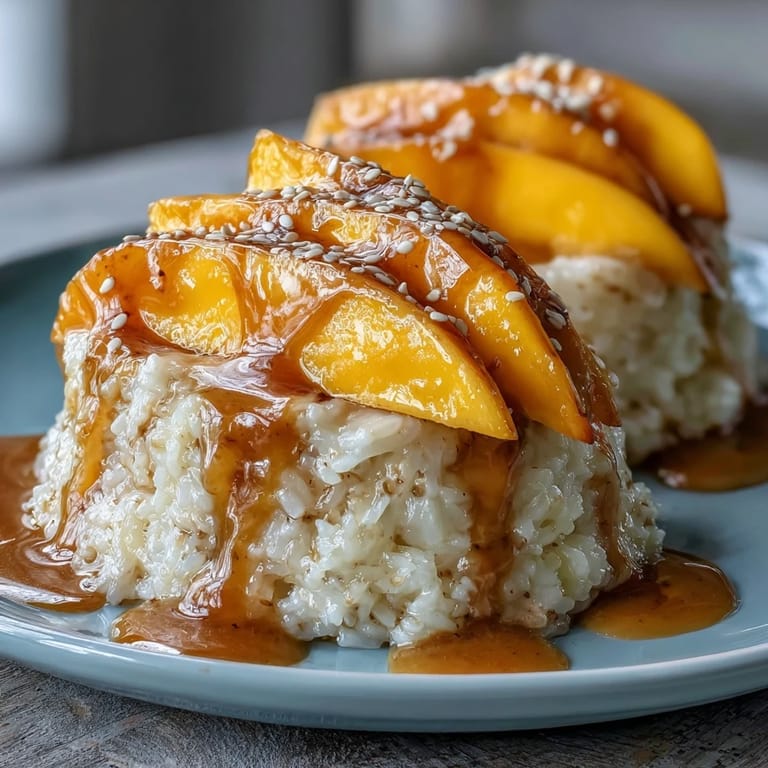
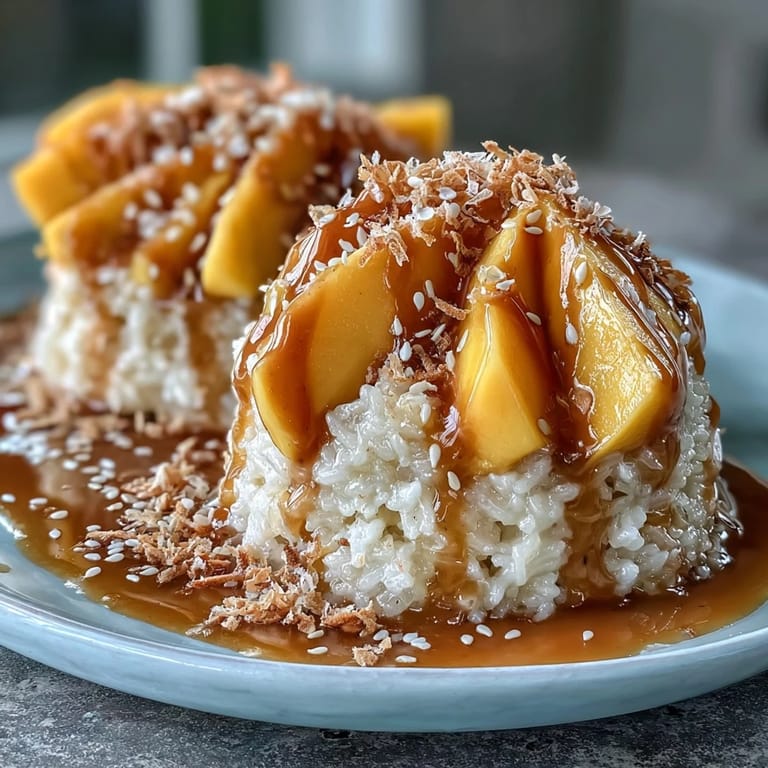
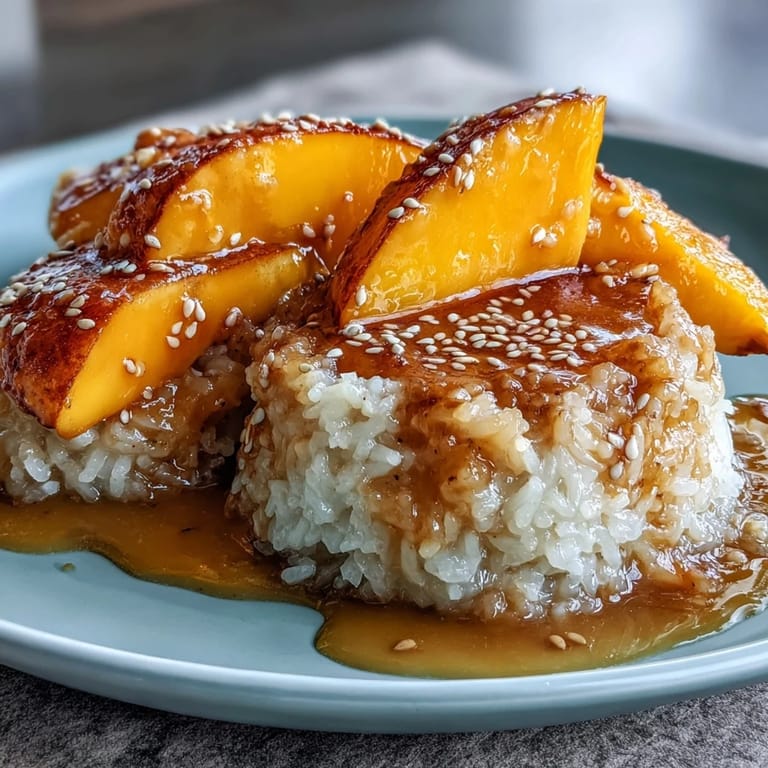
- Mound the sticky rice in the center of each plate, fan the mango slices alongside it, and drizzle the coconut topping over everything just before serving. The presentation is simple but makes the dish feel intentional and restaurant-worthy.
 Pin It
 One night, I made this dessert for my neighbor who'd been having a rough week, and I left it on her doorstep with a small note. She called me the next morning to say she'd eaten it sitting on her porch in her pajamas, watching the sunset, and for the first time in days she'd felt peaceful. That's when I understood that this dish is more than just rice and fruit—it's an invitation to slow down and savor something simple.
Choosing the Perfect Mango
The mango makes or breaks this dish, so give yourself permission to be picky at the market. Hold each one in your palm and feel for that gentle give when you press it lightly near the stem—if it's rock hard, it needs another day or two on your counter, and if it's mushy, it's past its prime. The fragrance is the final test: bring it to your nose and breathe in, and if you catch that sweet, almost floral aroma, you've found the one.
The Magic of Glutinous Rice
I spent years eating mango sticky rice before I understood why the texture was so different from regular cooked rice, and it all comes down to the starch content. Glutinous rice contains a higher ratio of amylopectin, a type of starch that becomes incredibly sticky when cooked, which is what gives you that luxurious, slightly cohesive bite that regular rice simply cannot achieve. Once you understand this chemistry, you'll stop trying to make substitutions and just embrace the real thing.
Variations and Customizations
While the classic version is perfection on its own, I've learned that this dessert is wonderfully forgiving and adaptable to what you have on hand or what you're craving. Some versions add a pandan leaf to the coconut milk for a subtle floral note that feels almost haunting, and others include a pinch of cardamom or a thin scrape of lime zest for brightness. If you want to experiment, start with these additions in tiny amounts and taste as you go, remembering that with sticky rice, subtlety is always more elegant than loudness.
- For extra fragrance, steep a single pandan leaf in the warm coconut sauce and remove it before pouring over the rice.
- A light dusting of toasted sesame seeds adds nuttiness and prevents the plate from looking one-note.
- Serve with jasmine tea or a light floral wine to echo the delicate, tropical flavors on the plate.
 Pin It
 Every time I make this, I'm reminded that some of the most beautiful things in the kitchen come from understanding a few simple ingredients and treating them with respect. This dessert has become my go-to when I want to say something without words.
Questions About This Recipe
- → What type of rice works best?
Use glutinous (sticky) rice for the characteristic chewy texture and optimal flavor absorption.
- → How long should the rice soak?
Soak the rice for at least 4 hours or overnight to ensure proper steaming and softness.
- → Can the coconut sauce be thickened?
Yes, adding a cornstarch slurry while heating the topping mixture helps achieve a thicker, creamier consistency.
- → Is there a recommended garnish?
Toasted sesame seeds or mung beans can be sprinkled on top to add a subtle nutty crunch.
- → What drinks pair well with this dish?
Light floral dessert wines or jasmine tea complement the sweet and creamy flavors beautifully.