 Pin It
 One afternoon in late autumn, I watched my neighbor carefully layer sheet after sheet of phyllo dough, each one brushed with butter until the pan shimmered. She was making baklava for her daughter's birthday, and the kitchen smelled like cinnamon and toasted nuts. I'd never attempted it before, but something about the rhythmic brushing and folding made it look almost meditative. When she pulled the golden pastry from the oven and poured the honey syrup over it, the sizzle filled the room with the sweetest, warmest fragrance I'd ever known.
I made my first batch for a potluck dinner, nervous about the phyllo tearing and the syrup ratio. My friend Leyla, who grew up in Ankara, took one bite and closed her eyes. She said it reminded her of her grandmother's kitchen, where baklava was always waiting on a silver tray. That moment taught me that some recipes carry more than flavor, they carry memory, warmth, and a sense of home that transcends borders.
Ingredients
- Walnuts: They bring an earthy richness that anchors the sweetness, and chopping them finely helps them nestle between the phyllo layers without tearing through.
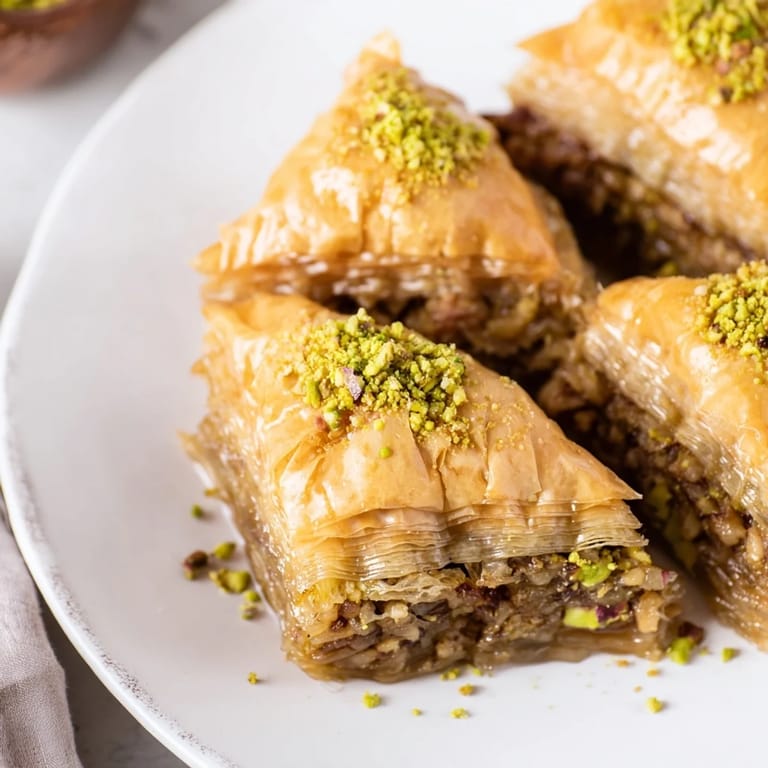
- Pistachios: The vibrant green flecks add a subtle sweetness and a gorgeous color contrast when you slice into the baklava.
- Almonds: These add a delicate, almost floral note that rounds out the nut blend beautifully.
- Granulated sugar: A little in the filling and more in the syrup creates a balanced sweetness that never feels cloying.
- Ground cinnamon: Just a teaspoon warms the entire filling without overpowering the honey and nuts.
- Phyllo dough: Thaw it overnight in the fridge so it stays pliable, and always keep it covered with a damp towel while you work.
- Unsalted butter: Melted and brushed generously, it creates those irresistible golden, crispy layers.
- Honey: The star of the syrup, it soaks into every crevice and gives baklava its signature floral sweetness.
- Water and lemon juice: They thin the syrup just enough to let it penetrate the layers, and the lemon cuts through the richness.
- Lemon zest and cinnamon stick: Simmered into the syrup, they add a fragrant complexity that lingers on your palate.
Tired of Takeout? 🥡
Get 10 meals you can make faster than delivery arrives. Seriously.
One email. No spam. Unsubscribe anytime.
Instructions
- Prep the Pan and Oven:
- Preheat your oven to 350 degrees and brush a 9x13 inch baking dish with melted butter so nothing sticks. This step sets the stage for those perfect, golden edges.
- Mix the Nut Filling:
- Combine the walnuts, pistachios, almonds, half a cup of sugar, and cinnamon in a bowl. The aroma alone will make your kitchen smell like a Turkish pastry shop.
- Prepare the Phyllo:
- Unroll the phyllo dough and immediately cover it with a damp towel. Phyllo dries out in seconds, and a dry sheet will crack and crumble when you try to layer it.
- Layer the Base:
- Lay one sheet of phyllo in the dish and brush it lightly with melted butter, then repeat until you have 8 buttery layers. This foundation needs to be sturdy enough to hold the nuts.
- Add the First Nut Layer:
- Sprinkle a third of your nut mixture evenly over the phyllo. Press it down gently so it settles into the buttery layers.
- Build the Middle Layers:
- Add 5 more phyllo sheets, brushing each with butter, then sprinkle another third of the nuts. Repeat once more so you have three distinct nut layers.
- Finish with Phyllo:
- Top with the remaining phyllo sheets, about 8 to 10, brushing each one generously. The top should glisten with butter before it goes into the oven.
- Cut Before Baking:
- Use a sharp knife to cut the baklava into diamonds or squares, slicing all the way through to the bottom. This prevents the phyllo from shattering when you try to cut it later.
- Bake Until Golden:
- Slide the pan into the oven and bake for 45 minutes, until the top is crisp and deeply golden. The smell will be almost unbearable in the best way.
- Make the Honey Syrup:
- While the baklava bakes, combine honey, water, sugar, lemon juice, zest, and a cinnamon stick in a saucepan. Bring it to a boil, then simmer for 10 minutes until it thickens slightly, then remove the zest and cinnamon stick and let it cool just a bit.
- Pour the Syrup:
- The moment the baklava comes out of the oven, pour the warm syrup slowly and evenly over the hot pastry. You'll hear it sizzle and see it soak in, and that's when the magic happens.
- Let It Rest:
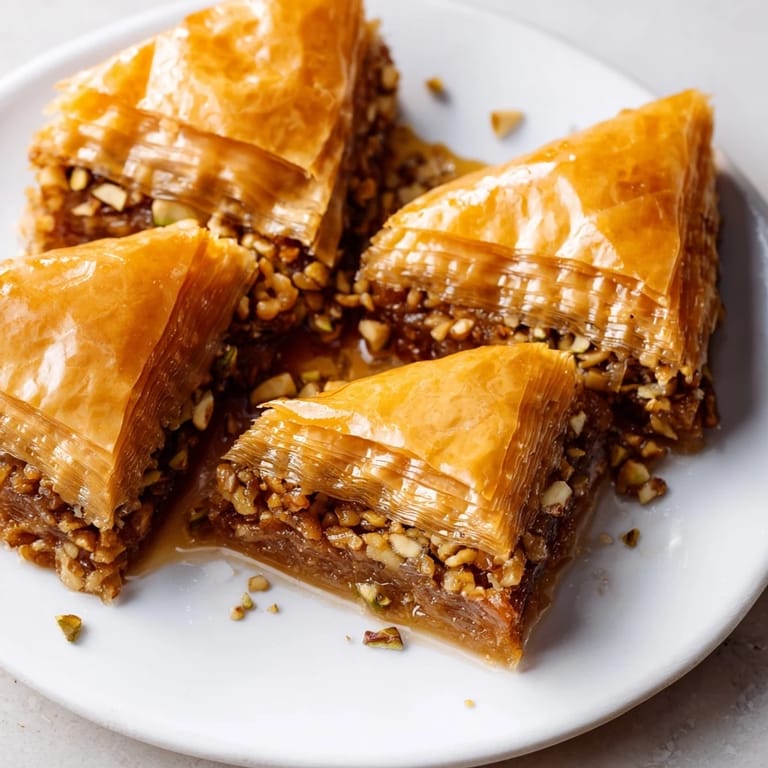
- Allow the baklava to cool completely, uncovered, for at least 4 hours. This resting time lets the syrup soak through every layer and the flavors meld into something extraordinary.
 Pin It
 The first time I served this at a dinner party, a guest who claimed he didn't like sweets came back for a second piece, then a third. He said the combination of honey, nuts, and crisp phyllo was unlike anything he'd tasted, almost savory in its complexity. That night, baklava stopped being just a dessert to me and became a conversation starter, a memory maker, and a reason to gather around the table a little longer.
Storing and Serving
Baklava keeps beautifully at room temperature, covered loosely with foil or parchment, for up to a week. I've found that it actually tastes better on day two, when the syrup has fully soaked in and the flavors have settled. Serve it with strong Turkish coffee or a pot of black tea, and let the sweetness balance the bitterness of the brew.
Customizing the Flavor
If you want a lighter, more floral syrup, swap half the honey for orange blossom water and add it after the syrup cools slightly. Some people like to sprinkle a little cardamom into the nut mixture, which gives it a warm, aromatic edge. I've also tried adding a handful of finely chopped dried apricots to the filling, and it brought a subtle tang that cut through the sweetness in the best way.
What to Watch For
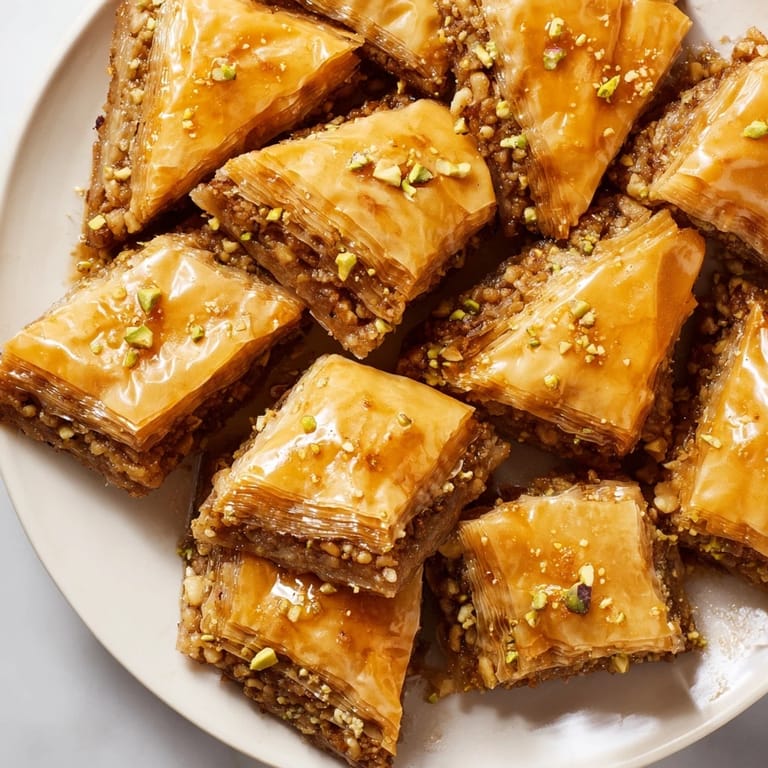
The biggest mistake I made early on was being too timid with the butter. Phyllo needs generous brushing to crisp up properly, so don't hold back. Also, make sure your knife is truly sharp when you cut the baklava before baking, a dull blade will drag and tear the delicate layers. Finally, resist the urge to cover the baklava while it cools, trapping steam will soften the phyllo and undo all your hard work.
- Use a pastry brush with natural bristles for even butter coverage.
- Let the syrup cool for a few minutes before pouring so it doesn't immediately boil off.
- If you have leftover phyllo, wrap it tightly and freeze it for next time.
 Pin It
 There's something deeply satisfying about pulling a pan of baklava from the oven, hearing that first sizzle of syrup, and knowing you've created something that will bring people together. I hope this recipe becomes a favorite in your kitchen, just as it has in mine.
Questions About This Recipe
- → What nuts are used in this baklava?
The filling combines finely chopped walnuts, pistachios, and almonds seasoned with ground cinnamon.
- → How is the honey syrup prepared?
The syrup is made by boiling honey, water, sugar, lemon juice, lemon zest, and a cinnamon stick, then simmering and cooling before pouring over the baked layers.
- → What is the best way to layer the phyllo dough?
Brush each sheet with melted butter and layer multiple sheets before adding nut mixture, repeating this process for crisp, golden layers.
- → How long should the baklava rest before serving?
Allow the baklava to cool completely and soak in the syrup for at least four hours to enhance flavor and texture.
- → Can this dessert be stored, and how?
Store covered at room temperature for up to one week, ensuring it stays fresh and the texture remains crisp.