 Pin It
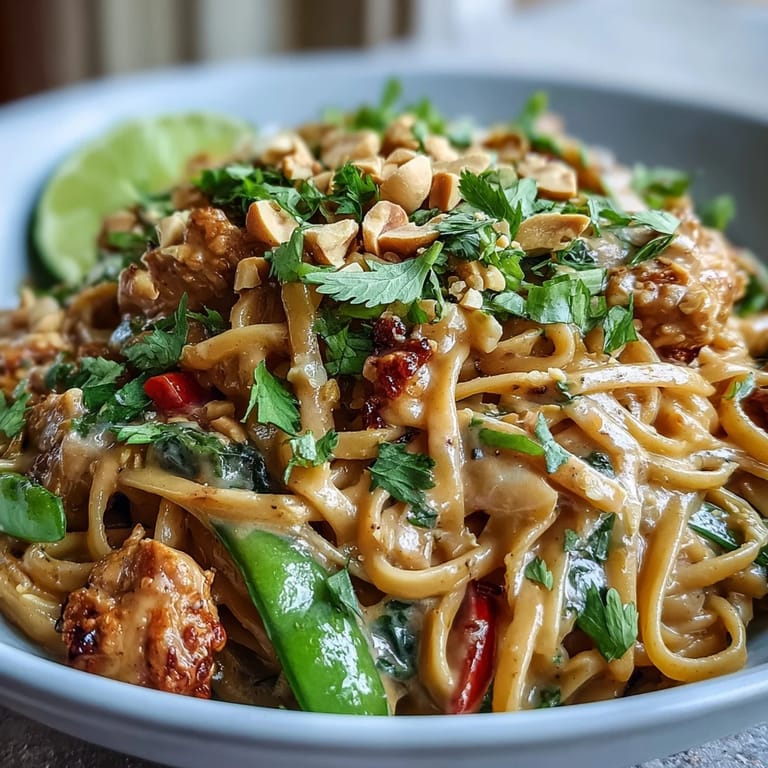
 One humid afternoon, I was craving the kind of noodle dish that tastes like you spent hours layering flavors, but honestly feels thrown together in twenty minutes. I'd been thinking about Thai takeout all week, but something about making it at home with ground chicken and crispy vegetables felt more satisfying. The real trick I discovered was cooking everything in one pan, letting the noodles soak up all that creamy peanut sauce while the vegetables stay snappy and alive. It became my go-to weeknight answer to cravings.
I made this for my friend Sarah on a Tuesday night when she was between jobs and we both needed something comforting that wasn't heavy. She watched from the kitchen stool as everything transformed in that one skillet—the smell of ginger and garlic hitting first, then the peanut butter sauce creating this silky coating over everything. By the time we sat down with our bowls, she'd stopped talking about her worries and started asking for the recipe, which felt like the highest compliment.
Ingredients
- Ground chicken: The protein backbone that cooks in minutes and soaks up sauce like a sponge, making every bite creamy without needing dairy.
- Dried wide rice noodles: They're forgiving and sturdy enough to handle the one-pan cooking method without turning to mush.
- Red bell pepper, carrots, snap peas: This trio gives you sweetness, earthiness, and snap—keep them in different sizes so they cook at roughly the same pace.
- Green onions and fresh ginger: The green onion whites go in early to build flavor, while the greens stay bright on top; ginger adds that warm, slightly spicy backbone.
- Creamy peanut butter: Use the kind with just peanuts and salt, not the spreadable stuff with added oils and sugar—it emulsifies better into the sauce.
- Soy sauce, hoisin, rice vinegar: This is your umami triangle, creating depth and that signature savory-sweet-tangy balance of Thai food.
- Sesame oil, sriracha, lime juice: Sesame oil adds toasted richness, sriracha brings heat you can control, and lime juice brightens everything at the very end.
- Low-sodium broth: This becomes your sauce liquid, so you want it flavorful enough to carry the other ingredients but not so salty it overpowers.
Tired of Takeout? 🥡
Get 10 meals you can make faster than delivery arrives. Seriously.
One email. No spam. Unsubscribe anytime.
Instructions
- Brown the chicken and build your base:
- Heat oil in a large skillet over medium-high heat and add ground chicken, breaking it apart as it cooks until golden and cooked through, about 5 minutes. The chicken should have some color and loose texture, not clumped together.
- Wake up the aromatics:
- Add minced garlic, grated ginger, and the white parts of sliced green onions to the pan and let them sizzle for just a minute—your kitchen will smell incredible. You're not cooking them deeply, just releasing their fragrance into the oil.
- Add your vegetables:
- Stir in bell pepper, carrots, and snap peas and cook for 2 to 3 minutes until they start to soften but still have crunch. They'll continue cooking once the sauce comes in, so don't overdo this step.
- Nestle in the dry noodles:
- Spread the dried rice noodles evenly over the vegetables and chicken, breaking them up so they sit in a single layer. This is the magic of the potsticker technique—they'll cook directly in the sauce and absorb all those flavors.
- Mix your sauce and pour:
- In a separate bowl, whisk together peanut butter, soy sauce, hoisin, rice vinegar, honey, sesame oil, sriracha, and broth until you have a smooth, pourable sauce. This step takes a minute and ensures your peanut butter doesn't clump up when it hits the heat.
- Simmer and let it come together:
- Pour the sauce over everything, bring it to a simmer, cover the pan, and cook for 4 to 6 minutes, stirring occasionally so the noodles cook evenly and don't stick. You'll see the noodles soften and the liquid get thicker and creamier as the starch releases.
- Return the chicken and toss:
- Add the cooked chicken back to the pan (if you'd removed it earlier) and toss everything together over low heat for 2 to 3 minutes until creamy and cohesive. This is where you adjust the heat—if it needs more warmth, add a pinch of sriracha; if it feels thick, loosen it with a splash of broth.
- Finish with brightness:
- Squeeze in the lime juice, toss once more, and taste for balance—this final hit of acid is what makes the whole thing sing. Serve immediately topped with roasted peanuts, cilantro, reserved green onion tops, and extra lime wedges.
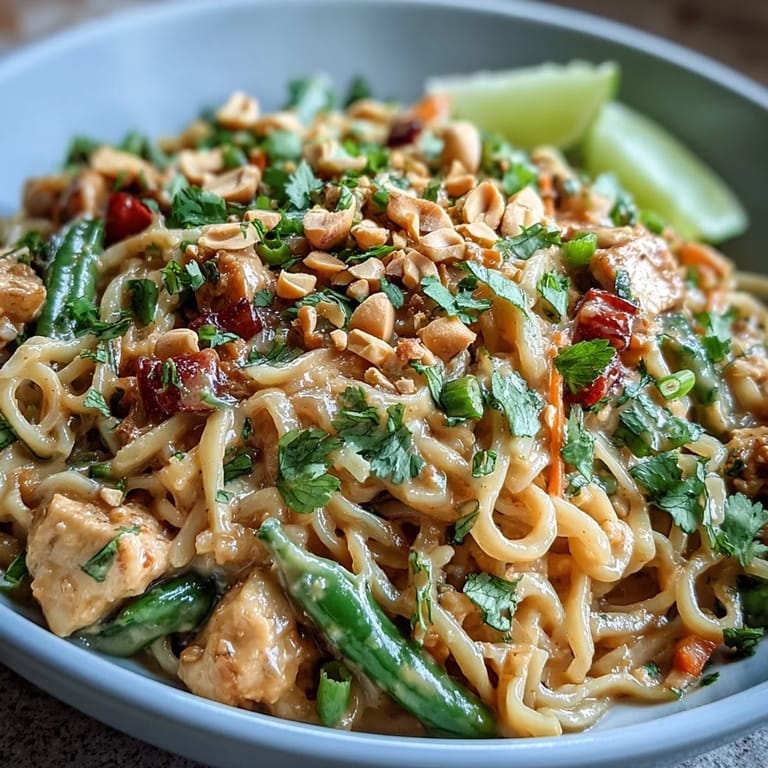 Pin It
 There's something about watching someone take their first bite of this and seeing their shoulders relax slightly—like they weren't expecting homemade food to taste this good and arrive this quickly. That moment when the creamy, savory sauce hits their tongue and they look up surprised is exactly why I keep making this.
The One-Pan Magic
The potsticker noodle technique sounds fancy, but it's really just a shortcut that concentrates flavor instead of diluting it in a pot of boiling water. I learned this trick from a cookbook about quick weeknight cooking, and it changed how I approach noodle dishes. Instead of cooking noodles separately and then mixing everything together, you let them cook right in the sauce, absorbing all that creamy peanut goodness directly. The starch from the noodles actually thickens the sauce naturally, which is why it tastes rich without any cream or flour.
Making It Your Own
This recipe is flexible enough to bend with what's in your kitchen and what you're craving. I've made it with ground turkey when chicken felt boring, and with crumbled tofu for a vegetarian friend who said it tasted just as satisfying. Some nights I add baby bok choy or broccoli florets instead of some of the vegetables, and it works beautifully. The sauce is forgiving—more honey makes it sweeter, more sriracha makes it fiercer, and an extra squeeze of lime never hurt anything.
Storage and Leftovers
This dish is best eaten right away while everything is hot and the vegetables still have their snap, but leftovers keep in the fridge for a couple of days if you store them separately from the lime wedges and crispy garnishes. Reheat gently in a skillet over medium-low heat with a splash of broth to restore the creamy texture, and add fresh cilantro and peanuts when you serve it again. It won't taste quite the same as the first night, but it's still a solid lunch for the next day.
- Store the cooked noodles in an airtight container and keep fresh cilantro, lime, and peanuts separate so they stay vibrant.
- This freezes reasonably well if you need to meal-prep, but defrost in the fridge overnight and reheat with extra broth to loosen it back up.
- The sauce actually tastes even better the next day as all the flavors settle and meld together.
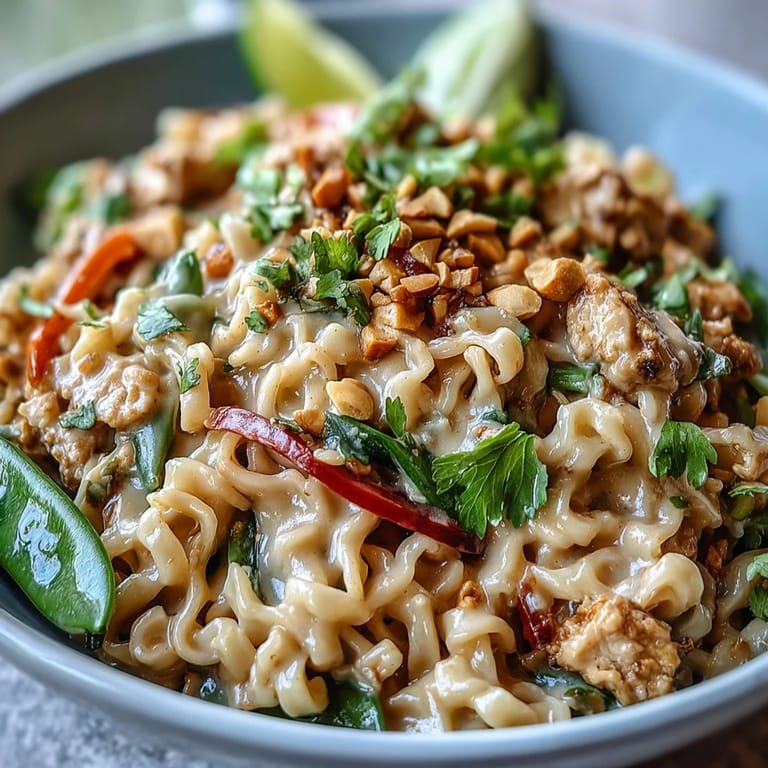 Pin It
 This is the kind of dish that proves you don't need hours in the kitchen to eat like you tried, or a takeout menu to taste authentic and craveable. It's become my answer to almost every question about what's for dinner.
Questions About This Recipe
- → Can I make this dish vegetarian?
Absolutely. Substitute crumbled firm tofu or use extra vegetables like mushrooms and broccoli instead of ground chicken. The cooking time remains the same, and the peanut sauce provides plenty of richness and flavor.
- → What type of rice noodles work best?
Wide rice noodles (sometimes called rice sticks) are ideal because they hold up well to the simmering technique and absorb the creamy sauce beautifully. Look for dried noodles labeled as wide or pad thai style.
- → How can I adjust the spice level?
Start with 1 teaspoon of sriracha in the sauce for mild heat, or increase to 2 teaspoons for medium spice. You can also serve with additional sriracha or chili flakes at the table so everyone can customize their bowl.
- → Can I prepare the peanut sauce ahead?
Yes, whisk the sauce ingredients together (except the broth) and store in the refrigerator for up to 3 days. When ready to cook, whisk in the broth and proceed with the recipe as directed.
- → What vegetables can I substitute?
Shredded cabbage, broccoli florets, sliced mushrooms, or baby corn work wonderfully. Aim for about 3 cups of vegetables total to maintain the right ratio of noodles to vegetables.
- → Is there a nut-free alternative to peanut butter?
Try sunflower seed butter or tahini as a substitute. Both provide creamy texture, though the flavor profile will shift slightly. Adjust with additional honey or lime to balance the taste.