 Pin It
 There's something about the smell of roasted pumpkin that stops me mid-afternoon—it fills the kitchen with this golden warmth that makes you want to gather people around a bowl of soup. My neighbor knocked on my door one October with an armful of pumpkins from her garden, and instead of letting them sit, I decided to turn one into soup that very evening. What started as a quick dinner became this silky, spiced comfort that tastes like autumn decided to become a meal.
I served this soup to my daughter's book club last year, and someone asked if I'd added maple syrup because it tasted so naturally sweet—I hadn't, just the pumpkin itself and a whisper of cinnamon doing the work. That moment made me realize how forgiving this recipe is, how it lets good ingredients speak without needing tricks or shortcuts.
Ingredients
- Pumpkin, 1 kg (2.2 lbs) peeled, seeded, and diced: This is the soul of the soup, so choose one that feels dense and has deep color—sugar pumpkins work beautifully if you can find them, though any cooking pumpkin will do.
- Onion, 1 medium chopped: It dissolves into the broth and builds the foundation for every other flavor, so don't rush the softening step.
- Garlic, 2 cloves minced: Two is enough to be present without drowning out the pumpkin—trust this balance.
- Carrot, 1 medium peeled and diced: It adds a gentle sweetness and helps the soup's texture become velvety rather than gluey.
- Vegetable broth, 1 liter (4 cups): Use broth you actually like drinking, because it becomes the liquid backbone—homemade is lovely if you have it, but good store-bought works just as well.
- Heavy cream or coconut milk, 200 ml (3/4 cup plus 1 tbsp): This is where richness happens, so don't skip it or skimp on the amount; if you're using coconut milk, shake the can first so the cream pours in evenly.
- Ground cumin, 1 tsp: It adds earthiness without announcing itself loudly—the kind of spice that makes people wonder what makes the soup taste so good.
- Ground nutmeg, 1/2 tsp: Nutmeg and pumpkin are old friends; measure this carefully because too much tastes medicinal.
- Ground cinnamon, 1/2 tsp: Warm and slightly sweet, it ties the whole spice profile together.
- Chili flakes, 1/4 tsp optional: A tiny pinch adds a whisper of heat that makes you pause mid-spoonful and wonder why it tastes so alive.
- Salt and freshly ground black pepper, to taste: Always taste at the end and season generously—salt isn't optional here, it's the thing that makes all the flavors pop.
- Cream or coconut milk for drizzling, toasted pumpkin seeds, and fresh herbs for garnish: These turn a humble bowl into something that looks like it was made with intention, which it was.
Tired of Takeout? 🥡
Get 10 meals you can make faster than delivery arrives. Seriously.
One email. No spam. Unsubscribe anytime.
Instructions
- Soften the onion foundation:
- Heat oil in a large pot over medium heat and add your chopped onion, letting it turn translucent and soft around the edges—about 3 minutes. You'll know it's ready when it smells sweet rather than sharp and you can mash a piece against the pot with your spoon.
- Build the aromatics:
- Stir in the minced garlic and diced carrot, sautéing for about 2 minutes until the whole pot smells like something good is happening. This step wakes up the garlic without letting it brown, which would make it bitter.
- Toast the spices:
- Add the diced pumpkin, cumin, nutmeg, cinnamon, and chili flakes if using, stirring for 2 to 3 minutes so the spices warm through and release their oils. You'll smell the difference—the pot goes from smelling like raw vegetables to smelling like autumn.
- Simmer until tender:
- Pour in the vegetable broth, bring everything to a boil, then turn the heat down to a gentle simmer for 20 to 25 minutes. The pumpkin and carrots should become so soft they practically fall apart when you poke them with a spoon.
- Blend into silk:
- Remove from heat and use an immersion blender to puree the soup until completely smooth, or carefully transfer it in batches to a countertop blender if that's what you have. The immersion blender is easier because you stay right there with the pot and can control the texture as you go.
- Finish with cream:
- Stir in the cream or coconut milk, then taste and season with salt and pepper—add these slowly because the broth is already seasoned and you want to taste as you go. Reheat gently over low heat if it's cooled, but don't let it boil.
- Serve with care:
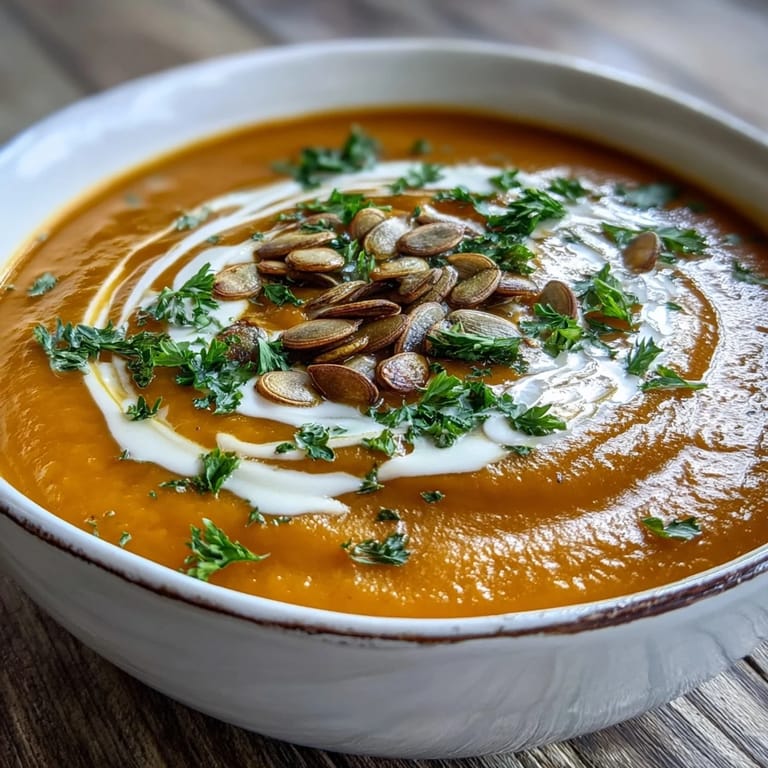
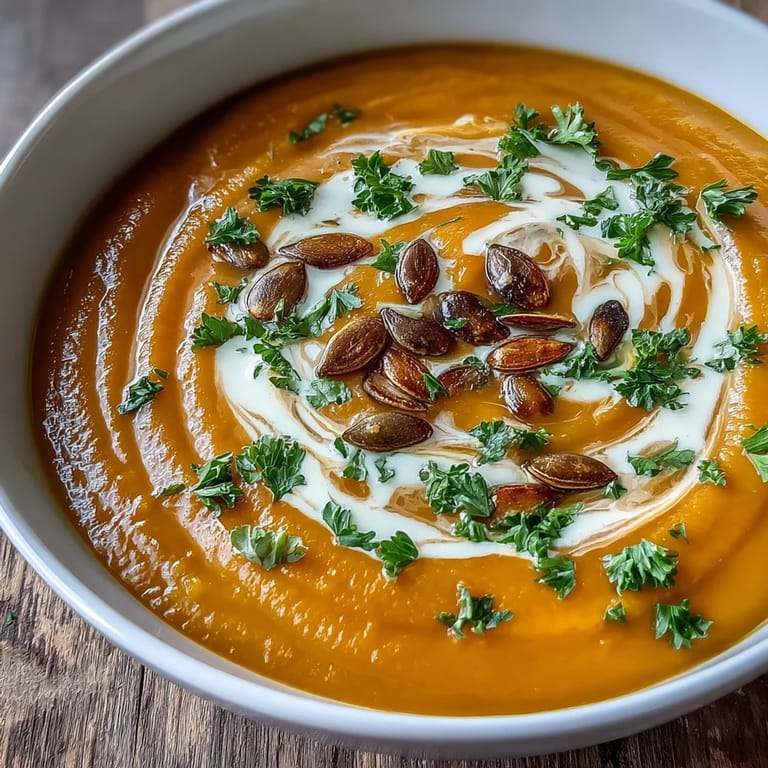
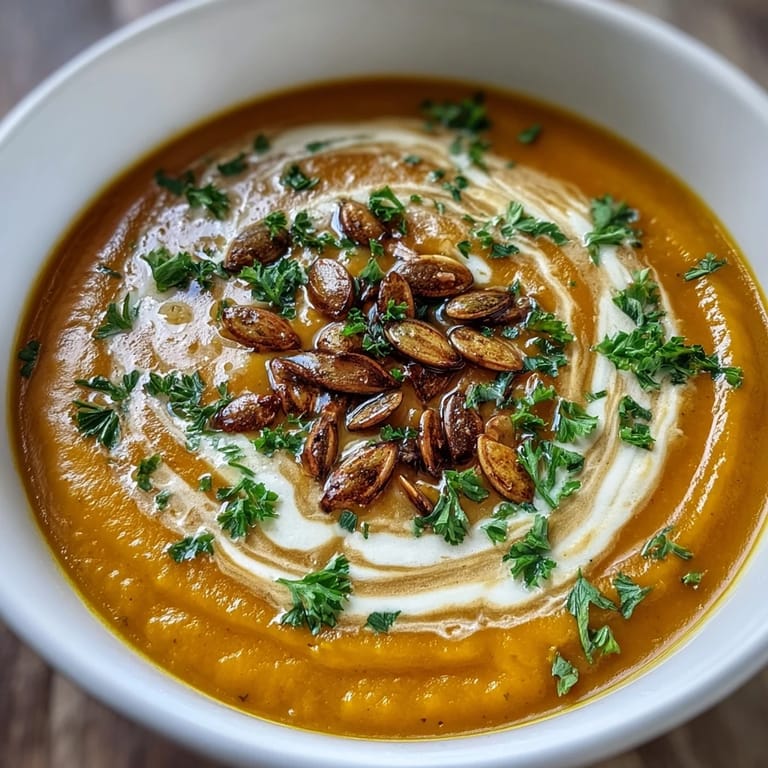
- Ladle into bowls and top with a small drizzle of cream, a scatter of toasted pumpkin seeds, and fresh parsley or chives if you have them. The warmth of the soup will release the aroma of the herbs, making each spoonful feel like a small celebration.
 Pin It
 What made this soup special wasn't just the recipe—it was serving it to my friend who thought she didn't like pumpkin, and watching her expression shift from polite to genuinely surprised. Sometimes a good soup does more than warm your stomach; it changes someone's mind about what they thought they didn't like.
The Secret of Roasting
If you have an extra 25 minutes before starting the soup, roast your diced pumpkin pieces at 200°C (400°F) until they caramelize at the edges and smell intensely sweet. The roasted versions create a soup with deeper, almost nutty undertones that raw pumpkin can't quite reach—it's the difference between a good soup and one that tastes like you spent hours on it.
Flexibility That Works
I've made this soup with butternut squash when pumpkins weren't in season, and honestly, some people prefer it—butternut is slightly sweeter and creates an almost silkier texture. Coconut milk instead of cream makes it tropical and works beautifully if you're avoiding dairy, and I've added a squeeze of fresh lime juice on a whim once and never went back. The recipe is strong enough to handle your substitutions and preferences without falling apart.
Serving and Storing Wisdom
This soup keeps beautifully in the refrigerator for up to 5 days and actually tastes better the next day once the flavors have settled together. It also freezes well without the cream stirred in—add that when you're reheating, which prevents the texture from becoming grainy. Serve with warm crusty bread if you want something more substantial, or pair with a crisp white wine like Sauvignon Blanc if you're being fancy.
- Let leftover soup cool completely before storing so condensation doesn't make everything watery.
- Reheat gently over low heat rather than blasting it with high heat, which can cause the cream to separate.
- Keep toasted pumpkin seeds in an airtight container and sprinkle them on just before serving so they stay crunchy.
 Pin It
 This pumpkin soup has become my quiet ritual on the first truly cold day of autumn—something I make without thinking too hard about it, knowing it will warm the kitchen and whoever's in it. There's comfort in knowing how to make something this good, and generosity in sharing a bowl with someone else.
Questions About This Recipe
- → Can I make this dairy-free?
Yes, simply substitute the heavy cream with coconut milk for a delicious dairy-free version that maintains the soup's creamy texture.
- → How long does the soup keep?
Store in an airtight container in the refrigerator for up to 4 days. Reheat gently on the stove, adding a splash of broth if needed.
- → Can I freeze this soup?
Freeze for up to 3 months in freezer-safe containers. Thaw overnight in the refrigerator and reheat slowly. Add cream after reheating for best texture.
- → What pumpkin variety works best?
Sugar pie pumpkins or butternut squash offer the best flavor and texture. Avoid large carving pumpkins as they can be watery and less sweet.
- → How can I make it thicker?
Roast the pumpkin cubes before adding to the pot, or reduce the broth amount slightly. For extra body, add a peeled potato during cooking.